The Debate: Should the next government build more new towns?

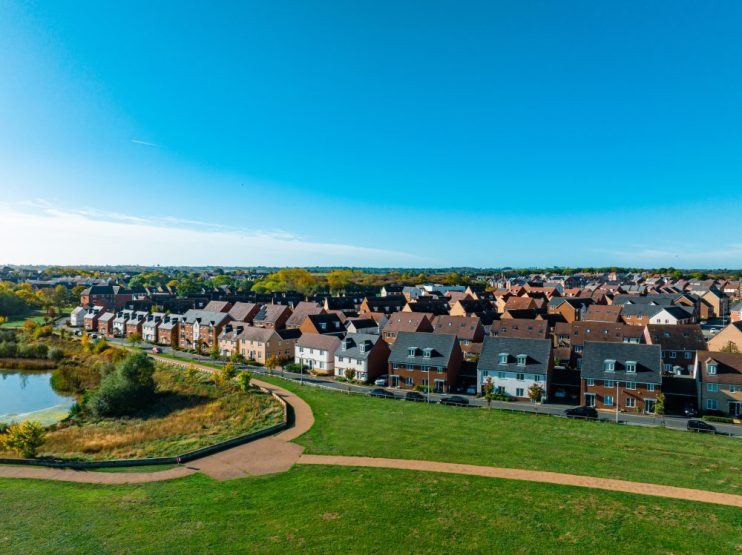
Morning Wire’s new weekly feature takes the fiercest water-cooler debates and pits two candidates head to head before delivering The Judge’s ultimate verdict. This week: we are in the midst of a housing crisis and Labour has committed to a programme of new towns – so should the UK build more Peterboroughs and Runcorns?

Yes: Building new towns can help solve England’s housing crisis – but we shouldn’t stop there
Evidence of the UK’s housing crisis abounds, marked by a deficit of over 4m homes and the highest house prices relative to earnings in 150 years. More young adults (18-34) now live with their parents than forming their own families. The favoured government responses, such as demand-boosting ‘Help to Buy’ schemes, have only fanned the flames. To affect real change, we must substantially increase housing supply, and a programme of new towns can and should play its part.
Historically, new towns have had a significant impact. The New Towns Act of 1946 led to the creation of 32 of them, now accommodating 4.3 per cent of the UK population. A modern wave could emulate this success, providing a significant increase in housing supply, sustainable living with energy-efficient homes, and clean and green transport systems. New towns are also an opportunity to weave green spaces into community fabrics, fostering inclusive yet diverse environments.
New towns can also offer streamlined, scalable development, presenting lower risks and appealing to long-term, patient, investors. But we must be realistic. Even replicating the most ambitious town building programme ever undertaken in the UK, would fill just over a quarter of the current housing gap. Wider comprehensive reform is essential, entailing a planning system overhaul – removing the discretionary nature of the system, introducing sub-regional strategic planning, providing land assembly powers for local authorities, and reforming compulsory purchase laws.
Resistance to such sweeping reforms is to be expected. The first new town, derisively dubbed “Silkingrad” by its detractors, faced significant opposition. Yet the need for affordable housing and societal renewal is as urgent now as it was post-war. All that’s missing is the political will.
Luke Murphy is an associate director at IPPR

No: People want to live near each other in cities with high productivity rates
Building more is the only way out of the UK’s housing crisis, but not every new home is equal. We need new builds in our most productive cities, like London.
The historically successful, and earliest, new towns were built within close commuting distance of high-wage cities with plentiful jobs and excellent transport links. These schemes, like Slough and Harlow, inspired such backlash and local opposition that later new town attempts, the so-called second generation, were built too far away from established centres of work and opportunity to be successful.
Even the first generation of new towns lost money. They were unable to recoup costs because they ignored the fundamental of economic geography: agglomeration effects drive productivity growth. People want to live near each other in cities with high productivity rates.
A more effective strategy is to use the powers in the New Towns Act to set up development corporations that focus on the extensions of high-wage cities. These extensions can be built faster and leverage underutilised existing infrastructure. They also offer greater social and economic benefits, with residents having easier access to jobs and cultural amenities.
To address the UK’s housing crisis, policymakers should prioritise urban extensions and intensification of expensive urban areas, fostering sustainable growth while addressing local opposition by providing tangible benefits for existing residents. Ultimately, this means emphasis should be on strategies that harness the economic potential of established cities where people want to live, rather than relying on the outdated concept of new towns.
Sam Watling is an advisory board member at Pricedout
The Verdict: Perhaps predictably, Morning Wire would funnel funds into forging supercities like London and Leeds over new towns
Everyone agrees we have a housing crisis, the shortfall being at around 4m as Murphy highlights. Labour have pledged to build more, and hopes it could turbo charge building in this country – understandably; in some ways new towns feel like a blank canvas upon which a veritable utopia could be designed and built: green spaces, wide roads, water features – oh, the possibilities.
But reality interjects and its name is Runcorn. Unfortunately, Watling’s bleaker assessment of new towns rings truer: if given the choice, the vast majority of people wouldn’t choose to live in Corby over a London suburb. And choice matters – evidence has shown the UK is building in the wrong places, which is a waste of resources and an egregious disservice to the 8.5m people in the UK searching for a home.
Municipalities with fountains and fauna sound charming but when it comes down to it, a sense of history, range of careers and established community vibe are more valuable to would-be residents. As Watling argues, the transport infrastructure required to connect new towns to existing hubs is prohibitively expensive (building trainlines is 10x more expensive in the UK than in France).
Verdict: rejected.