Skip to content
Monday 14 September 2026London --:--Frankfurt --:--Zurich --:--
NewslettersSearchEN · DE · FR
MorningWire

European business, markets and politics

FTSE 100
10,679.73
+0.28%
DAX
25,344.51
-0.88%
CAC 40
8,092.46
-1.07%
STOXX 50
6,238.41
-1.37%
  • Europe
  • Markets
  • Business
  • Economy
  • Regulation
  • Politics
  • Opinion
More
GermanyFranceEU InstitutionsCompetitionPublic AffairsBankingTechnologyEnergy
  • Germany
  • France
  • Europe
  • Markets
  • Business
  • Economy
  • Regulation
  • Politics
  • Opinion
  • DE
Tuesday 27 July 2021 2:00 pm  |  Updated:  Tuesday 27 July 2021 2:15 pm

DEBATE: Is it fair for businesses to go completely cashless?
By: Tom Spencer and Ariana Wolde

Add as a preferred source on Google
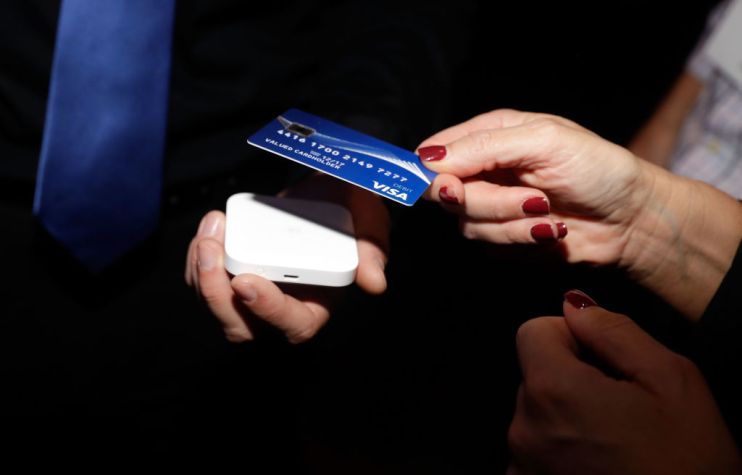
Visa ID Intelligence Launch Party at Money 20/20
LAS VEGAS, NV - OCTOBER 23: Guests tap to pay using contactless cards to support releif efforts during the Visa ID Intelligence launch party at Money 20/20 on October 23, 2017 in Las Vegas, Nevada. (Photo by Isaac Brekken/Getty Images for VISA Inc)

Tom Spencer, chief organiser of the London Neoliberals, says YES

A move to a cashless economy has long been met with fear due to the small impracticalities it will have on few people. But we should be embracing this change because it will bring about significant economic benefit.

This is because the problem of the zero lower bound has been haunting most major economies since the 1990s. This is the point at which a country cannot reduce interest rates in a way that will have a significant impact on expenditure. Whilst we have created ways to avoid this, such as helicopter money and quantitative easing, there is still a point where we reach a liquidity trap. At this point a central bank is powerless to prevent the impacts of a recession – as a consequence we would see higher inflation, unemployment and lower growth. 

Moving to a cashless society will help reduce that point. Under the current system if a bank adopts negative interest rates then people can simply withdraw their money and hoard it under their beds. On the other hand, under a cashless system, depositors would have to pay to keep their money in the bank if negative interest rates were adopted. This would help to incentivise more spending, speeding up any future recoveries.

Ariana Wolde, Contributor to Young Voices UK, says NO 

The pandemic has sped up the decline of cash, but there are still many who aren’t ready to make the switch. 13.7 million people opted to live a mostly cashless life last year – nearly double the 7.4 million figure in 2019, according to UK Finance. 

But going cashless freezes out the most vulnerable, those with lower incomes who can’t afford to tap away freely and need to keep a close eye on how much they have to get through the week. 1.7 million people in the UK don’t even have a bank account. Then there are older people unable to keep up with technology, those living in rural communities with poor broadband.

Putting a £10 note across the counter is also a lot less hassle for those with certain disabilities or dexterity issues than fumbling around trying to press the right buttons on a smartphone or using a card reader. 

Businesses who pride themselves on a sense of social responsibility should think twice about excluding these groups. Having the choice is great, and has the potential to make businesses much more efficient, but it can’t come at the cost of millions of the most vulnerable.

Read more

Gatwick takes ‘significant’ passenger hit from Iran war

Gatwick Airport terminal bustling with travelers and staff under bright signage and flight information displays

Share this article

  • Facebook
  • X
  • LinkedIn
  • WhatsApp
  • Email

Similarly tagged content:

Sections

  • Opinion

Categories

  • Opinion

Trending Articles

  • Wetherspoon boss: ‘Not up to Burnham’ to choose who is on the high street 

  • Revolut facing ransom request after hackers obtain customers’ data

  • Reform hits back at Tory plan to ‘abolish inheritance tax’

  • Four interest rate hikes loom despite surprise economic growth

  • Former Formula 1 champion loses £1.4m HMRC tax bill appeal

More from Morning Wire

  • Gatwick takes ‘significant’ passenger hit from Iran war

    Transport & Infrastructure
    Gatwick Airport terminal bustling with travelers and staff under bright signage and flight information displays
  • Poundland loss doubles as discount retailer nears sale

    Retail
    Poundland store sign with white letters and a yellow wreath logo, reflected in blue tinted windows
  • Over one million pensioners hit by higher income tax rates

    Personal Finance
    British pound banknotes in various denominations, highlighting UK currency amidst economic discussions
  • Workers’ rights overhaul pushes Employment Tribunal to breaking point

    Legal
    LONDON, ENGLAND - OCTOBER 15: Commuters cross London Bridge on October 15, 2024 in London, England. Estimates for the September 2024 payroll indicate that the number of employees rose by 0.4% compared with September 2023, a rise of 113,000 employees. (Photo by Dan Kitwood/Getty Images)
  • ‘War on wealth creation’: capital gains tax raid would lose government money, Tories argue

    Politics
    Mel Stride speaking at a press conference, addressing key issues, in a formal setting with a backdrop of the events logo.
  • Ten bold ideas to fire up the British economy

    Economics
    Morning Wire
  • Burnham has inherited Labour’s EU delusion

    Opinion
    Emmanuel Macron, Brigitte Macron, and UK officials outside 10 Downing Street
  • Mortgage rate hikes cost London homebuyers £35,000

    Property
    Street scene with historic London row houses, parked cars, crosswalk, and a red mailbox under a blue sky
MorningWire

Independent European business, markets and political news for decision-makers.

Morning Briefing

Europe

  • Germany
  • France
  • EU Institutions
  • Europe

Business

  • Markets
  • Business
  • Economy
  • Regulation
  • Competition
  • Public Affairs

Editorial

  • Opinion
  • Editorial Policy
  • Corrections
  • Contact

Company

  • About Morning Wire
  • Privacy Policy
  • Terms of Use
  • Cookie Policy
© 2026 Morning Wire Ltd · Published by Morning Wire Media, Bahnhofstrasse 65, 8001 Zürich, Switzerland
Privacy · Terms · Cookies · Facebook