Skip to content
Wednesday 2 September 2026London --:--Frankfurt --:--Zurich --:--
NewslettersSearchEN · DE · FR
MorningWire

European business, markets and politics

FTSE 100
10,789.28
-0.32%
DAX
25,970.11
0.00%
CAC 40
8,301.85
0.00%
STOXX 50
6,368.98
0.00%
  • Europe
  • Markets
  • Business
  • Economy
  • Regulation
  • Politics
  • Opinion
More
GermanyFranceEU InstitutionsCompetitionPublic AffairsBankingTechnologyEnergy
  • Germany
  • France
  • Europe
  • Markets
  • Business
  • Economy
  • Regulation
  • Politics
  • Opinion
  • DE
Monday 05 August 2019 4:13 am  |  Updated:  Friday 02 August 2019 5:17 pm

DEBATE: Should we be worried about police use of facial recognition technology?
By: Gus Tomlinson and Silkie Carlo

Add as a preferred source on Google
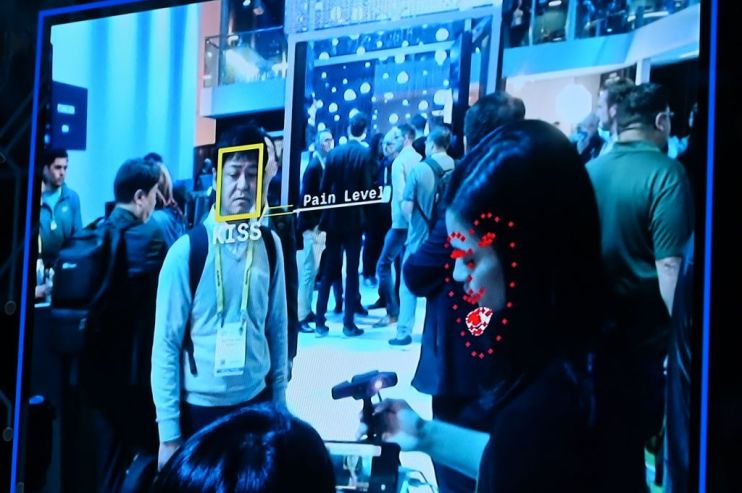
Facial recognition software is demonstrated at the Intel booth at CES 2019 consumer electronics show, January 10, 2019 at the Las Vegas Convention Center in Las Vegas, Nevada. (Photo by Robyn Beck / AFP) (Photo credit should read ROBYN BECK/AFP/Getty Images)

Should we be worried about police use of facial recognition technology?

Silkie Carlo, director of privacy and civil liberties campaign group Big Brother Watch, says YES.

A society where we’re watched, tracked, and identified by facial recognition cameras was once the stuff of dystopian fiction – and for good reason.

In a free society, citizens aren’t subjected to arbitrary identity checks. In a country watched by facial recognition cameras, our identities would be checked all the time – and we wouldn’t even necessarily know about it. We’d become walking ID cards tracked by a shadow surveillance state.

But UK police are now using live facial recognition, despite the lack of any law permitting this. We’re bringing a legal challenge against the Metropolitan Police and home secretary for their lawless use of this dangerously authoritarian surveillance. Over 15 rights groups back our campaign.

In the US, three cities have passed legislative bans on their authorities using facial recognition surveillance. In contrast, China has embraced facial recognition to police its population – and to persecute its minorities.

Britain should be a beacon of liberal democracy – not an imitation police state.

Gus Tomlinson, head of strategy at GBG, a company specialising in identity data intelligence, says NO.

Read more

Policing alone won’t solve London’s shoplifting epidemic

Shoplifting incident in retail store with security camera footage showing suspect concealing merchandise in jacket

The question of human rights does hold merit; today’s citizens have an increasingly heightened sense of the value of their personal data, including biometrics. Perhaps the real failure here has been communicating the benefits of the technology to the public, with our safety in mind.

But as our digital identity trails fragment and tracking crime becomes more complex, it’s hard to imagine a future where these technologies are not used widely.

The private sector already embraces biometrics verification, and it benefits consumers every single day. From checking a bank balance to ordering a food delivery, services are vastly more flexible, convenient and secure for it.

I believe fundamentally that technology can be used to make our world a safer place to live in.

So surely the constructive question to ask is not “how can we stop facial recognition from happening?”, but rather, “how can we ensure that it is used safely, and in the hands of organisations we trust?”.

Main image credit: Getty

Read more

Monitoring the situation: HSBC to add 46 CCTV cameras with ‘face detection’ outside new City HQ

Multiple CCTV security cameras in light blue and white against a green background, emphasizing surveillance and monitoring.

Share this article

  • Facebook
  • X
  • LinkedIn
  • WhatsApp
  • Email

Similarly tagged content:

Sections

  • News
  • Opinion

Categories

  • Opinion
  • Politics
  • Tech

Trending Articles

  • Vodafone and Deliveroo look to patch up Reform ties after Yusuf prison threats

  • Jaguar reveals the Type 01’s screen-free interior

  • Trio of firms poised to quit London Stock Exchange as exodus gathers pace

  • Easyjet’s over-60s recruitment push is economically necessary

  • As it happened: FTSE 100 slides as bound rout deepens; Oil jumps as Trump vows more strikes on Iran

More from Morning Wire

  • Policing alone won’t solve London’s shoplifting epidemic

    Opinion
    Shoplifting incident in retail store with security camera footage showing suspect concealing merchandise in jacket
  • Monitoring the situation: HSBC to add 46 CCTV cameras with ‘face detection’ outside new City HQ

    Banking
    Multiple CCTV security cameras in light blue and white against a green background, emphasizing surveillance and monitoring.
  • Naser Taher Named Among Forbes Middle East’s Top 100 CEOs 2026

    Business Wire
  • Smarsh Named to Inc. 5000 for the 19th Consecutive Year

    Business Wire
  • North Highland Awarded on the World’s Best Management Consulting Firms List for Fifth Consecutive Year

    Business Wire
  • Mary Kay Accelerates Beauty Innovation and Digital Transformation

    Business Wire
  • Everfox Reaffirms Commitment to UK Armed Forces Covenant

    Business Wire
  • In Jason Arday, Cambridge is discovering the dangers of DEI

    Opinion
    Jason Arday smiling, wearing academic regalia with a blue cap and gown with red accents.
MorningWire

Independent European business, markets and political news for decision-makers.

Morning Briefing

Europe

  • Germany
  • France
  • EU Institutions
  • Europe

Business

  • Markets
  • Business
  • Economy
  • Regulation
  • Competition
  • Public Affairs

Editorial

  • Opinion
  • Editorial Policy
  • Corrections
  • Contact

Company

  • About Morning Wire
  • Privacy Policy
  • Terms of Use
  • Cookie Policy
© 2026 Morning Wire Ltd · Published by Morning Wire Media, Bahnhofstrasse 65, 8001 Zürich, Switzerland
Privacy · Terms · Cookies · Facebook