Skip to content
Friday 28 August 2026London --:--Frankfurt --:--Zurich --:--
NewslettersSearchEN · DE · FR
MorningWire

European business, markets and politics

FTSE 100
10,792.54
-0.79%
DAX
26,367.24
0.00%
CAC 40
8,319.87
0.00%
STOXX 50
6,424.73
0.00%
  • Europe
  • Markets
  • Business
  • Economy
  • Regulation
  • Politics
  • Opinion
More
GermanyFranceEU InstitutionsCompetitionPublic AffairsBankingTechnologyEnergy
  • Germany
  • France
  • Europe
  • Markets
  • Business
  • Economy
  • Regulation
  • Politics
  • Opinion
  • DE
Friday 21 February 2020 7:09 am  |  Updated:  Thursday 20 February 2020 7:20 pm

DEBATE: Should the government intervene to stop cash disappearing?
By: Andrew Martin and Fred de Fossard

Add as a preferred source on Google
cash

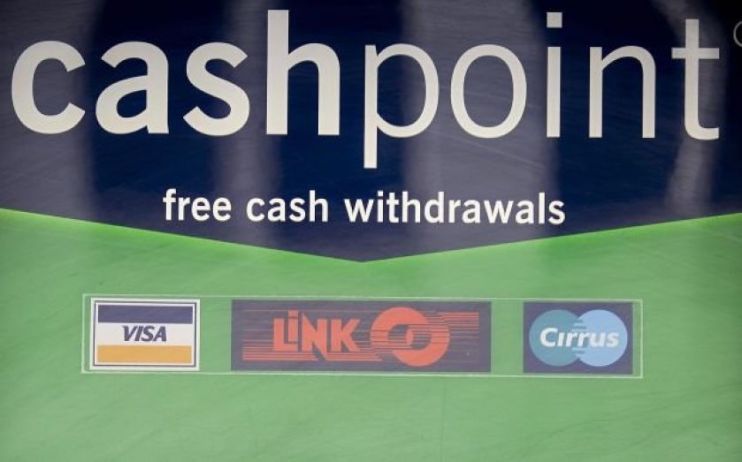
Should the government intervene to stop cash disappearing, as the Access To Cash panel has urged?

YES, says Andrew Martin, chief executive of Retail Financial Consulting.

It’s essential that cash remains a staple of British society in order to maintain social inclusion and economic stability.

One need only look at Sweden, which is on the verge of becoming cashless, before realising the detriments of its extinction in our own society. As of November, Sweden had to introduce emergency laws as it became clear that the social consequences of a cash-free society would be too severe.

The consequence in the UK would be the creation of a bi-polar society, whereby a line is drawn between those without the need for cash, and those with the need for cash. The latter would typically include homeless people, tradesmen, and other workers who are currently paid in cash, as well as members of society who do not have sufficient access to the internet, or indeed their own bank account.

Consumers must be given freedom-of-choice in their payment options, and that includes full access to cash — which is not prone to power outages, cyber attacks or IT glitches, and maintains an element of anonymity.

NO, says Fred de Fossard, an adviser to The Entrepreneurs Network.

It is easily possible that in 10 years’ time cash will be a thing of the past. And with the right policies, this will be an opportunity for us all. 

Between 2007 and 2017, cash payments halved, and today they make up less than a quarter of all payments. Cash is expensive and inconvenient. Handling cash costs businesses £3,000 per year on average, and in an age of instant, internet-powered card payment it is easy to see why businesses and consumers alike are ditching cash in favour of electronic payments.

It is true that 1.5m people remain unbanked, but the solution is not to enforce the use of cash. Open Banking is making financial innovation accessible to all — initiatives like the government-supported rent recognition challenge encourage companies to help people build trust with utility bill payments, so poor credit scores are no longer a barrier to electronic finance.

Cashless societies shouldn’t only benefit well-off early adopters. But thanks to Open Banking and forward-thinking fintechs, this won’t be the case.

Main image credit: Getty

Read more

Can John Healey deliver Burnham’s make-or-break devolution agenda?

John Healey, in a red tie, speaking with Andy Burnham, wearing glasses and a dark blue jacket, outdoors.

Share this article

  • Facebook
  • X
  • LinkedIn
  • WhatsApp
  • Email

Similarly tagged content:

Sections

  • Jobs and Money
  • News
  • Opinion

Categories

  • Business
  • Money
  • Opinion

Related Topics

  • Bank of England

Trending Articles

  • Pensioners to hand over bank statements in government benefits crackdown

  • Jamie Carragher: HMRC petitions for Sky Sports star to be declared bankrupt

  • Brewdog founder James Watt hits out at ‘total silence’ over new venture

  • Lloyds Bank and Halifax users unable to use app in latest outage

  • Economists urge Bank of England to halt bond sales as borrowing costs climb

More from Morning Wire

  • Can John Healey deliver Burnham’s make-or-break devolution agenda?

    Economics
    John Healey, in a red tie, speaking with Andy Burnham, wearing glasses and a dark blue jacket, outdoors.
  • Prothena Reports Second Quarter 2026 Financial Results and Business Highlights

    Business Wire
  • In Jason Arday, Cambridge is discovering the dangers of DEI

    Opinion
    Jason Arday smiling, wearing academic regalia with a blue cap and gown with red accents.
  • The Simon Levy case proves some criminals can never be rehabilitated

    Opinion
    Simon Levy, a man with dark hair and a beard, looking directly at the camera.
  • SCP Standard Capital Partners AG Completes Its Strategic Shift Towards Defence Technology Through the Acquisition of Vanea Technologies GmbH and Nocturne Technologies GmbH – Plans to Change Its Name to VANEA AG

    Business Wire
  • Silence Therapeutics Reports Second Quarter 2026 Financial and Business Results

    Business Wire
  • Balfour Beatty ups profit forecasts as it defies construction gloom

    Transport & Infrastructure
    Balfour Beatty construction site showcasing cranes, workers, and building progress against a city skyline backdrop
  • Organigram Reports Record Third Quarter Fiscal 2026 Results

    Business Wire
MorningWire

Independent European business, markets and political news for decision-makers.

Morning Briefing

Europe

  • Germany
  • France
  • EU Institutions
  • Europe

Business

  • Markets
  • Business
  • Economy
  • Regulation
  • Competition
  • Public Affairs

Editorial

  • Opinion
  • Editorial Policy
  • Corrections
  • Contact

Company

  • About Morning Wire
  • Privacy Policy
  • Terms of Use
  • Cookie Policy
© 2026 Morning Wire Ltd · Published by Morning Wire Media, Bahnhofstrasse 65, 8001 Zürich, Switzerland
Privacy · Terms · Cookies · Facebook