Skip to content
Saturday 5 September 2026London --:--Frankfurt --:--Zurich --:--
NewslettersSearchEN · DE · FR
MorningWire

European business, markets and politics

FTSE 100
10,831.09
0.00%
DAX
26,046.40
+0.17%
CAC 40
8,278.77
-0.09%
STOXX 50
6,392.93
+0.16%
  • Europe
  • Markets
  • Business
  • Economy
  • Regulation
  • Politics
  • Opinion
More
GermanyFranceEU InstitutionsCompetitionPublic AffairsBankingTechnologyEnergy
  • Germany
  • France
  • Europe
  • Markets
  • Business
  • Economy
  • Regulation
  • Politics
  • Opinion
  • DE
Friday 23 August 2019 4:05 am  |  Updated:  Thursday 22 August 2019 6:06 pm

DEBATE: Will email die out?
By: Morten Brøgger and Tim Sadler

Add as a preferred source on Google
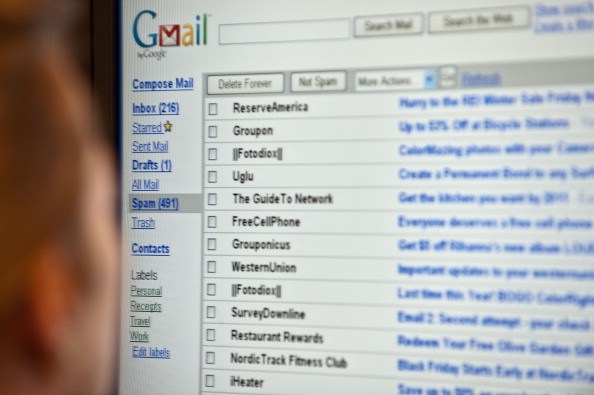
(Photo credit should read NICHOLAS KAMM/AFP/Getty Images)

Will email die out?

Morten Brøgger, chief executive of collaboration platform Wire, says YES.

Almost 50 years on since its inception, email is fast becoming no longer fit for purpose as a communication tool.

Given that 90 per cent of cyber attacks begin with a phishing email, today it’s the equivalent of leaving the house with all the windows wide open.

Meanwhile, from a collaboration perspective, it’s about as effective as a telegram – perhaps even worse. At least workers of days gone by didn’t receive 100 plus telegrams a day, with the expectation that they would need to reply to each one.

The day we decide to ditch email once and for all will equate not only to enterprises saving billions due to the decreased risk of cyber breaches, but also to a reduction in spam and unread messages, leading to a significant boost in productivity and better real-time collaboration.

We’re at the tipping point of embracing a far safer, more practical and modern form of communication. Yet, in order to move away from email, first we must accept that it is officially a relic of the past.

Tim Sadler, chief executive of cyber security company Tessian, says NO.

Read more

Stansted Airport owner hit with cyber attack as millions of customers’ data stolen

London Stansted Airport is part of the wider Manchester Airports Group (MAG).

We spend a third of our working week on email, sending and receiving around 124 emails a day. It’s our primary tool to communicate, collaborate, negotiate, and share information. And this won’t change any time soon.

Despite the growing popularity of instant messaging and collaboration platforms, we’re more dependent on email than ever. We recently found that 59 per cent of employees now send work emails on their mobiles during out-of-office hours

Furthermore, people increasingly use their inboxes as a “digital filing cabinet” – storing and archiving useful business information.

Undeniably, our relationship with email is risky. With so much data being shared and cyber threats like spear-phishing rife, some businesses have even suggested banning the use of email altogether. But this isn’t realistic.

Figures show that the number of emails will grow from 281bn today to over 333bn in 2022.

Email is here to stay; businesses need to make sure that employees can use it as effectively, productively, and safely as possible.

Main image credit: Getty

Read more

Iranian hackers behind UK energy plant attack

UK industrial electricity prices are the highest in the G7 and 46 per cent above the average of the International Energy Agency.

Share this article

  • Facebook
  • X
  • LinkedIn
  • WhatsApp
  • Email

Similarly tagged content:

Sections

  • News
  • Opinion

Categories

  • Business
  • Opinion
  • Tech

Trending Articles

  • Victoria Beckham owed £350,000 by Harvey Nichols

  • M&G: FTSE 100 giant hits out at Rayner’s ground rent cap as it suffers loss

  • Fulham owner Khan sees his £1bn stadium construction project take next steps

  • John Lewis boss: UK economy facing a ‘permacrisis’ 

  • My stressful night at London’s ultra luxe £1k a night hotel where I found glass in my food

More from Morning Wire

  • Stansted Airport owner hit with cyber attack as millions of customers’ data stolen

    Transport & Infrastructure
    London Stansted Airport is part of the wider Manchester Airports Group (MAG).
  • Iranian hackers behind UK energy plant attack

    Energy
    UK industrial electricity prices are the highest in the G7 and 46 per cent above the average of the International Energy Agency.
  • Amentum Selected for Projects to Upgrade and Protect the UK Energy Grid

    Business Wire
  • Andrew Bailey warns markets are not ready for the rise (or fall) of AI

    Markets
    Andrew Bailey, Governor of the Bank of England, in a suit and tie, looking thoughtful during a press conference.
  • IGI Announces the Launch of Cipher, A Specialty Treaty Reinsurance Platform Focused on Cyber

    Business Wire
  • Defence Tech Hub, Nordics’ Leading Dual-Use Deep-Tech Hub, Expands and Unites the Helsinki Region’s Defence Ecosystem

    Business Wire
  • FTSE 100 Beazley profit plunges as war roils insurance market

    Insurance
    Beazley 2026 business forecast graph with financial data and growth trends displayed for February 24 analysis
  • AI gold rush leaves accountancy firms exposed to costly cyberattacks

    AI
    Two tablets displaying code and a cyber warning symbol, with blurry blue and pink background numbers
MorningWire

Independent European business, markets and political news for decision-makers.

Morning Briefing

Europe

  • Germany
  • France
  • EU Institutions
  • Europe

Business

  • Markets
  • Business
  • Economy
  • Regulation
  • Competition
  • Public Affairs

Editorial

  • Opinion
  • Editorial Policy
  • Corrections
  • Contact

Company

  • About Morning Wire
  • Privacy Policy
  • Terms of Use
  • Cookie Policy
© 2026 Morning Wire Ltd · Published by Morning Wire Media, Bahnhofstrasse 65, 8001 Zürich, Switzerland
Privacy · Terms · Cookies · Facebook