Skip to content
Saturday 22 August 2026London --:--Frankfurt --:--Zurich --:--
NewslettersSearchEN · DE · FR
MorningWire

European business, markets and politics

FTSE 100
10,816.56
+0.64%
DAX
26,136.56
+0.59%
CAC 40
8,484.43
+0.37%
STOXX 50
6,462.22
+0.63%
  • Europe
  • Markets
  • Business
  • Economy
  • Regulation
  • Politics
  • Opinion
More
GermanyFranceEU InstitutionsCompetitionPublic AffairsBankingTechnologyEnergy
  • Germany
  • France
  • Europe
  • Markets
  • Business
  • Economy
  • Regulation
  • Politics
  • Opinion
  • DE
Wednesday 20 January 2021 9:00 am  |  Updated:  Wednesday 20 January 2021 9:03 am

Decentralising the NHS could be a game-changer for the UK’s future health

By: Paul Ormerod

Add as a preferred source on Google
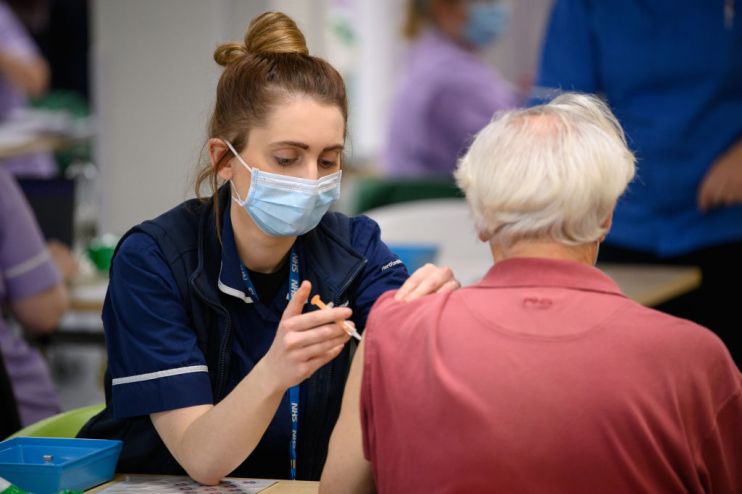
Keir Starmer Visits Vaccine Centre To Promote "Let's Vaccinate Britain" Campaign
Jabbed. (Photo by Leon Neal/Getty Images)

The NHS is a highly centralised organisation. During the Covid crisis, policy decisions have been made at the top and then passed down.  There has been little scope for showing initiative at a local level.

This dates back to when the NHS was set up in the late 1940s. Central planning was very fashionable at the time.  

Yet as many have pointed out, no other Western health service has seen fit to copy the particular organisational structure of the NHS. There is, to varying degrees, more devolution of authority and decisions.

Read more: Excl: Hong Kong activist Nathan Law slams firms ‘colluding’ with Beijing

In normal times, the problems arising from a centralised, command-and-control system have become apparent over the years. Cancer survival rates, for example, are routinely lower in the UK than in other European health systems.  

In a crisis, however, many economists and business school theorists have argued that a highly centralised structure works best. Decisive and coordinated action is needed, and this may be done more effectively from the centre.

There is a rival school of academic thought which takes a completely different view. 

When a major shock such as a financial crisis occurs, decision makers face a highly uncertain environment. Local managers in a firm, for example, can understand their specific circumstances much better than can those in central headquarters. They are therefore better placed to make good decisions.

A timely paper in the American Economic Association’s Applied Economics journal examines the performance of firms during the Great Recession of 2008/9.

Read more

NHS data counters claims that £330m Palantir deal has led to ‘no improvement’

Brit are seeking financial support from the ‘Bank of Mum and Dad’ to afford private healthcare.

Nicholas Bloom of Stanford, along with his colleagues, analyse two large micro data sets of decentralisation in firms across ten developed economies.

Their conclusion is unequivocal. Companies which delegated more power from the central headquarters to local plant managers before the Great Recession happened outperformed their centralised counterparts.  

The enhanced value of specific local knowledge during a crisis, when uncertainty is high, is seen as a key reason for the finding.

In the context of Covid and the NHS, the effectiveness with which the vaccination programme is being carried out appears to contradict this view.  But this did not need specific localised knowledge. It required the large-scale mobilisation of resources to deliver a very clear target.

Against this success, we can set the myriad failures of Public Health England. Its ability even to perform the basic task of collecting accurate data on the number of new cases has been brought into question.

Certainly, some local authorities embody the central planning mentality even more than PHE. But many could have used their local information about outbreaks to act much faster if the powers had been devolved to them. Local public health inspectorates, for example, have a lot of experience of practical tracking and tracing. 

With decentralisation, different authorities would initially have tried different approaches. We would have had a natural experiment, as it were, into what sorts of things really worked. Successful tactics could then have been copied more widely.

One of the key lessons from the Covid crisis is the need to devolve powers within the outdated system of central planning on which the NHS is currently based.

Read more

Leeds NHS Innovation to Accelerate Global Adoption of AI-enabled Pathology for Cancer Diagnostics Through Epredia Partnership

Share this article

  • Facebook
  • X
  • LinkedIn
  • WhatsApp
  • Email

Similarly tagged content:

Sections

  • Opinion

Categories

  • Opinion

Related Topics

  • Coronavirus
  • NHS

Trending Articles

  • House prices in wealthy London boroughs fall by up to £300,000

  • As it happened: Miners fuel FTSE 100 recovery; oil jumps as Trump claims Strait of Hormuz

  • City law firm sues prominent Emirati business family

  • Amanda Blanc has worked her magic at Aviva

  • As it happened: FTSE 100 rallies after JD Sports drags on blue chips; oil jumps again

More from Morning Wire

  • NHS data counters claims that £330m Palantir deal has led to ‘no improvement’

    Tech
    Brit are seeking financial support from the ‘Bank of Mum and Dad’ to afford private healthcare.
  • Leeds NHS Innovation to Accelerate Global Adoption of AI-enabled Pathology for Cancer Diagnostics Through Epredia Partnership

    Business Wire
  • ‘Social value’ procurement rules are an absurd waste of time and money

    Economics
    Tunnelling for the Euston link finally kicks off this week.
  • Champions Cup rugby team hacked in ransom attack with player data at risk

    Sport Business
    Rugby player in a pink uniform running with the ball, pursued by an opponent in a black jersey.
  • Public sector makes wage growth higher than expected

    Economics
    London has defied national trends as job postings in the capital rose.
  • Experian Brings Personalised Credit Scores to ChatGPT in a UK First

    Business Wire
  • Britain’s problem isn’t too much Thatcherism, but too little

    Opinion
    Margaret Thatcher smiling outside 10 Downing Street during her tenure as UKs longest-serving Prime Minister in the 20th ce...
  • Aera Technology Named to Constellation ShortList™ for Decision Intelligence Platforms as the Category Reaches an Enterprise Inflection Point

    Business Wire
MorningWire

Independent European business, markets and political news for decision-makers.

Morning Briefing

Europe

  • Germany
  • France
  • EU Institutions
  • Europe

Business

  • Markets
  • Business
  • Economy
  • Regulation
  • Competition
  • Public Affairs

Editorial

  • Opinion
  • Editorial Policy
  • Corrections
  • Contact

Company

  • About Morning Wire
  • Privacy Policy
  • Terms of Use
  • Cookie Policy
© 2026 Morning Wire Ltd · Published by Morning Wire Media, Bahnhofstrasse 65, 8001 Zürich, Switzerland
Privacy · Terms · Cookies · Facebook