Delete your emails, bin your ex’s texts or we’ll run out of room for all our data

The cloud has turned us into a nation of digital hoarders, it’s time to face up to our data problem, writes Anna Moloney.
If you have lived in London for long enough, it is likely you have had your phone stolen. A financial headache no doubt, but for many of us the more immediate fear is not the hunk of metal itself, it’s the thousands of photos, contacts and text messages we’ve obsessively stored. Long gone are the days when a pickpocketed phone meant game over. Today, you will almost certainly have entrusted this precious data to that impressive safety net we call ‘the cloud’; a new phone and a backup is all that’s needed to reunite you with those precious photos of your dog. Job’s a good’un.
But, of course, nothing in life comes free. Many of us are more than happy to use the cloud, but far fewer of us understand what it is and, more pressingly, what the cost of such convenience is. Because while the name ‘the cloud’ may suggest that our data is immaterial and our capacity to store it is endless, this is far from the truth. “Everything on your phone is stored somewhere within four walls,” Gordon Dolven, director of data centre research in the Americas for CBRE told The New York Times.
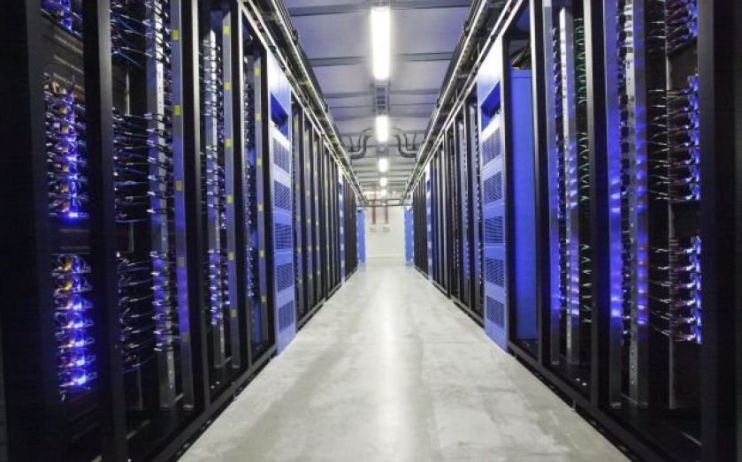
What Dolven referred to is the data centre, an entity that has come a long way since the dotcom boom. At their inception, data centres were typically on-site facilities used by single companies to house their IT infrastructure; now the term is used in reference to public cloud data centres. These are vast, industrial complexes, housing data infrastructure for millions and millions of customers via an internet connection. Amazon Web Services, Google Cloud Platform, IBM Cloud and Microsoft Azure all run hyperscale data centres, with the largest covering over millions of square feet of space.
Far from our cloudy fantasies in an intangible stratosphere, these facilities are highly energy-intensive. By 2030, it is expected data centres will consume about six per cent of UK electricity, while the excess heat generated by the facilities mean they also require incredible amounts of water to cool them down. Indeed, Thames Water threatened to restrict water supplies to data centres over the summer due to their strain on resources. In other words, those thousands of unread emails sitting in your inbox do not exist without consequence. Our inability to let go of old messages is literally taking up space.
Demand is also growing exponentially. First it was home working, and then the rapid development of artificial intelligence (AI) which added more pressure. It is estimated that about 90 per cent of the data we use now was created within the last two years.
Accordingly, Big Tech is moving fast to expand capacity. Last week, Microsoft announced its largest ever single investment in the UK, with the tech giant committing £2.5bn to AI infrastructure, including doubling its data centre space across the country. If we wish to keep up with our technological ambitions for Britain, data centres are non-negotiable. But we also risk losing sight of reality. On top of the environmental concerns, Eddie Richards, partner at Charles Russell Speechlys, emphasised the logistical challenges, with the demands on local power infrastructure along with convoluted local planning systems meaning building and running these data centres is no easy task.
In a weird Catch-22, proponents of AI argue it can be the solution as well, by using it to manage data centres’ power usage and make them more efficient. Whether this can outweigh the costs of powering AI is unknown. Microsoft president Brad Smith said the company was moving fast to improve the sustainability of its data centres, but he admitted it wasn’t a straightforward science. “Can I do a mathematical equation? Not yet,” he said.
So we are left in a difficult situation. We need more data centres, but we must reckon with the consequences. Big Tech and government must address the majority of these and, to their credit, creative solutions are already on the table. The UK government last month announced it would be exploring using waste heat from data centres to heat homes while data centre company Highlander last week sunk a data centre to the bottom of the South China Sea – a natural cooling solution.
But there are also things we must reckon with ourselves. We have become a nation of digital hoarders and we are ignoring the physical footprint of our digital addictions because we have mystified what data is. Understanding what the cloud is and that data is not intangible is a first step. If our house was overrun with paper versions of our emails we would clean it up, but our removal from the physical footprints of our digital lives makes it a problem we ignore. Live on the edge and delete your emails.