Despite Britain’s Brexit borders, immigration at record 1m a year to become ‘new normal’ in UK

Britain must prepare for a new era of high immigration caused by UK domestic need and changes in global economics and politics, a new think-tank paper said today.
The post-pandemic immigration rate of 1.1m arrivals a year could be the start of a trend towards historically high migration levels in the coming decades, according to the Social Market Foundation.
Britain’s ageing population and skills shortages will mean the country has an ongoing demand for migrant workers.
Meanwhile, Britain has longstanding ties with the most populous and still growing nations, whose own demographic changes will mean they have large numbers of young people looking for jobs and opportunities elsewhere in the world.
Jonathan Thomas, a senior fellow at the SMF, argued that British politics and policy need to be better prepared for an era of high migration flows.
Thomas suggested that Britain should explore “skills partnerships” with migrants’ home countries, supporting the training of workers in those countries some of whom could then bring those skills to Britain.
“The UK should focus on helping to strategically shape migration sustainably on mutually beneficial terms with those countries from which the UK is receiving migrants”, he stressed.
Immigrant workers must be shown to be “supplementing, not supplanting” the UK workforce, Thomas continued.
“The value of a more open approach to labour immigration must be set out in a way that clearly acknowledges political and public concerns.”
Jonathan Thomas
Significant reform of the international refugee system, to break the bond between where people claim asylum and where they settle.
“Only a system where an asylum claim represents just an entry into the system rather than a final destination can remove the incentives that drive the people-smuggling business model”, he said.
Deal with France
Britain should strike a meaningful deal with France to curb the Channel chaos, but to be able to return migrants to France will require the UK to take in more refugees, from France and/or elsewhere in the EU.
“The UK should accept that France has no obligation and little incentive to help Britain on asylum, particularly during times when France has received asylum applications at roughly three times the UK rate, and accepts a greater number of refugees than the UK does,” Thomas said.
In the year ending June 2022, long-term immigration into the UK was estimated at around 1.1m This is an increase of 435,000 on the previous year.
This current high level of migration is often put down to the unique circumstances following the Covid-19 pandemic and the Russian invasion of Ukraine.
Many politicians and commentators have suggested that future flows are unlikely to reach the levels seen today.
But Thomas argued that in fact, both supply- and demand-side factors mean that the UK’s future migration trend may be towards inflows remaining at historically high levels in the medium to long term.
Demand and supply
On the demand side, skills and labour shortages may be worsened by an ageing resident population often reluctant to work longer.
On the supply side, Britain’s historic ties to the most populous and still growing nations elsewhere are likely to mean significant numbers of working-age people willing and able to come to the UK.
Demographic trends that are already locked in mean that, in the period to 2050, two such countries – India and Nigeria – will provide most of the world’s young people actively looking for jobs and a better life.
Credible academic forecasts predict a near tripling of the number of first-generation immigrants in the UK over the next three decades.
Such predictions should be given more attention by UK policymakers, Thomas said.
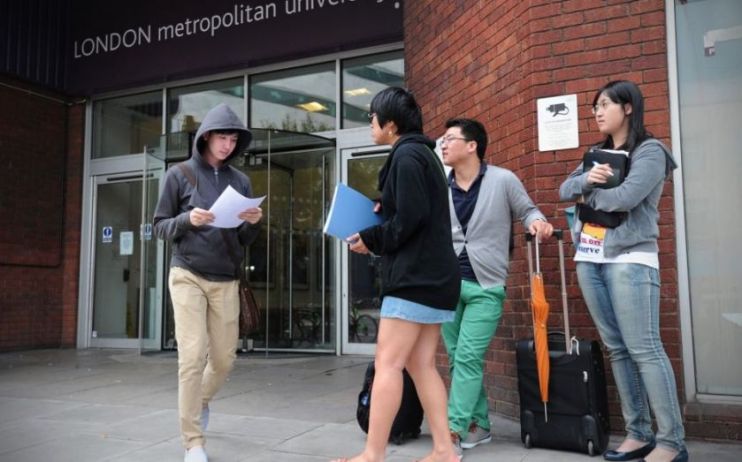
“Staggering” recent changes in student visa numbers illustrate the scope for population shifts in countries such as India, Nigeria and Pakistan to change Britain’s migration flows, Thomas noted.
Student numbers swelling
Since 2019, Indian student numbers have risen to 117,965 up 215 per cent.
Nigerian student numbers are now 57,545, up 686 per cent. Pakistani student numbers are at 18,563, up 377 per cent.
Thomas said: “Current high levels of migration could well be the norm rather than the exception. Over the longer term the UK’s deep historical connections with some of the most populated countries across the globe – India, Pakistan, Nigeria, and Bangladesh – have the potential to create far more sizeable flows of people to the UK than the smaller and stagnating populations of the EU ever realistically could.”
Since Britain left the EU, the UK has operated a relatively liberal immigration policy, granting permanent residency rights to over 5m EU nationals and over 5m Hong Kong residents.
Despite political focus on Channel Crossings, there has been relatively little political or public debate about wider migration issues, which some commentators have taken as proof of a fundamental shift in public opinion towards a more liberal view of immigration.
But Thomas arguds that such a shift is unlikely to have taken place in just a few years and notes that a significant number of voters appear to remain concerned about immigration.
Meanwhile, both Conservative and Labour leaderships are basing their economic policies on an Office for Budget Responsibility forecast of rising net migration. This creates the scope for political disruption over the issue, he warns.
Thomas said: “The political consensus favouring economic arguments for liberal migration policy is extremely fragile.”
He added: That consensus also creates an opportunity for political disruptors, an opportunity seized by Nigel Farage and UKIP in the early 2010s. To avoid that risk, there must be compromise on all sides to reach a sustainable centre-ground position on migration.”