Skip to content
Sunday 13 September 2026London --:--Frankfurt --:--Zurich --:--
NewslettersSearchEN · DE · FR
MorningWire

European business, markets and politics

FTSE 100
10,650.44
+0.39%
DAX
25,568.56
+0.82%
CAC 40
8,179.77
+0.78%
STOXX 50
6,325.13
+0.90%
  • Europe
  • Markets
  • Business
  • Economy
  • Regulation
  • Politics
  • Opinion
More
GermanyFranceEU InstitutionsCompetitionPublic AffairsBankingTechnologyEnergy
  • Germany
  • France
  • Europe
  • Markets
  • Business
  • Economy
  • Regulation
  • Politics
  • Opinion
  • DE
Wednesday 30 March 2022 6:15 am  |  Updated:  Tuesday 29 March 2022 5:24 pm

Despite what we wish, there are no miracle economics Rishi can pull out of his hat

By: Paul Ormerod

Add as a preferred source on Google
UK Reacts To Russian Invasion Of Ukraine
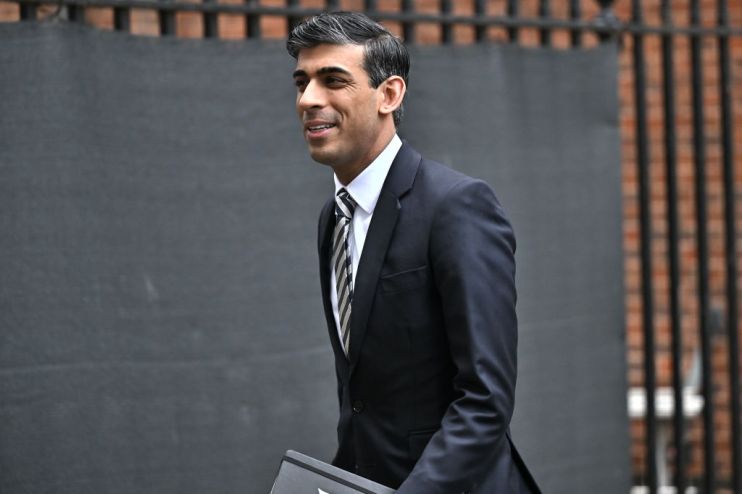
The response to Chancellor Rishi Sunak's spring statement has not been largely positive. (Photo by Jeff J Mitchell/Getty Images)

The economic pressures now known as “the cost of living crisis” were at the core of the criticism of the spring statement last week. Those who once eulogised the Chancellor have now been selling their stocks of Sunak.

While much of the commentary is unfair, politics is a trade in which the concept of fairness has always been in distinctly short supply.

World commodity prices have risen dramatically, energy prices are double what they were a year ago and other commodities are following suit in the wake of the crisis in Ukraine. Wheat, for example, has risen almost 50 per cent in the past month alone, and is up some 80 per cent year on year.

Britain is a net importer of commodities. As a matter of simple logic, this means our real national income has fallen. There is no possible way for governments to circumvent this. Even if a set of policies could be magicked into existence which immediately boosted our growth rate, national income would still be below what it would otherwise have been without the commodity price boom. The Chancellor is further constrained by the huge increase in public sector debt incurred as a result of the policies of lockdown and restrictions in the face of Covid-19.

There is much talk in the political class about the “windfall” the Treasury will receive in the form of higher tax receipts due to higher inflation.

Government borrowing so far in the financial year about to end is £25.9bn lower than projected by the Office for Budget Responsibility. But borrowing for the year is on track to be over £130bn, on top of the £324bn deficit in the 2020/21 financial year. In comparison, the “windfall” is a drop in the ocean. And at some point, these debts will have to be paid.

The public reaction to all this illustrates a fundamental problem of political economics which confronts not just Sunak but all Western finance ministers. Economists have known for a very long time that individuals give more weight to the present than they do to the future. A cost of, say, £100 incurred today has to generate a benefit of more than £100 in the future to make it worthwhile.

A key development in economics over the past twenty years or so has been a new perspective on how people value costs and benefits today compared to those in the future. Voters place far more weight on what happens now rather than what will happen as a result in the future – much more weight than standard economic theory presumed.

The work of the Harvard economist David Laibson did much to establish this idea, known as hyperbolic discounting, in the 1990s.

The concept crops up with policies such as the furlough scheme under lockdown. At the time the policy was hugely popular. It was a major factor underpinning the public support at the time for restrictive policies.

Now, confronted with the bill, voters just do not want to know. Someone else, anyone else, can pay as long as it is not them personally.

In principle, the increase in energy bills and fuel costs is a good thing, as it gives an incentive to reduce the consumption of these carbon-intensive products. But the reaction of the public illustrates all too clearly the huge difficulties of getting people to value future benefits while they struggle with current costs. This creates real problems for any elected politician trying to follow rational policies – including our Chancellor.

Read more

As it happened: FTSE 100 climbs as markets digest Bessent buyback

Scott Bessent, a man with gray hair and glasses, wearing a blue suit and striped tie, looking to the side.

Share this article

  • Facebook
  • X
  • LinkedIn
  • WhatsApp
  • Email

Similarly tagged content:

Sections

  • Opinion

Categories

  • Opinion

Trending Articles

  • Wetherspoon boss: ‘Not up to Burnham’ to choose who is on the high street 

  • Primark sales slip as owner dresses up retailer for demerger

  • Badger Beer maker Hall & Woodhouse doubles profit ahead of tie-up with James May

  • Crystal Palace owner Blitzer part of £1bn mega stadium redevelopment

  • Barclays faces legal scrutiny over role in £90m ‘Ponzi scheme within a Ponzi scheme’

More from Morning Wire

  • As it happened: FTSE 100 climbs as markets digest Bessent buyback

    Markets
    Scott Bessent, a man with gray hair and glasses, wearing a blue suit and striped tie, looking to the side.
  • Oil price falls but Trump and Iran clash on negotiations claim

    Markets
    Donald Trump smiling in a blue suit and tie with an American flag pin, US flag in background
  • Whey and weight-loss drugs to eat into Applied Nutrition profit

    Retail
    Woman lifting dumbbells with a trainer in a busy gym, promoting fitness and health
  • FGE NexantECA Acquires Square Commodities, Accelerating Its Green Molecules Strategy

    Business Wire
  • ‘Cost of business crisis’ as government drives up overheads by 70 per cent in a decade

    Business
    Andy Burnham, Mayor of Greater Manchester, drinking a pint of beer in a busy pub setting
  • Top business group urges Healey to cut NICs to ‘solve Neets crisis’ 

    Economics
    Man in suit and red tie speaking at a podium to an audience in a modern building.
  • House prices suffer biggest August slump in eight years 

    Property
    Aerial view of colorful residential houses built on a hillside, nestled among green trees, representing housing markets
  • Bailey warns on inflation risks as Iran war roils UK economy

    Economics
    Bank of England Governor Andrew Bailey addressing financial stability concerns at a press conference
MorningWire

Independent European business, markets and political news for decision-makers.

Morning Briefing

Europe

  • Germany
  • France
  • EU Institutions
  • Europe

Business

  • Markets
  • Business
  • Economy
  • Regulation
  • Competition
  • Public Affairs

Editorial

  • Opinion
  • Editorial Policy
  • Corrections
  • Contact

Company

  • About Morning Wire
  • Privacy Policy
  • Terms of Use
  • Cookie Policy
© 2026 Morning Wire Ltd · Published by Morning Wire Media, Bahnhofstrasse 65, 8001 Zürich, Switzerland
Privacy · Terms · Cookies · Facebook