Developers must make the most of London’s rich history and not rely on retail alone

Property developers can no longer depend on traditional retail for survival and must engage with London’s unique and varied history to ensure successful regeneration, Trevor Morriss writes
The collapse of countrywide retail chain Wilko is a stark reminder that no town or city centre can rely on the security of so-called “golden tenants” for their survival. Large department stores and shopping malls are no longer a guarantee for steady flow of footfall. In this environment, shopping is a part of, but not principal to, successful regeneration. So what else can we now rely on?
In the standoff with the Goliath that is e-commerce, David’s best strategy isn’t to attempt to keep pace with digital retail. By focusing on retail alone, we lose sight of a clear advantage – the rich history of London’s districts and the heritage assets we all too often take for granted.
Heritage is everywhere in London. The variety of architectural styles, quality and building types is truly unique, from industrial factories and warehouses to churches and gardens. Some areas are defined by one landmark while other areas are characterised by a particular typology. But too many of these assets have been allowed to fall into disrepair. Historic England’s Heritage at Risk register identifies 631 sites in London under threat of being lost, including 19 new entries last year. This only includes those that are formally listed.
Heritage can underpin the identity of a new development. It separates and distinguishes, preserves and enhances. Recent regeneration in Kingston centred around the refurbishment of All Saints Church – the site of the coronation of seven Kings of England that gave the town its name – using storytelling to reinstate the area’s character.
But even buildings that are far from what we would consider local landmarks can serve as the bedrock for regeneration. In Southwark’s Borough Yards, once overlooked warehouses and Victorian-era railway arches now serve as a focal point, hinting at the area’s history while accommodating an array of commercial uses that have attracted visitors to a new London destination.
That’s not to mention the environmental benefits of preservation. As growing attention is paid to the carbon emitted during the construction process, demolition without reason is increasingly unviable. And in a digital age, where footfall is driven by social media, historical architecture can draw in content-hungry Instagrammers, with knock-on benefits for local businesses.
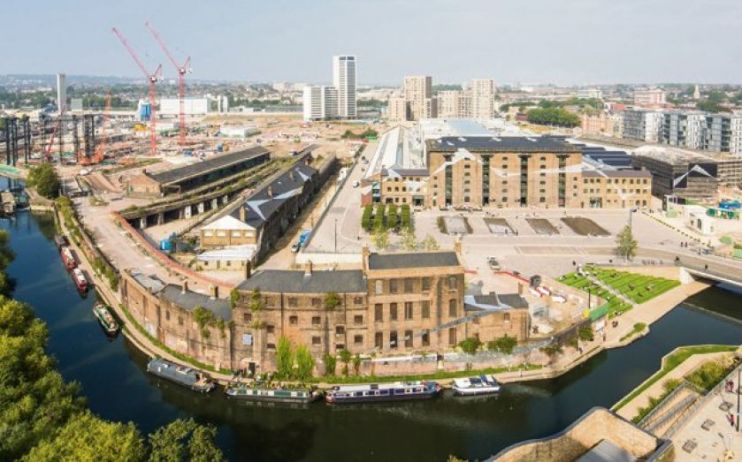
However, developments that attempt to graft their own vision onto an area’s heritage sites are unlikely to stick. Where the regeneration of King’s Cross struck gold was its careful incorporation of the area’s creative legacy. In the 1990s, artists moved their studios into the area’s disused warehouses. Subsequent regeneration expanded this creative focus to encompass music and visual arts through the creation of the Kings Place venue and a new home for the world-famous Central Saint Martins art school.
A similar concept underlies the planned regeneration of Kensington’s historic Olympic exhibition halls. Though originally intended by the Victorians as a so-called “People’s Palace”, entrance to the site has long been possible only by purchasing a ticket, making Olympia feel disconnected from its neighbouring community.
Opening up the grand venue through pedestrianisation, including public spaces with views over the historic exhibition halls and dedicated areas for community-led projects, will finally make good on the original Victorian vision. The inclusion of a new music venue, theatre and school for the creative arts, meanwhile, will build on the site’s legacy for the performing arts.
It’s no surprise that heritage-led regeneration schemes are linked to improved footfall, increased revenues for local businesses and stronger communities. As projects anchored by retail alone become increasingly challenging, successful regeneration will require drawing on an area’s unique history and the sensitive restoration of the historic buildings and quarters to tell that story.
Trevor Morriss is the founder and principal at SPPARC Architecture