We’ve been using digital identities for years without impinging on our civil liberties or freedom

Of all the things painted as nefarious threats to our civil liberties, digital identity combines a triangle of top targets: identity cards, technology and big government. Yesterday, Rishi Sunak ruled out identity cards on this very premise. The reality however, is far less threatening and in modern society, already part of our lives.
Digital identity has re-emerged as a solution to our burgeoning asylum processing crisis. One reason for the large number of people making the hazardous crossing to Dover is that it is easier to work in the informal economy in the UK, and thus fall off the radar.
This is a large contributor to the demand side of irregular migration. It is generally a result of employers avoiding compliance, enabling undocumented migrants to ‘disappear’ into the informal economy, where they are often paid below minimum agreed levels.
As surely as the sun rises in the east, one can guarantee a storm of vitriolic criticism from a vocal minority of civil liberties groups and libertarian MPs as soon as the word “identity” is mentioned. But this is misguided: digital identity, and identity infrastructure in general, is mired by misconceptions and tropes that are worth scrutinising in slightly closer detail.
In contrast to common perceptions, digital identity is not merely a digitised version of an “ID card”. It can act in this capacity if designed to, but mostly it is a type of government infrastructure that allows people to prove they are who they say they are and connects public services together.
There are broadly two types of digital identity: foundational digital identities – which provide identity as a public good, not for a specific service. And functional digital identities, which exist to prove your identity to serve a specific function – like the one proposed for immigration policy.
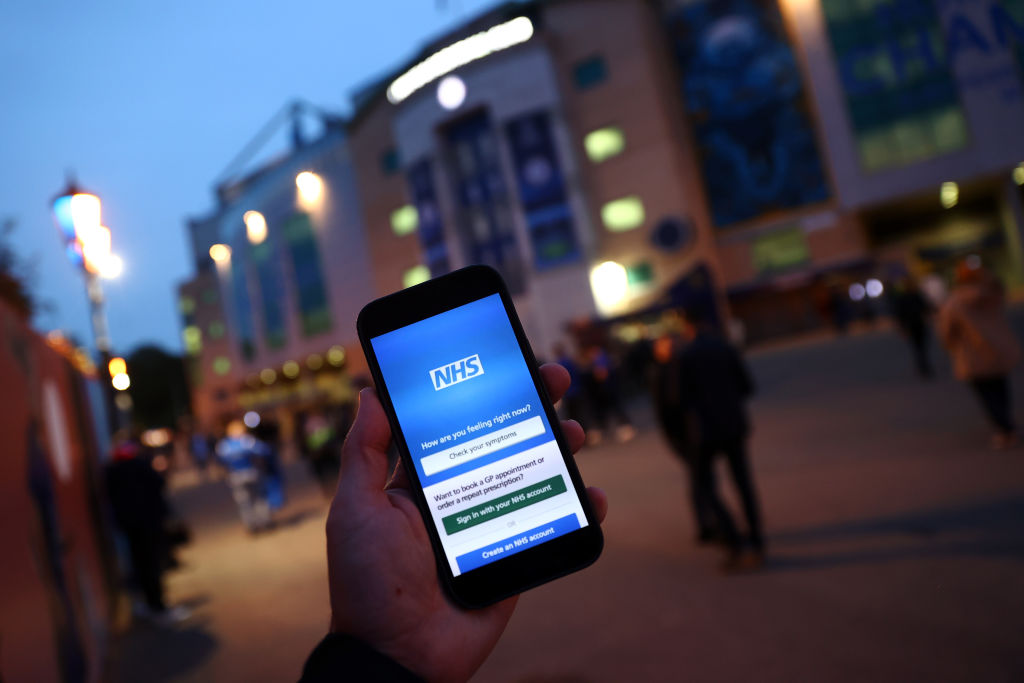
I also hate to break this news, but we have had digital identities in the UK for several years now. Gov.uk Verify – a way to log in to government services, with a guarantee you are who you say you are – has existed since 2016. NHS login, which allows individuals to sign onto many health websites, apps and services, is also a form of functional digital identity. They are generally convenient and far less threatening than people imagine.
For many, the ideal situation would be to have a foundational digital identity. In the same way physical infrastructure, like bridges and roads, supports the existence of services and businesses, digital identity is core infrastructure that supports public systems and business activities.
Digitalisation of basic services is happening across the world, and numerous use cases have demonstrated that digital identity facilitates everything from emergency cash payments to voting online. Estonia uses theirs to check medical records, submit tax claims, and even as a legal travel ID.
There is actually broad consensus in the development community – the UN, World Bank, and USAID – that more digital identity is the right direction of travel, particularly when it comes to stateless citizens. Indeed, it is an almost certain one: ABI Research forecast over 850 million citizens will be equipped with a form of mobile identity by 2026.
A common criticism of digital identity, or identity infrastructure in general, is that it is a precarious, bureaucratic solution to a non existent problem. That is clearly no longer the case when it comes to border security, which is now a very tangible challenge.
Critics of digital identity would rightfully point to instances of data leaks and occasional misuse of surveillance and data retention powers. They might also focus on the potential targeting of minority groups by the authorities.
But these concerns are surmountable: foundational digital identity is used in pretty much every European country, as well as Canada, Australia and India. The reticence to it in the UK is increasingly becoming the outlier.
Many of our public services in the UK remain uniquely cumbersome and mismatched to the digital world we live in. We need to start thinking more creatively about how we solve seemingly intractable problems, and thus stop looking at digital identity as a controversial policy idea that simply renews the debate on ID cards, but as a genuinely useful piece of infrastructure that improves how governments deliver.