Skip to content
Tuesday 25 August 2026London --:--Frankfurt --:--Zurich --:--
NewslettersSearchEN · DE · FR
MorningWire

European business, markets and politics

FTSE 100
10,854.32
+0.35%
DAX
26,106.60
0.00%
CAC 40
8,453.01
0.00%
STOXX 50
6,447.98
0.00%
  • Europe
  • Markets
  • Business
  • Economy
  • Regulation
  • Politics
  • Opinion
More
GermanyFranceEU InstitutionsCompetitionPublic AffairsBankingTechnologyEnergy
  • Germany
  • France
  • Europe
  • Markets
  • Business
  • Economy
  • Regulation
  • Politics
  • Opinion
  • DE
Wednesday 05 October 2022 3:17 pm  |  Updated:  Wednesday 05 October 2022 6:46 pm

Directors only owe duty to creditors on real risk of insolvency, UK’s Supreme Court rules

By: Louis Goss

Add as a preferred source on Google
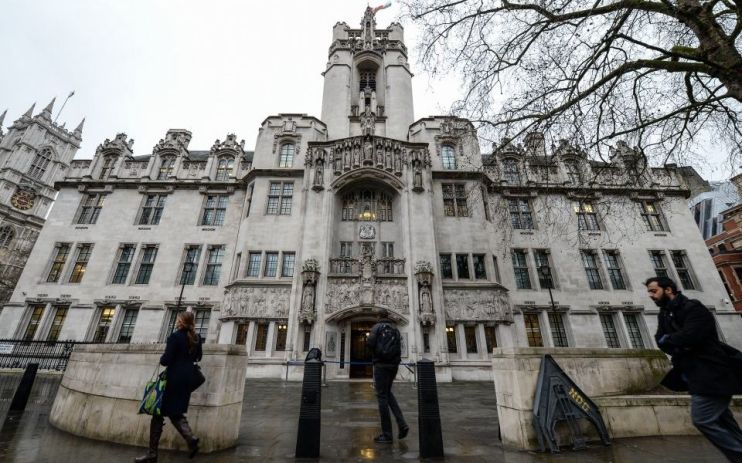
The UK's Supreme Court

The UK’s Supreme Court has dismissed a claim calling for the law to be changed to force company directors to start taking creditors into account at the first risk of insolvency.

The Supreme Court ruling reaffirms the current position in law, in stating company directors are only required to begin prioritising creditors if it is “probable” their company will actually plunge into insolvency.

The ruling clarifies the current legal position under which directors’ duties to creditors are triggered only when a company is either insolvent or on the brink of bankruptcy, rather than at an earlier point in time, when the first signs of insolvency risks appear.

The case comes after debt collector BTI filed a lawsuit against French paper maker Sequana seeking to reclaim a €135m (£188m) dividend paid out to it by its subsidiary AWA in May 2009.

Although AWA was solvent at the time, the Scottish paper manufacturer had long-term pollution related liabilities that meant there was a real risk it might become insolvent in the future.  

BTI later sought to reclaim the €135m debt from Sequana following AWA’s in October 2018 – almost a decade after it first paid out the dividend.

The debt collector had sought to argue that AWA’s decision to pay Sequana a dividend was taken in breach of its creditor duties, due to the risk of potential insolvency.

Read more

Former Crystal Palace owner John Textor scores temporary block of Brazilian football club share sale

John Textor says he is ready to sell his stake in Crystal Palace to avoid the club being kicked out of the Europa League due to rules on multi-club ownership.

Lawyers speaking to Morning Wire said the Supreme Court’s ruling will likely be welcomed by company directors due to it clarifying directors only have a duty to begin considering creditors’ interests when there is a real risk of insolvency.

“As before, directors need to heed the shadow of insolvency only when it becomes more likely than not,” commercial barrister David Drake said.

However, Drake noted the court’s ruling may come as a “bitter pill” for creditors “who feel that directors have been given a licence to fritter away assets, ignoring an obvious risk of creditors being left short-changed.”

Ashurst partner Olga Galazoula said the extra clarity provided by the ruling “particularly helpful… at the current time when we are seeing increased distress in the market”.  

Natalie Osafo from the London Solicitors Litigation Association (LSLA) said: “This decision provides some welcomed clarity” but noted “the precise point in time at which the duty will be triggered and how to balance creditors’ interests with other competing interests of the business remains relatively elusive.”

Edward Smith, a partner in Travers Smith’s restructuring and insolvency practice, said: “The Supreme Court judgment recognises that there may be a sliding scale of distress, where the more parlous the financial state of the company, the more the directors should prioritise the interests of creditors.”

Cripps director Tania Clench said: “Prior to the judgment, we already knew that in the run up to insolvency, there’s a point at which the interests of the company and its members take a back seat in favour of the interests of creditors. But today’s judgment has clarified the point at which that duty switches.”

Read more

Exclusive: City giants tighten trans policies

Progress Pride flag flying on a pole against a modern building, symbolizing trans policies in city firms

Share this article

  • Facebook
  • X
  • LinkedIn
  • WhatsApp
  • Email

Similarly tagged content:

Sections

  • News

Categories

  • Legal
  • Business

Related Topics

  • Company
  • Law firms

Trending Articles

  • Can debt-ridden Morrisons become a Big Four supermarket again?

  • Ratcliffe’s Ineos saves Runcorn plant

  • As it happened: Stocks rally; US to unveil ‘economic D-Day’ Iran sanctions

  • Amazon says it buys books in bulk to ‘improve products’

  • HMRC mansion tax inspectors to target homes for property valuations

More from Morning Wire

  • Former Crystal Palace owner John Textor scores temporary block of Brazilian football club share sale

    Lawsuit
    John Textor says he is ready to sell his stake in Crystal Palace to avoid the club being kicked out of the Europa League due to rules on multi-club ownership.
  • Exclusive: City giants tighten trans policies

    Business
    Progress Pride flag flying on a pole against a modern building, symbolizing trans policies in city firms
  • Top court ‘opens the floodgates’ for part-time workers’ claims

    Lawsuit
    Supreme Court building under clear sky, symbolizing justice and authority, relevant to recent judicial news coverage
  • Revealed: Natwest banked company used by MFS founder to ‘siphon off’ funds

    Banking
    Hand holding a NatWest debit card with a colorful design, blurred NatWest logo in the background.
  • Stop burying us in swollen corporate reports, says audit watchdog boss

    Accountancy
    Richard Moriarty, FRC unveils new stewardship code reducing reporting burdens
  • Luton Airport expansion set for take-off after environmental challenge dismissed

    Transport & Infrastructure
    Luton Airport aerial view with planes, runways, and terminal buildings, highlighting busy travel hub operations
  • Litigation funders need certainty to keep Britain’s class action regime fair

    Opinion
    UK Supreme Court building, London, with intricate stone carvings and statues, under a blue sky
  • Family feud: London estate agent Winkworth sues chair over plot with wife to oust son from board

    Property
    Winkworth estate agent For Sale sign in front of a brick building, indicating property prices and availability.
MorningWire

Independent European business, markets and political news for decision-makers.

Morning Briefing

Europe

  • Germany
  • France
  • EU Institutions
  • Europe

Business

  • Markets
  • Business
  • Economy
  • Regulation
  • Competition
  • Public Affairs

Editorial

  • Opinion
  • Editorial Policy
  • Corrections
  • Contact

Company

  • About Morning Wire
  • Privacy Policy
  • Terms of Use
  • Cookie Policy
© 2026 Morning Wire Ltd · Published by Morning Wire Media, Bahnhofstrasse 65, 8001 Zürich, Switzerland
Privacy · Terms · Cookies · Facebook