Skip to content
Monday 10 August 2026London --:--Frankfurt --:--Zurich --:--
NewslettersSearchEN · DE
MorningWire

European business, markets and politics

FTSE 100
10,862.50
-0.35%
DAX
26,323.88
+0.02%
CAC 40
8,726.03
+0.13%
STOXX 50
6,535.62
+0.18%
  • Europe
  • Markets
  • Business
  • Economy
  • Technology
  • Politics
  • Opinion
More
GermanyFranceBankingAIEnergyFintechPropertyCapital Markets
  • Germany
  • France
  • Europe
  • Markets
  • Business
  • Economy
  • Technology
  • Politics
  • Opinion
  • DE
Wednesday 13 November 2024 1:09 pm  |  Updated:  Wednesday 13 November 2024 1:10 pm

Do luxury products have a pricing problem?

By: Amber Murray

Retail Reporter

Add as a preferred source on Google
Underperforming luxury brands face pressure to cut prices

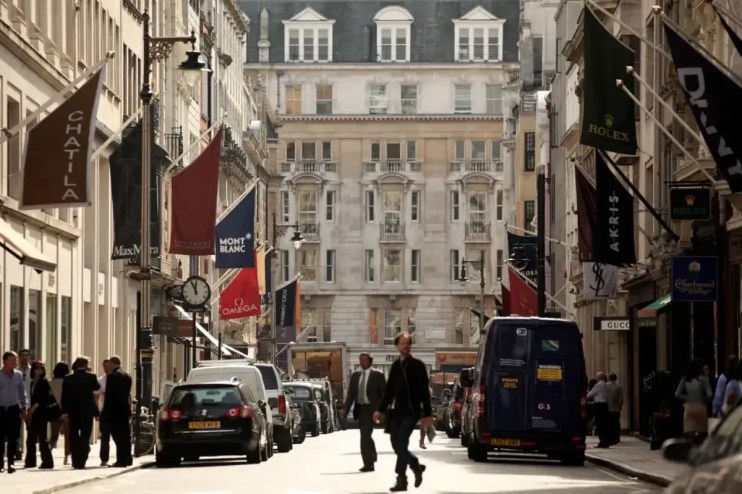
At some point, luxury brands all face the same question: How do you price a good at a level that implies desirability and exclusivity without making it completely exclusionary?

The vast majority of luxury brands rely on the aspirational consumer just as much as the super-wealthy.

McKinsey has estimated that around half of the luxury market’s value is made up of those who buy only one or two luxury pieces a year – and less wealthy customers have lower price limits.

That’s becoming a problem for the industry, which has pushed prices notably higher in the past two years.

Consumers switch off luxury

New research from Bain & Co has suggested that the luxury consumer base has fallen by 50m in the last two years, or around 12.5 per cent. This is the first drop in the number of customers in at least a decade.

“This is a signal for brands that it’s time to readjust their value propositions,” Claudia D’Arpizio, Bain partner and leader of the firm’s global fashion and luxury practice, said.

According to HSBC, the average price of personal luxury goods in Europe has increased by an eye-watering 52 per cent since 2019.

Customers may have been able to stomach the rise in the post-covid savings-fuelled luxury demand boom, but global inflation has since squeezed incomes.

Gen Z customers switch to secondhand.

Customers – particularly younger Gen Z ones – who want luxury goods have switched to the secondhand market.

According to Bain, the luxury resale market has doubled in size in four years and is now equivalent to 12 per cent of the value of the market for new luxury goods.

Again, it’s not that people do not want luxury goods – spending on small-ticket items like beauty is up – but that eye-wateringly expensive price tags are not on the menu.

“To secure future growth, brands will need to rethink their luxury equations, re-establishing creativity and blending old and new playbooks,” Federica Levato, partner at Bain & Company said.

Read more

Porsche’s Toy Story 911s prove luxury carmakers are selling stories as much as sports cars

Porsche TS model showcasing sleek design and advanced technology in a dynamic urban setting

“This includes rediscovering their essence and embracing the foundational pillars of the industry: desirability fueled by craftsmanship, creativity, and distinctive brand value”.

It may also include price drops or at least discounting; luxury goods in China can already be found at discounts of 20 to 50 per cent, according to luxury intelligence consultancy Re-Hub.

President Trump and international tariffs

The need to boost luxury’s consumer base may be further complicated by Trump’s recent elevation to President-elect of the United States.

He held up tariffs on imports as “the greatest thing ever invented” in September 2024 at a town hall event in Michigan, and has pledged to put at least a 10 per cent tariff on all foreign imports, rising to 60 per cent for Chinese goods.

The addition of a 10 per cent tariff on luxury products may put them even further out of reach for the aspirational consumers.

However, D’Arpizio suggested tariffs on luxury goods are unlikely.

“I don’t think these are the first products I would put tariffs, because it could just depress internal consumption without really giving a real impulse to internal consumption,” she said.

“For some of these brands there is not an immediate substitution with US brands and US products,” she added.

She said that Trump could even be good for international luxury brands: “Wealthy people are expecting a reduction of taxes or at least a known escalation of fiscal pressure,” she said, adding that the removal of uncertainty will encourage consumer to spend their savings.

“People who didn’t trust in the future have been saving money… this is not a typical trait of American citizens,” D’Arpizio said. “The money was there… they were not just spending [it]”.


Read more

Historic French Luxury Leather Goods House Moreau Paris Sold to Leading Manufacturer

Share this article

  • Facebook
  • X
  • LinkedIn
  • WhatsApp
  • Email

Similarly tagged content:

Sections

  • News

Categories

  • Business

People & Organisations

  • fashion
  • Hermes
  • Luxury
  • Prada
  • shopping

Trending Articles

  • Nottingham Forest owner Marinakis sues Crystal Palace for defamation

  • Back to basics: Sainsbury’s gradual retreat from the British high street

  • Thames Water faces fresh threat to survival after pensions regulation breach

  • Hargreaves Lansdown orders staff back to office

  • As it happened: Intel, Arm shares slide; Oil climbs higher

More from Morning Wire

  • Porsche’s Toy Story 911s prove luxury carmakers are selling stories as much as sports cars

    Sponsored
    Porsche TS model showcasing sleek design and advanced technology in a dynamic urban setting
  • Historic French Luxury Leather Goods House Moreau Paris Sold to Leading Manufacturer

    Business Wire
  • Mike Ashley’s Frasers circles Burberry in latest luxury swoop

    Retail
    Burberry store facade with classic plaid pattern, logo, display windows featuring mannequins and handbags
  • Next and Frasers go head to head for control of Harvey Nichols

    Retail
    Harvey Nichols luxury department store at night, illuminated by golden lights and festive window displays.
  • Is the Maybach GLS the most excessive SUV?

    Life&Style
    Gray Mercedes-Maybach GLS SUV parked next to a pool with a Maybach logo, green hills, and ocean in background
  • Mike Ashley’s Frasers muscles in on Harvey Nichols sale

    Retail
    Harvey Nichols storefront featuring elegant window displays and seasonal decorations in a bustling city setting
  • Harvey Nichols will collapse without rescue deal, directors warn

    Retail
    Exterior view of the Harvey Nichols luxury department store building facade with prominent black lettering and ornate arch...
  • Aspire’s David Collyer: my curry catastrophe at the Cinnamon Club

    Opinion
    David Collyer, CEO of Swissport, sitting in a black leather chair with a brown travel bag beside him.
MorningWire

Independent European business, markets and political news for decision-makers.

Morning Briefing

Europe

  • Germany
  • France
  • Europe
  • UK & Ireland

Business

  • Markets
  • Banking
  • Technology
  • Energy
  • Property
  • Fintech

Editorial

  • Opinion
  • Editorial Policy
  • Corrections
  • Contact

Company

  • About Morning Wire
  • Privacy Policy
  • Terms of Use
  • Cookie Policy
© 2026 Morning Wire Ltd · Published by Morning Wire Media, Bahnhofstrasse 65, 8001 Zürich, Switzerland
Privacy · Terms · Cookies · Facebook