Doctor, Doctor: How can we cure our chronic NHS shortage?

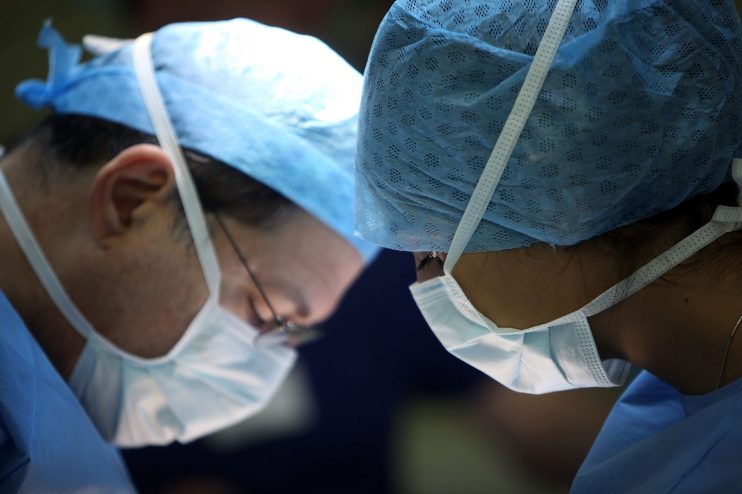
Shortages of PPE and ventilators have been at the top of the agenda during this pandemic, but such attention has masked a far more intractable problem: the global shortage of doctors.
According to one forecast, in 10 years there will be a global deficit of 400,000 doctors, with that undersupply spread between 32 OECD countries. As ageing wealthy countries compete over dwindling migratory flows, they will find it harder to import foreign-trained physicians as they have in the past.
The UK is particularly vulnerable to this upcoming threat, as the NHS is heavily dependent on doctors who qualified abroad, with 37 per cent of those registered with the General Medical Council having a foreign medical degree. It is also braced for the rapid industrialisation of Asia, which is set to reduce the “push factors” that have sustained the flow of foreign medics coursing into the ailing NHS’s proverbial catheter.
Already, the UK ranks 27th out of 36 OECD countries for number of physicians — and with around 30 per cent of doctors on the GP and specialist registers aged 55 or over, the tick-tock of a retirement time bomb grows ever more audible.
A looming shortage of doctors is cause for alarm even in normal times. Mid-pandemic, it signals catastrophe.
The problem has been on the horizon for some time, but action has been slow. Although the government added 1,500 extra medical school places a year in 2018, these students are still a decade or more from emerging as consultants. Fast-acting reforms are needed now to future-proof the nation’s clinical workforce.
In a new paper published today for the Institute of Economic Affairs, I propose three key reforms to stem the tide — reforms that do not require starting from square one with students just out of school.
First, more NHS professionals should have the power to prescribe medications. If physician associates, who exist on the skill spectrum somewhere between nurses and doctors, were granted the ability to independently prescribe medications (as their counterparts in the United States can), this would reduce pressure on doctors whose time can be better spent on other types of care.
Additionally, clinical psychologists — who are not doctors but work alongside psychiatrists who are — should be added to the list of independent prescribers, allowing them to hand out psychotropic medications, rather than make referrals back to colleagues and adding to the workload within the health service.
Second, we should open the NHS to graduates from similar, non-medical fields. UK universities currently churn out around 60,000 graduates with degrees in biological sciences every year. In 2016/17, six per cent of these graduates were unemployed, while 19.4 per cent were working in retail, catering and bar jobs six months after graduation.
Instead of being under or unemployed, these graduates could be given the opportunity to enter fast-track extended nursing roles, which would enable them to use their studies in a different way, while plugging gaps in the NHS.
Finally, allow NHS Trusts to set their own wages. The UK’s shortage of physicians is not evenly spread between the specialities: emergency medicine, histopathology and psychiatry in particular suffer from acute deficits. The problem is further compounded by local discrepancies, with less desirable regions of England turning into “doctor deserts” — in 2017, for example, Trusts in the south had a four per cent shortfall of ICU consultants, compared to a 16 per cent deficit in the north.
The current Soviet-style, centralised system of price-setting and national pay structures makes it incredibly difficult to address these discrepancies. Junior doctors fight over the “sexy” specialty training courses (neurosurgery, public health, radiology, for example), which are oversubscribed, while Trusts can offer no additional incentives to specialise in under-staffed fields or poorly served localities. Enabling Trusts to offer the wages that meet their requirements will help attract doctors to the regions and specialities that need them most.
The pandemic has created a perfect storm for the health service: demand has skyrocketed, while a shrivelled tax base threatens its funding. Efficiency savings are more urgent than ever. If we are to be on the right side of this next global health crisis, we must act now.
Main image credit: Getty