Does Britain care more about bats than people?

For each animal saved by the £100m the government spent on a ‘bat tunnel’ for HS2 we could have stopped 76 children dying of malaria. The affair illustrates the state’s total inability to consider trade-offs, says Samuel Hughes
Last month saw much discussion of the £100m ‘bat tunnel’ built for HS2. There are several morals to this remarkable story. Perhaps the most important is the failure of British public policy to deal honestly with trade-offs.
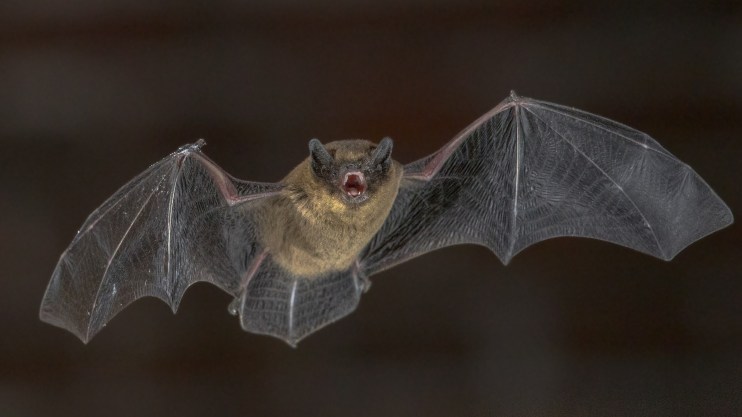
The story goes like this. HS2, the planned high-speed railway to Birmingham, will run through a wood in Buckinghamshire in which dwells a population of bats. Several thousand of these bats are of a specific type known as ‘Bechstein’s bats’, which enjoys protection under English environmental law. Natural England were concerned that the bats might fly into the path of moving trains. To meet its concerns, HS2 resolved to encase the railway in a kilometre-long tube to prevent their doing so.
Like most people, I like bats. I like the fact that we have bats in England. I also like the fact that we have lots of bat enthusiasts. The famous economist Friedrich Hayek said that single-issue enthusiasts are a great good for societies, provided that public policy does not become a servant of their enthusiasms. I think that is true.
The problem with the bat tunnel is that this is what seems to have happened. According to Natural England, there are about 300 Bechstein’s bats in the colony. Assume they will all have fatal collisions with HS2 without the tunnel, and that the tunnel will save all of them. On these (very generous!) assumptions, we are spending over £330,000 per bat.
What does spending £330,000 per bat equate to?
What does this equate to? Effective altruists, who study the most efficient ways to do good, think it costs between £2350 and £4325 to save a child’s life by buying malaria nets. The NHS is prepared to spend about £20,000 to save a human being’s life for a year with medical drugs. The average annual rent in Britain is a little over £15,000. So for each bat we saved with the tunnel, we could have saved at least 76 children from malaria in poor countries, or added a year to the lives of sixteen NHS patients, or put 22 homeless British families into good accommodation for a year.
Does the British state really believe that each bat is worth the lives of 76 children in countries with endemic malaria, or leaving 22 families of its own citizens homeless? Of course not. The problem is not that the government consciously believes in these insane trade-offs. It is that it has not consciously made any trade-off at all. The HS2 company thought it needed the support of Natural England, an organisation whose sole responsibility is environmental matters. It is not Natural England’s job to trade off environmental goods against other values: it is legally mandated to oppose development until environmental mitigations have been adopted. If the only available mitigations are insanely expensive, that makes no difference.
Friedrich Hayek said that single-issue enthusiasts are a great good for societies, provided that public policy does not become a servant of their enthusiasms. That is what happened with the HS2 bat tunnel
Trade-offs generally feel a bit arbitrary. How much should the British government be prepared to spend per bat? Most people feel that a range of answers to this question seems reasonable, and that any exact number that we settle on is somewhat random. We also tend to feel a bit uneasy making judgements like this, where we seem to lack a rigorous methodology for arriving at a precise answer. But that is the nature of government. Governing involves making trade-offs, including trade-offs between very disparate values. If we don’t do this actively, we will still do it passively, and the trade-offs we implicitly adopt will often fall outside the reasonable range. When we are letting 76 children die to save one bat, we need to acknowledge that something has gone badly wrong.
The British state needs to take more responsibility for trade-offs like this. If it effectively leaves decisions to veto-wielding single-issue quangos, it implicitly trades off values in ways that are rampantly inconsistent and often manifestly insane. It is the legitimate government of this country. It has the right, and the duty, to make responsible decisions about its overall good.
Samuel Hughes is head of housing at the centre for policy studies