Skip to content
Wednesday 2 September 2026London --:--Frankfurt --:--Zurich --:--
NewslettersSearchEN · DE · FR
MorningWire

European business, markets and politics

FTSE 100
10,759.09
-0.28%
DAX
25,878.54
-0.35%
CAC 40
8,299.82
-0.02%
STOXX 50
6,371.76
+0.04%
  • Europe
  • Markets
  • Business
  • Economy
  • Regulation
  • Politics
  • Opinion
More
GermanyFranceEU InstitutionsCompetitionPublic AffairsBankingTechnologyEnergy
  • Germany
  • France
  • Europe
  • Markets
  • Business
  • Economy
  • Regulation
  • Politics
  • Opinion
  • DE
Thursday 31 October 2019 6:44 am  |  Updated:  Wednesday 30 October 2019 6:49 pm

This may be the ideal time for a debate on a written constitution

By: Samantha Davies

Add as a preferred source on Google
Constitution
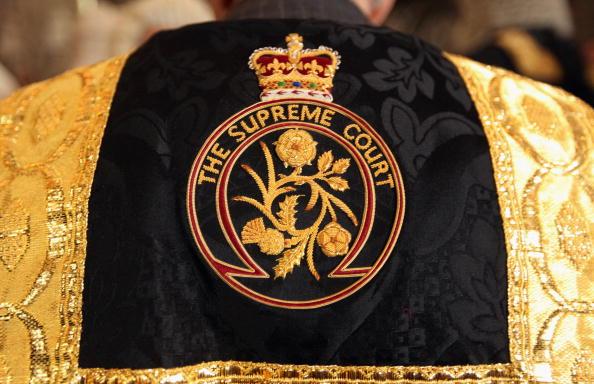
LONDON, ENGLAND - OCTOBER 01: One of the new 11 Justices of the Supreme Court arrives in Westminster Abbey after being sworn in on October 1, 2009 in London, England. The Judges, who are to replace the former Law Lords, mark the start of the legal year with a traditional religious service, arriving from the Royal Courts of Justice for a service which is followed by a procession to The Houses of Parliament and then a reception held by the Lord Chancellor. The ceremony in Westminster Abbey has roots in the religious practice of the judges praying for guidance at the start of the legal year. The custom dates back to the Middle Ages when the High Court was held in Westminster Hall. (Photo by Dan Kitwood/Getty Images)

Recent events in parliament have led many people to ask whether this country needs a proper – or at least written – constitution. This suggests that we do not possess either of these things already. 

This is to some degree misguided, as significant parts of our constitution are already written and enshrined in legislation, all of which can be referenced and relied upon by any citizen. Constitutional principles, however,  are less clear to the non-lawyer. 

For example, how do the various constitutional principles interact with each other? The recent Supreme Court judgment saw the interaction of different constitutional principles – in particular the matter of parliamentary sovereignty – at play. 

These matters can be distilled by the most senior judges in the land, but it is clear that an uncodified constitution can be less easily debated and considered by the non-expert (to use what is now a very loaded term). 

So how do we determine how constitutional principles interact with each other when they appear to be in conflict, and how should principles such as parliamentary sovereignty, the separation of powers, and the rule of law work in practice? 

This is just one of the challenging questions which Brexit has unearthed concerning our constitution – on issues that were never previously considered. 

There have been many others. What is the constitutional status of a referendum? What are the circumstances in which the Prime Minister may prorogue parliament, and for how long? Can the court adjudicate on the exercise of a prerogative power? What even is a prerogative power? The list goes on. 

The nineteenth-century journalist, historian and barrister Sir Sidney Low described our constitution as “a system of tacit understandings – but these understandings themselves are not always understood”. Two centuries later, it appears that this description still rings true. 

How many people (lawyers aside) can explain what a prerogative power actually is? How many members of the public can identify all the sources of our constitution? 

Read more

Qatar Racing takes over sponsorship of £4.4m British Champions Day

Jockey in orange and blue silks on a brown racehorse galloping on a green track, another horse slightly behind.

As the system which determines the framework of government and sets out the relationship between citizen and state, it is curious that, in a developed democracy such as ours, fundamental issues concerning our constitution remain hidden and opaque to a large number of citizens. 

Many would struggle to even name the sources of our unwritten and unconsolidated constitution. The constitutional principles which underpin its various parts remain lesser known still, and are the subject of debate among academics and, more recently, legal argument in the courts. 

Against this backdrop, it is hardly surprising that calls are growing for a written constitution which everyone can read and understand. Formed of various sources, not all of which can be found to be enumerated in a single document, the flexibility which has defined our uncodified constitution  up until this point may now present its greatest challenge. 

A constitution should put certain fundamental issues beyond the agenda of day-to-day politics. Codifying at least parts of ours would provide greater clarity for citizens as they participate in the democratic process.  

The danger presented by fully codified constitutions is that they can often very quickly become fossilised, reflecting social norms of a by-gone era. The American constitution has had to be amended 27 times. 

However, as we prepare to leave the European Union with the possible repeal of existing legislation arising from our membership, now may be the opportune and necessary moment to determine the rights we wish to see protected as fundamental. 

The codification of certain procedural and substantive elements of our constitution may now require our full and proper consideration. 

Main image: Getty

Read more

Ombudsman and River to serve up another Juddmonte thriller

Jockey in blue silks riding a brown racehorse with a white blaze, galloping past a blurred crowd at a racecourse

Share this article

  • Facebook
  • X
  • LinkedIn
  • WhatsApp
  • Email

Similarly tagged content:

Sections

  • News
  • Opinion

Categories

  • Opinion
  • Politics

Related Topics

  • General election 2019
  • London business

Trending Articles

  • Vodafone and Deliveroo look to patch up Reform ties after Yusuf prison threats

  • Trio of firms poised to quit London Stock Exchange as exodus gathers pace

  • Jaguar reveals the Type 01’s screen-free interior

  • Easyjet’s over-60s recruitment push is economically necessary

  • FCA ‘worked backwards’ to justify motor finance redress, say lenders

More from Morning Wire

  • Qatar Racing takes over sponsorship of £4.4m British Champions Day

    Sport Business
    Jockey in orange and blue silks on a brown racehorse galloping on a green track, another horse slightly behind.
  • Ombudsman and River to serve up another Juddmonte thriller

    Sport
    Jockey in blue silks riding a brown racehorse with a white blaze, galloping past a blurred crowd at a racecourse
  • Claude to watermark AI ‘slop’ – including edited human writing

    Tech
    Smartphone displaying the Claude by Anthropic AI assistant app, showing the app icon and interface.
  • Ex-UK minister Robertson rubbishes Ukrainian claims he aided Russia’s Olympic return

    Sport Business
    Sir Hugh Robertson, British Olympic Association, wearing a poppy and name tag, at an event
  • Should Burnham dash for an early election?

    Opinion
    Andy Burnham, wearing a dark suit and glasses, speaks outdoors with trees in the background.
  • Amazon says it buys books in bulk to ‘improve products’

    Tech
    Bloomsbury was voted Publisher of the Year at the British Book Awards 2025.
  • AI powerhouses are betting on London’s future

    Opinion
    Aerial view of Kings Cross St. Pancras station and square, London, with people, buses, and surrounding buildings.
  • Lammy’s cohabitation rules threaten unmarried couples with ‘horrendous’ court costs

    Legal
    Foreign Secretary David Lammy is set to hold talks with officials about Iran and Israel.
MorningWire

Independent European business, markets and political news for decision-makers.

Morning Briefing

Europe

  • Germany
  • France
  • EU Institutions
  • Europe

Business

  • Markets
  • Business
  • Economy
  • Regulation
  • Competition
  • Public Affairs

Editorial

  • Opinion
  • Editorial Policy
  • Corrections
  • Contact

Company

  • About Morning Wire
  • Privacy Policy
  • Terms of Use
  • Cookie Policy
© 2026 Morning Wire Ltd · Published by Morning Wire Media, Bahnhofstrasse 65, 8001 Zürich, Switzerland
Privacy · Terms · Cookies · Facebook