Skip to content
Tuesday 25 August 2026London --:--Frankfurt --:--Zurich --:--
NewslettersSearchEN · DE · FR
MorningWire

European business, markets and politics

FTSE 100
10,854.32
+0.35%
DAX
26,106.60
-0.11%
CAC 40
8,453.01
-0.37%
STOXX 50
6,447.98
-0.22%
  • Europe
  • Markets
  • Business
  • Economy
  • Regulation
  • Politics
  • Opinion
More
GermanyFranceEU InstitutionsCompetitionPublic AffairsBankingTechnologyEnergy
  • Germany
  • France
  • Europe
  • Markets
  • Business
  • Economy
  • Regulation
  • Politics
  • Opinion
  • DE
Wednesday 16 February 2022 6:15 am  |  Updated:  Tuesday 15 February 2022 5:35 pm

The dominance of high street banks is waning as they shun small businesses

By: Rich Wagner

Add as a preferred source on Google
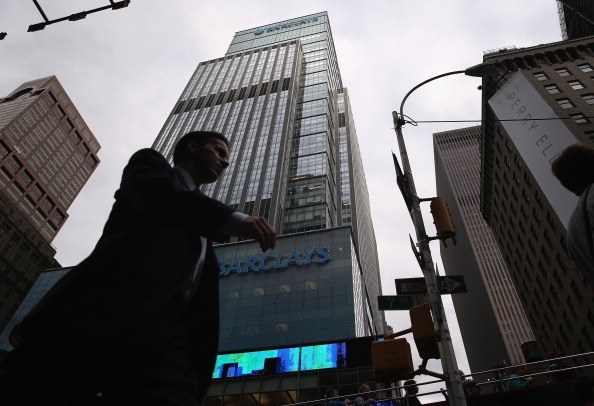
Five Years After Start Of Financial Crisis, Wall Street Continues To Hum
Wall Street: Gross domestic product increased at a 5.2 per cent annualised rate last quarter, revised up from the previously reported 4.9 per cent pace

Shortly after the financial crisis in 2008, a wave of new UK challenger banks and fintechs began to emerge. The challenge facing this new breed of business was stark. How could these upstarts challenge the incumbent behemoths without the vast scale, established branch networks and centuries old name recognition held by the high street banks?

Over a decade later, it’s true that major UK banks maintain a dominant position in the market. But a report published by the FCA last month shows that this dominance appears, at long last, to be waning and that there are signs of real competition in the sector. So why has it taken so long, and what’s changed?

Well, there are those ingrained advantages for a start, as the old saying went, you’re more likely to get divorced than change your bank account. It holds true that, even if a challenger has a compelling offer, they might not be able to get that all-important “primary” relationship with the customer and perhaps many people just don’t want to think that much about their bank account.

But, they will start to take notice when they don’t get what they need from a bank, and there are other options in front of them.

For the clearest example, we need to look at small business banking, where the nearly six million small companies that provide the overwhelming majority of private sector jobs are consistently overlooked and poorly served by high street banks. But these venerable giants are poorly placed to serve many of the customers that need them most.

If you’re a sole trader, freelancer or start-up business, not only will you find the process of opening a high street business current account bureaucratic and painful, but you’ll also struggle to get a small loan, even if it’s just £500 for a laptop. That’s because, as a new business you don’t have a credit history, and big banks don’t want the expense of getting you started. Even if you have millions of pounds of funding sitting in the bank, high street banks still decline business credit card applications all the time; according to Cashplus data from last year, there is around £6bn of unmet credit demand.

The strength and innovation of our world leading fintech sector, and credit where credit is due, the increased pace of licencing and introduction of pro-competition measures from UK regulators, has started to eat into the revenue streams available to big banks. As the FCA’s report also identifies, low interest rates have also put pressure on profitability and big banks are saddled with legacy costs and that pricey (if dwindling) branch network. So, if you’re a small business that’s not eligible for a chunky fixed term loan that might actually be an attractive proposition for a high street bank, forget it.

Many challengers fighting in this space are heavily loss making, and there’s likely a strong, narrow generational appetite for digital banking, but this doesn’t mean high street banks can relax.

Challengers are coming to the fore allowing a wider set of customers to enjoy better, smarter services, designed around them and built for the digital age, so it isn’t a surprise that businesses and consumers are considering, and switching in ever greater numbers.

Read more

The European fintech American dream is being called into question

Wise logo with downward trending stock chart, highlighting fintechs share decline amid Belgium fraud investigation

Share this article

  • Facebook
  • X
  • LinkedIn
  • WhatsApp
  • Email

Similarly tagged content:

Sections

  • Opinion

Categories

  • Opinion

Trending Articles

  • Can debt-ridden Morrisons become a Big Four supermarket again?

  • Ratcliffe’s Ineos saves Runcorn plant

  • As it happened: Stocks rally; US to unveil ‘economic D-Day’ Iran sanctions

  • Amazon says it buys books in bulk to ‘improve products’

  • HMRC mansion tax inspectors to target homes for property valuations

More from Morning Wire

  • The European fintech American dream is being called into question

    Fintech
    Wise logo with downward trending stock chart, highlighting fintechs share decline amid Belgium fraud investigation
  • Big bank bosses on alert as tax noise gets louder under Burnham

    Banking
    Two men, one in a white shirt and red tie, the other in a navy jacket, conversing outdoors.
  • JP Morgan boss issues bank tax warning to John Healey

    Banking
    JPMorgan Chase CEO Jamie Dimon
  • Monitoring the situation: HSBC to add 46 CCTV cameras with ‘face detection’ outside new City HQ

    Banking
    Multiple CCTV security cameras in light blue and white against a green background, emphasizing surveillance and monitoring.
  • ‘Alice in Wonderland’ workspace firm lands £129m Aberdeen-backed finance

    Property
    Modern reception area with unique legs art installation, white desk, and colorful stools.
  • Stamp duty on shares is ‘biggest handbrake’ says UK bank chief

    Markets
    LSEG logo on a large screen inside a modern building with stock tickers and glass ceilings.
  • Anthropic subscriptions overtake OpenAI in the UK, fresh data suggests

    AI
    Smartphone displaying the Claude by Anthropic AI assistant app, showing the app icon and interface.
  • The decline of Harvey Nichols is a tale of London’s decline too

    Opinion
    Harvey Nichols department store at night, illuminated with neon signs and colorful window displays.
MorningWire

Independent European business, markets and political news for decision-makers.

Morning Briefing

Europe

  • Germany
  • France
  • EU Institutions
  • Europe

Business

  • Markets
  • Business
  • Economy
  • Regulation
  • Competition
  • Public Affairs

Editorial

  • Opinion
  • Editorial Policy
  • Corrections
  • Contact

Company

  • About Morning Wire
  • Privacy Policy
  • Terms of Use
  • Cookie Policy
© 2026 Morning Wire Ltd · Published by Morning Wire Media, Bahnhofstrasse 65, 8001 Zürich, Switzerland
Privacy · Terms · Cookies · Facebook