Don’t let the NIMBYs win: Onshore wind is essential to UK’s energy future

President Volodomyr Zelensky’s recent visit to Parliament nearly a year after Russia’s invasion of Ukraine reflected the government’s sustained loyalty to Ukraine, and continuing resolve in the face of soaring energy prices, immense pressure on the global economy and persistent Kremlin aggression.
Yet, if Vladimir Putin had invaded Ukraine dressed up as an Oxfordshire farmer, holding a placard opposing a local wind farm, you can be sure the Tories’ unified stance would have wilted in a matter of seconds – such is its flimsiness in the face of intransigent, vocal minority opposition to green energy projects.
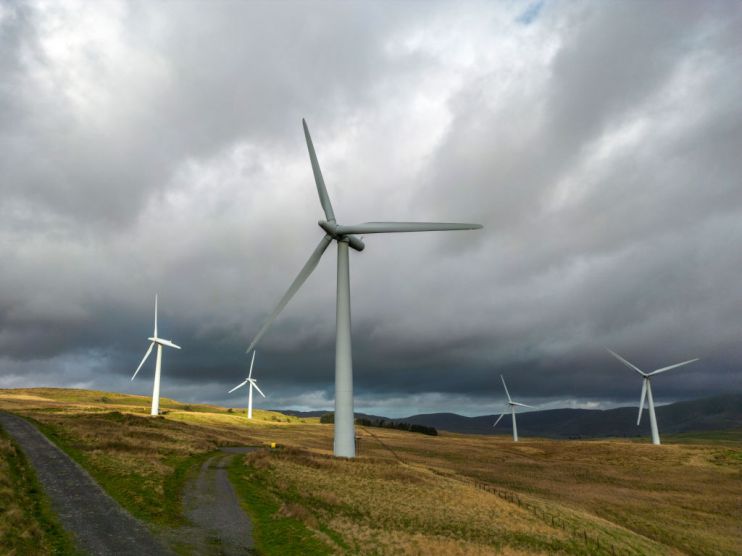
Despite government polling showing 79 per cent support for onshore wind farms in the UK – with only four per cent opposing them – only two turbines were installed in England last year, according to industry body Renewable UK.
Onshore wind developments have dropped sharply since 2016, when former Prime Minister David Cameron pushed through new restrictions – which meant wind farm developers had to show proposed projects are located in an area designated for renewable energy in a local plan, and that they had unanimous support.
However, former cabinet minister and Conservative MP Simon Clarke secured a rare, key victory against NIMBYism two months ago.
Clarke tabled an amendment in December calling for onshore wind planning rules to be liberalised as part of the National Planning Policy Framework, which establishes development rules for building projects.
He gained the support of over 30 MPs including former prime ministers Boris Johnson and Liz Truss and had also been backed by Labour – meaning it had a real chance of progressing.
However, he later shelved the amendment – in exchange for reforms to the draft text, with the bill expected to be voted on in the House of Commons later this year.
This means the de-facto seven-year de-facto ban on new onshore wind projects, could finally be overhauled.
Energy industry raises concerns over pledges
It now turns out Downing Street is looking to ease planning obstacles by reducing requirements for new sites to be in designated land – essentially rewriting restrictive planning footnotes.
Under the reforms, government will only require developers to “appropriately” address local concerns rather than “fully.”
However, Clarke has fired a warning shot at the government, urging them not to water down proposals to ease planning laws for onshore wind developments amid industry concerns the reforms will not do enough to boost the declining industry.
He told City A.M.: “We can’t allow a vocal minority to derail projects supported by most people locally. Instead, we need a system that enables and encourages councils to designate suitable sites for wind farms and ensure these communities benefit from hosting renewables.”
Clarke’s support for onshore wind is not universally shared in the Conservative party.
Two dozen Tory MPs, led by senior backbenchers Sir John Hayes and David Davis, wrote to the Prime Minister Rishi Sunak at the time of the Clarke amendment, urging him to stand firm on the strict planning laws.
Meanwhile, influential BEIS Select Committee member Alexander Stafford believes offshore wind was the more “cost and space effective way” of generating wind-energy.
He told City A.M.: “Not only is there sometimes not enough wind onshore to generate any electricity, onshore turbines can disrupt communities, land, and animals. I am pleased that the government is consulting on changes to the National Planning Policy Framework, and would advocate for local communities to have full control over whether to give permission or not.
This pushback means Clarke’s approach has been collegiate – to appease divisions in the party.
He explains: “We know onshore wind is popular, including with 2019 Conservative voters, and would cut energy bills. This proposal is a step towards unlocking this cheap energy while ensuring communities get a genuine say. My colleagues and I will work with ministers to get the wording right.”
But Renewable UK did not share Clarke’s optimism that onshore wind could be revived purely through changing the wording of planning documents.
It has instead called for planning rules for new turbines to be eased in line with other building projects, to restore investor confidence in the sector.
James Robottom, head of onshore wind at Renewable UK, was disappointed that restrictive rules for onshore wind were being rewritten rather than scrapped.
He said: “After seven years of a de-facto ban in England – it is very difficult to see how the proposed changes to planning will give the industry, communities and businesses the confidence to invest in onshore wind again from a completely standing start.
“The increased complexity and ambiguity only reinforces the fact that onshore wind continues to be treated differently to any other infrastructure in England, at a time when it should be key to increasing energy security, reducing costs and our net-zero goals.”
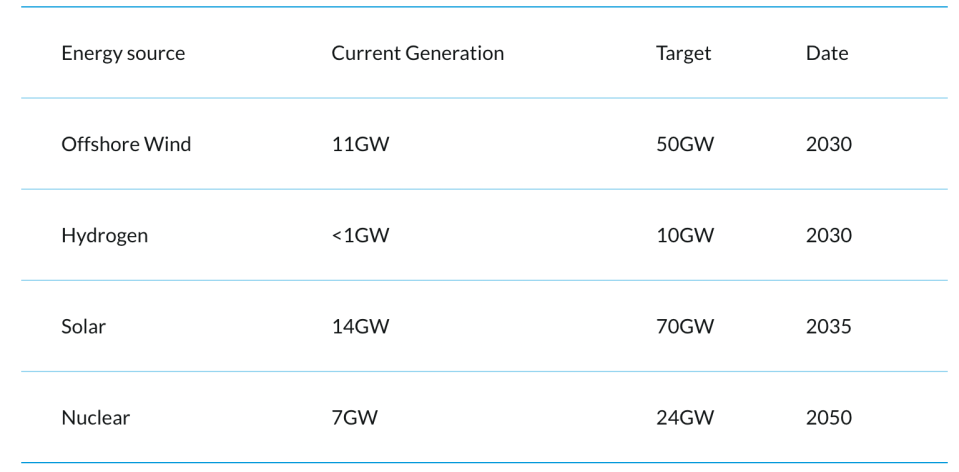
This outlook was shared by environmental think tank Green Alliance, which argued the proof of reforms had to be in the outcome.
Joe Tetlow, Green Alliance’s senior political adviser, said: “I think the government did this consultation on the expectation that it would increase the amount of renewables, such as onshore wind. So, if the end result is for that not to happen – that is just another couple of wasted years, which we can’t afford to have in this energy security crisis.”
When approached for comment, a spokesperson from the department for Levelling Up, Housing and Communities presented a middle-ground for new projects.
A spokesperson said: “Local communities must be at the heart of decision making for onshore wind, which is why we are consulting on changes to national planning policy that determines how these decisions are made. This consultation remains open as we seek and consider a wide range of views.”
It is easy to praise Clarke’s consistent backing of onshore wind, and commitment to easing restrictions – but the industry remains on edge, and if onshore wind is to be revived from its declining role in the UK’s energy sector, bolder action is necessary.
While the government should remain open to further insights and new ideas, the reality remains that onshore wind has stagnated, and a future of cheaper, cleaner energy bills is hugely improved by lifting the energy source from its moratorium.
As Zelensky leaves London, it is worth remembering that the energy crisis the UK has struggled through would have been considerably easier to bear with a resilient onshore wind sector.