Don’t like the OBR? Then stop borrowing so much

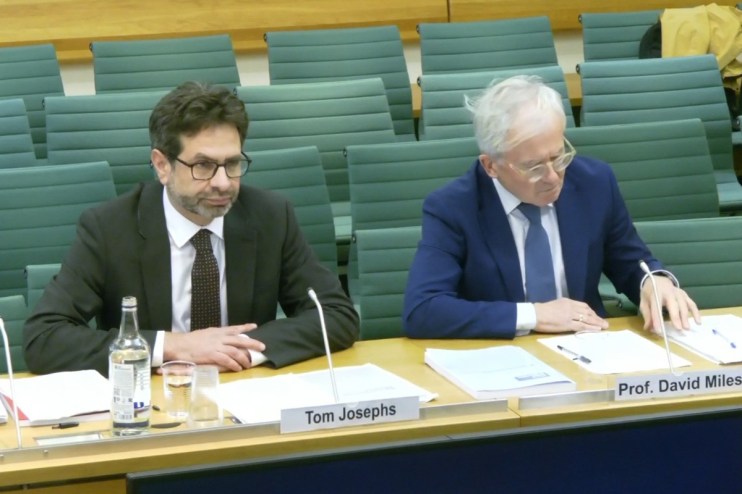
The left and the right have found a common enemy in the OBR, but if governments don’t like having their headroom wiped out by forecasts they should try running a surplus, says Tom Harwood
Voices on the left and the right have found an unlikely common enemy in recent weeks: the much maligned Office for Budget Responsibility.
To the radical right, this is an all too powerful quango stuffed full of establishment Treasury orthodoxy and implacably opposed to the idea of growth boosting tax cuts. To the radical left, this is a monstrous George Osborne creation designed to constrain any left wing government from being able to borrow to invest.
On both left and right, it is claimed freedom of action is limited by the forecasted outcomes this shadowy cabal of economists expect your policy choices to bring about, years down the line.
And there is a little truth to each side’s critiques. Clearly governments of both red and blue hue have found themselves at the mercy of less than reliable forecasting. Forced into tax rises or tax cut U-turns thanks to what faceless bureaucrats project.
Yet, clearly, abolition of the OBR in one fell swoop would force the government into even more extreme measures of fiscal consolidation, delivering even less autonomy, because the bond markets listen to the OBR.
It won’t matter a fig what this annoying and bespectacled bunch of quangocrats forecast of your productivity or tax receipts if you aren’t determined to each and every year borrow to the brim of your allowance
Sidelining the OBR was partly what made the premiership of Liz Truss implode quite so spectacularly. It wasn’t the only reason. But it was a signal to the world that she wasn’t the iron clad fiscal conservative many who elected her had presumed.
Let’s not forget Truss had spent the entire leadership election promising the Tory selectorate no big spending bailouts and no socialist price fixes in response to the looming energy crisis.
Responding to a question on what was then seen as a looming energy bill crisis, in a hustings on 9th August 2022, Truss explicitly told the Tory Party faithful “what I don’t support is taking money off people in tax and then giving it back to them in handouts. That to me is Gordon Brown economics.”
This was widely reported as Truss refusing energy bailouts. Only for her first act upon becoming Prime Minister, to be the announcement of an enormous spending package, forecast to cost up to £200bn, paying for half the country’s energy bills.
Spending to the limit markets will allow
Ignoring the OBR did not increase Liz Truss’s room for maneuver. It limited her. Gilt yields spiked and we know how that story ended.
Each and every budget since has seen the spectre of the OBR hanging like a sword of Damocles over the head of each successive Chancellor.
We haven’t always worried about such forecasts, simply because we haven’t always had Chancellors who were determined to spend to the very limit of their own borrowing rules.
In 2014, when George Osborne saw himself on a mission to eliminate the deficit – not spend to the high waterline of what markets might bear – OBR revisions or forecasts were simply redundant against his £80bn of headroom. A far cry from Rachel Reeves’easily revised away £9.9bn.
In truth the way to ‘abolish’ the OBR is to render it redundant. It won’t matter a fig what this annoying and bespectacled bunch of quangocrats forecast of your productivity or tax receipts if you aren’t determined to each and every year borrow to the brim of your allowance.
The more a future Chancellor cuts spending, the more the OBR retreats into irrelevance. The spending watchdog only bites if you are consistently spending more than you can afford. And bond markets only bite if you are overwhelmingly indebted to them, with poor prospects for a return to national solvency.
So how could a new government accomplish the hitherto fiendishly difficult, devilish task of kicking the OBR into the dustbin of insignificance? It’s actually rather simple. Run a bloody surplus.
Tom Harwood is deputy political editor of GB News