Don’t suffer in silence over women’s health: contact your GP practice
If your periods or menopause symptoms affect your daily life, don’t suffer in silence. There are a wide range of symptoms that can have a huge impact on everything from a woman’s work-life to personal relationships and mental health. Sometimes these can be warning signs for something serious while others can be more easily treatable: the important thing is to contact your GP practice as soon as you feel something is wrong.
If your periods or menopause symptoms affect your daily life, don’t suffer in silence.
Despite the toll they can take on the lives of women and girls, gynaecological conditions often go unreported, with symptoms being perceived as ‘normal’ or not taken seriously. There is also a perception that help might not be available, when in fact your GP practice will have healthcare professionals trained to deal with situations just like yours.
Professor Dame Lesley Regan, Women’s Health Ambassador for England says: “Heavy or painful periods can seriously impact women’s lives, making learning, working and caring more difficult. They can also be a sign of health conditions that need attention. There is treatment available, so I urge all women to know the signs of a problem period. If your periods prevent you getting on with daily life, please do not hesitate to seek advice. Your local GP practice or women’s health hub can direct you to the help you may need.”
Endometriosis is a relatively common condition that can have a massive impact on women’s lives. This occurs when tissue similar to the lining of the womb grows in other places, such as the ovaries and fallopian tubes. It’s a long-term condition that can affect women of any age, including teenagers. Symptoms vary but it is often debilitating. Look out for pain in your lower tummy or back (pelvic pain) – usually worse during your period; period pain that stops you doing your normal activities; pain during or after sex; pain when peeing or pooing during your period; feeling sick, constipation, diarrhoea, or blood in your pee or poo during your period; difficulty getting pregnant; heavy periods that might use lots of pads or tampons, or lead to bleeding through to your clothes.
Painful or especially heavy periods can also be cause to contact your GP practice, especially if you faint when you have your period; have to stay in bed when you have your period due to severe pain or heavy bleeding; your periods become more painful, heavier or irregular; you’re bleeding between periods or after sex; your periods are affecting your life; you’ve had heavy periods for some time; you have severe pain during your periods; you have heavy periods and other symptoms such as pain when peeing, pooing or having sex.
Period pain usually happens to women around the start of their period.
You should also look out for signs of menopause and perimenopause. Menopause is when your periods stop due to lower hormone levels. It usually affects women between the ages of 45 and 55, but it can happen earlier, either naturally or be caused by treatment for other conditions. Perimenopause is when you have symptoms of menopause but your periods have not stopped.
If symptoms including anxiety, mood swings, brain fog, hot flushes, insomnia, fatigue, joint pains, low libido, pelvic pain, prolapse, bladder symptoms, heavy, painful or irregular periods, bleeding after sex and irregular periods affect your daily life, there are things you can do that will help. There are also medicines that can replace the missing hormones and help relieve your symptoms.
Dr Kate Barber, GP and Clinical Lead, says: “If you have symptoms you think might be menopause, are bothersome, persistent or something just doesn’t feel right then please see your doctor who can assess and advise, don’t put it off, get help today.”
The key message is not to suffer in silence. Nobody knows your body like you do so if something feels wrong, contact your GP practice right away.
For more information on the issues in this article go to www.nhs.uk/womens-health
Shazia Ginai, 40 Hertfordshire
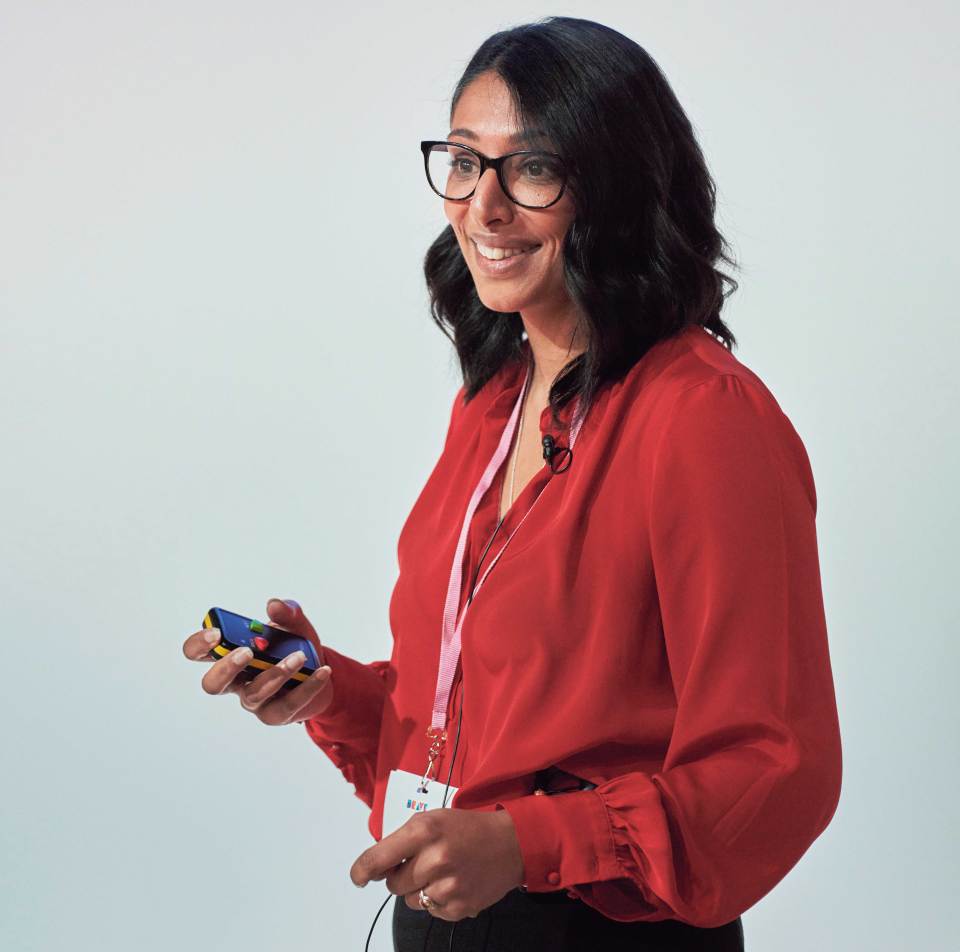
“The best thing you can do for yourself is take the time to really know what your body’s doing and why,” says Shazia Ginai.
The best thing you can do for yourself is take the time to really know what your body’s doing and why.
Shazia Ginai.
Now 40 years old, the chief marketing officer’s problem periods started at 14.
“I’d had very painful, very heavy periods for a number of years and when I was about 20 my GP said, ‘let’s get you checked out’.”
Shazia, who lives in Hertfordshire, was sent for a pelvic scan because the GP thought she was suffering from polycystic ovary syndrome, but the scan showed that her uterus and ovaries were healthy.
“It wasn’t until I was 25 when I went back to the GP and said ‘look, something is really not right’.”
She had more tests done and was eventually diagnosed with endometriosis, thanks to a GP who specialised in women’s health. Her first surgery took place at 26, and she had another operation at 35 and her third last year.
“I ended up with a great GP who was well-versed in understanding endometriosis,” Shazia says.
“One of the things I loved about them was whenever I’d go in after that first surgery, they were really good at going, ‘If you are concerned, you know your body better than anyone so why don’t we investigate?’ I’m really fortunate.”
At her worst with the endometriosis, which Shazia describes as “aggressive”, she was having periods that lasted for almost two weeks, every two weeks.
“Pain management is a huge thing. I’d have my TENS machine, my heat patches, my hot water bottles and my painkillers. But in addition to that, fatigue and being in pain mean that your entire routine can collapse.”
She recommends keeping a journal of symptoms, and if someone suspects they have the condition, to ask their GP practice for an investigation.
“Always say, ‘I know my body well, these are the things that I’m experiencing, I suspect it is endometriosis.’”