Don’t turn BBC reform into a political football

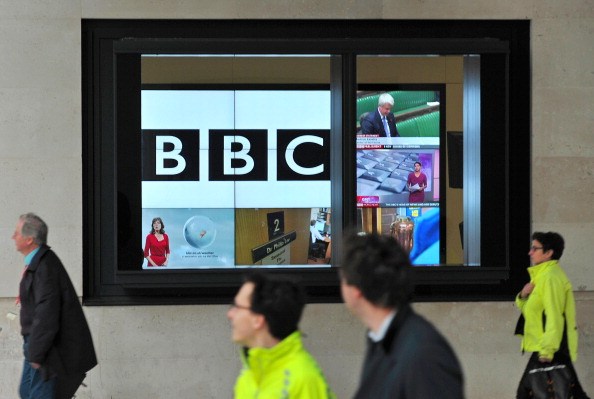
Move over Brexit, there’s a new B-word battle: over the fate of the BBC.
Dominic Cummings, the Prime Minister’s chief adviser, has had the broadcaster in his sights for some time, with reports from his think tank in 2004 suggesting axing it altogether.
Opening shots were fired after December’s election, when Cummings imposed a ministerial boycott of key BBC News programmes.
Seeing that the new government was gearing up for a fight, the BBC went on the pre-emptive offence, announcing the end of the much-loved Victoria Derbyshire programme. The message — that cuts would be sure to whip up public outrage against the government — was clear.
This week, culture secretary Baroness Nicky Morgan opened fire on a new front, launching a consultation into the decriminalisation of non-payment of the licence fee, whose funding preserves the BBC’s independence. It seems likely that this will be downgraded to a civil rather than a criminal offence, which, while more proportionate, could cost the institution £200m a year in non-payment.
The BBC is an undisputed behemoth — with nine TV channels, 40 radio stations, a host of regional and global offerings, plus a world-class news website and streaming service. The licence fee, which is required to watch any live UK TV at all, brings in a staggering £4.88bn. It is widely unpopular, and growing less relevant as viewer habits and demographics change. Therein lies the problem.
The argument is often made that the BBC should not try to compete with commercial channels, and therefore has no reason for the eye-watering salaries paid to some of its stars (Gary Lineker’s £1.75m comes to mind). And reality TV shows like Strictly Come Dancing and The Apprentice, for example, hardly seem the best way for the BBC to fulfil its core mission to “inform, educate and entertain” the nation.
But the opposite charge is also frequently levelled: that the BBC is “out of touch” with mainstream viewers, particularly those under 35, and must demonstrate its relevance to secure its funding. This was what Morgan echoed this week, when she compared the future of the Beeb to the ill-fated Blockbuster.
If the BBC is constantly being asked to prove its popularity, the most fail-safe way is to point to viewing figures. Thus the rationale behind commissioning programmes guaranteed to draw in the largest audiences is obvious.
What, then, is the BBC to do? Chase the ratings and leave itself open to accusations of funds misspent, or stick to the basics and field complaints that its offering does not compare to Netflix and Amazon?
This should be the fundamental question at the heart of any reform of the BBC or its funding model.
Clearly, our national broadcaster does serve a unique purpose. We would undoubtedly miss it if it were gone, particularly its news offering. According to the Reuters Institute, it was by far the most widely used news source during the election, used by nearly half (44 per cent) of Brits to get campaign information.
It also serves a role on the international stage. Brand Finance’s 2019 index of the most valuable British brands ranked the BBC at 22, ahead of iconic names like Burberry, British Airways and Rolls-Royce.
And as its own mission statement says: “The BBC should provide high-quality news coverage to international audiences, firmly based on British values of accuracy, impartiality, and fairness.”
In places that lack the UK’s commitment to a free press, the BBC’s role as a trusted source of news cannot be underestimated. Consider the value of BBC Persia to an Iranian audience.
None of this means that it can stand still. It is inefficient to have multiple teams of journalists from similar programmes working on the same stories, for example, or flying en masse to cover the same events.
The reforms announced last month seem broadly sensible (although cutting 450 journalist jobs is questionable, considering some of the salaries paid to top executives and presenters). People are changing how they consume news and entertainment, and the BBC must adapt.
But that adaptation will be impossible without an understanding both within the organisation and in Downing Street that the BBC’s core functions should be protected.
Maybe that means a “two-tier” licence fee, with the news and educational offerings ringfenced through a lower base fee, and the BBC’s entertainment content spun off and run as a Netflix-style subscription service. Or maybe it means reducing and decriminalising the licence fee, but no longer using ratings as a metric for success so the money can be better targeted.
But regardless, the government’s Beeb-bashing is unhelpful. Morgan is right to look for ways that the BBC can evolve, but wrong to compare a public service broadcaster burdened with numerous conflicting responsibilities to the fate of a commercial entity like Blockbuster. And the Downing Street BBC boycott makes the government look not only petty, but like it is out to destroy a cherished British institution.
Emotions in Whitehall might be running high, but for BBC reform to be a success, it must be a pragmatic, not political, project. Both sides must lay down their weapons, step away from the battlelines, and figure out how best to safeguard and upgrade a core British asset for a new digital world.
Main image credit: Getty