Skip to content
Sunday 23 August 2026London --:--Frankfurt --:--Zurich --:--
NewslettersSearchEN · DE · FR
MorningWire

European business, markets and politics

FTSE 100
10,816.56
+0.64%
DAX
26,136.56
+0.59%
CAC 40
8,484.43
+0.37%
STOXX 50
6,462.22
+0.63%
  • Europe
  • Markets
  • Business
  • Economy
  • Regulation
  • Politics
  • Opinion
More
GermanyFranceEU InstitutionsCompetitionPublic AffairsBankingTechnologyEnergy
  • Germany
  • France
  • Europe
  • Markets
  • Business
  • Economy
  • Regulation
  • Politics
  • Opinion
  • DE
Monday 22 July 2019 4:02 am  |  Updated:  Sunday 21 July 2019 6:38 pm

Don’t underestimate the importance of the Strait of Hormuz to the global economy

By: Bob Sanguinetti

Add as a preferred source on Google
The boss of Infrastrata threatened staff with unpaid leave if they did not come into the office during the November lockdown.

If last week’s obstruction of a British tanker in the Strait of Hormuz did not illustrate the dangers our seafarers face, we were furnished with further proof on Friday, when Iran seized the Stena Impero in international waters. 

Only the timely intervention of a Royal Navy frigate had secured the safe passage of the British Heritage, but it was too late for the Swedish-owned and British-flagged Stena Impero, which was taken swiftly into Iranian waters after its seizure.

It is only the latest development in a series of alarming events in the Gulf. Tensions between the US and Iran – recently reflected in the downing of an Iranian drone by US jammer technology – are rising. 

Iran has made it plain that it will not ignore the seizure off Gibraltar of Grace I, which was acting in breach of EU sanctions. Yet it seems that even during a volatile period, we take for granted that our ships will move smoothly around the globe.

This is by no means a given, however, and the stakes are high. 

The Strait of Hormuz is a choke point through which one fifth of the world’s oil moves. Some 30 per cent of global liquefied natural gas trade, as well as five per cent and 13 per cent of UK oil and gas respectively, pass through it. It is no exaggeration to say that securing the Strait of Hormuz is an imperative for the UK economy, and indeed for the wider world.

Yet without domestic support and international collaboration, this could become increasingly difficult. The Strait is just 21 miles wide, which means that any ship passing through must enter Iranian territorial waters on the way in, and Omani waters on the way out. 

The accidental interruption of the passage of ships through the Strait is already likely, but in these highly charged circumstances, there is every possibility that incidents similar to the Iranian seizure of the Stena Impero will happen again.

There is no doubt that the actions of Iran, as a signatory of the UN Convention on the Law of the Sea, were unacceptable, as well as deliberate. And as others have pointed out, Iran has long threatened to close the Strait of Hormuz. 

Read more

As it happened: FTSE 100 falls as Iran and US clash over Strait of Hormuz; Oil stockpiles ‘rapidly depleting’

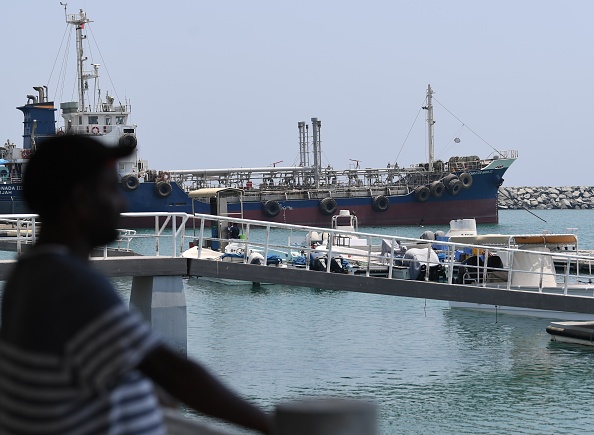
Bustling shipping activity in the Strait of Hormuz with tankers and cargo ships navigating Iranian waters.

Most sinister and concerning was Iran’s foreign ministry spokesman’s comments to IRNA news in the wake of the British seizure of the Iranian oil tanker Grace I. “This is a dangerous game and has consequences,” he said. 

The good news is that, through international collaboration, this threat can be neutralised. The “coalition of allies” plan proposed by the US is one way to do this, and we fully support it. Freedom of navigation, and therefore the safe passage of goods, must be protected.

This freedom is a fundamental principle of customary international law, which states that “ships flying the flag of any sovereign state shall not suffer interference from other states”. Any violation of this principle puts at risk the entire system of global seaborne trade and the interconnectedness of nations on which we rely for our economic stability. 

We are fortunate: the Royal Navy’s efforts in the region have been outstanding. Equally, the Combined Maritime Forces, a partnership of 33 nations, have been effective in keeping it secure. 

But as additional Royal Navy ships head for the Arabian Gulf, we should nevertheless remind ourselves that an international solution aimed at the swift de-escalation of tensions should be our ultimate goal.

For shipping to maintain this security, we must reach an international consensus on the legal way forward. We must come to an agreement that guarantees the safety of ships passing through the Strait, in the same way that international ship owners and seafarers feel safe in the Dover Straits, much closer to home. 

And we must not forget its global economic importance.

Main image credit: Getty

Read more

As it happened: Stocks rise despite new tensions in Strait of Hormuz; Oil price climbs

Bustling shipping activity in the Strait of Hormuz with tankers and cargo ships navigating Iranian waters.

Share this article

  • Facebook
  • X
  • LinkedIn
  • WhatsApp
  • Email

Similarly tagged content:

Sections

  • News
  • Opinion

Categories

  • Business
  • Opinion

Related Topics

  • International

Trending Articles

  • Ratcliffe’s Ineos saves Runcorn plant

  • Mike Ashley’s Frasers offers to pay personal shoppers in Harvey Nichols takeover

  • Can debt-ridden Morrisons become a Big Four supermarket again?

  • Amazon says it buys books in bulk to ‘improve products’

  • Burnham predicted to raise taxes for ‘fundamental’ cost of living support

More from Morning Wire

  • As it happened: FTSE 100 falls as Iran and US clash over Strait of Hormuz; Oil stockpiles ‘rapidly depleting’

    FTSE 100 Live
    Bustling shipping activity in the Strait of Hormuz with tankers and cargo ships navigating Iranian waters.
  • As it happened: Stocks rise despite new tensions in Strait of Hormuz; Oil price climbs

    FTSE 100 Live
    Bustling shipping activity in the Strait of Hormuz with tankers and cargo ships navigating Iranian waters.
  • As It Happened: Stocks dip as oil’s ‘slowing demand’ in focus; Iran threatens to extend war

    FTSE 100 Live
    People on a beach with cargo ships and a small boat in the Strait of Hormuz
  • As it happened: Intel, Arm shares slide; Oil climbs higher

    FTSE 100 Live
    Donald Trump smiling and holding a small golden ball, wearing a blue suit and red tie.
  • Oil price falls but Trump and Iran clash on negotiations claim

    Markets
    Donald Trump smiling in a blue suit and tie with an American flag pin, US flag in background
  • As it happened: FTSE 100 drops as oil prices rise after Trump makes Hormuz threat

    FTSE 100 Live
    Donald Trump speaking at a podium, microphone visible, discussing the Strait of Hormuz
  • As it happened: Stocks fall into red as oil fluctuates over Middle East developments

    FTSE 100 Live
    Large oil tanker navigating a strait under a cloudy sky, impacting oil prices and global trade.
  • As it happened: FTSE 100 mixed; oil breaks $91 as Trump rules out new US-Iran ceasefire

    FTSE 100 Live
    Donald Trump speaking emphatically at a podium, wearing a navy suit and blue tie, with a microphone and lights visible.
MorningWire

Independent European business, markets and political news for decision-makers.

Morning Briefing

Europe

  • Germany
  • France
  • EU Institutions
  • Europe

Business

  • Markets
  • Business
  • Economy
  • Regulation
  • Competition
  • Public Affairs

Editorial

  • Opinion
  • Editorial Policy
  • Corrections
  • Contact

Company

  • About Morning Wire
  • Privacy Policy
  • Terms of Use
  • Cookie Policy
© 2026 Morning Wire Ltd · Published by Morning Wire Media, Bahnhofstrasse 65, 8001 Zürich, Switzerland
Privacy · Terms · Cookies · Facebook