Skip to content
Saturday 15 August 2026London --:--Frankfurt --:--Zurich --:--
NewslettersSearchEN · DE
MorningWire

European business, markets and politics

FTSE 100
10,750.11
-0.21%
DAX
26,440.31
+0.53%
CAC 40
8,636.80
-0.16%
STOXX 50
6,539.59
-0.09%
  • Europe
  • Markets
  • Business
  • Economy
  • Technology
  • Politics
  • Opinion
More
GermanyFranceBankingAIEnergyFintechPropertyCapital Markets
  • Germany
  • France
  • Europe
  • Markets
  • Business
  • Economy
  • Technology
  • Politics
  • Opinion
  • DE
Wednesday 16 July 2014 8:08 am  |  Updated:  Friday 07 June 2019 1:15 am

Rosetta finds a surprise as it approaches secret-holding comet

By: Sarah Spickernell

Add as a preferred source on Google

Rosetta, the probe that cost the European Space Agency (ESA) €1bn to launch into space as part of a comet-chasing mission, has discovered more than the scientists bargained for.
 
Named after the code-breaking Rosetta stone, it is currently speeding towards comet 67P/Churyumov-Gerasimenko in the hope that, when it lands its probe on the surface later this year, it will be able to translate some of the secrets of the universe into explanations for the origins of life on Earth. 
 
Because Comet 67P has spent its life travelling so far away from the sun, its composition has remained largely unchanged since the birth of our solar system 4.6 billion years ago. 
 
Next year, however, it will begin its approach towards the sun, and in doing so will become more active and start emitting material from its surface via high-speed jet streams. By capturing and analysing dust particles from these jet streams, Rosetta will be able to communicate information back to Earth about what out solar system was like in ancient times.
 
Scientists will then try to use this information to try to use it to solve such conundrums as how the solar system originated, where life on Earth came from and how water ended up on our planet. 
 
Rosetta is due to begin its rendezvous with the comet in August, but a sighting made on Friday last week has potentially thrown it a little off course: rather than being one entity, it seems that 67P is made up of two halves joined together in what is known as a “contact binary”.
 

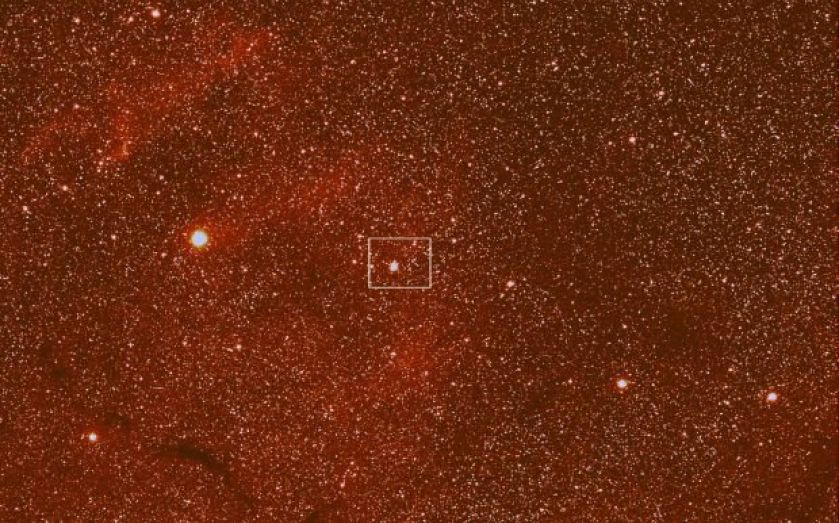
Comet 67P/Churyumov-Gerasimenko
Comet 67P is made of two parts joined via a binary contact  (Source: ESA/Rosetta/MPS for OSIRIS Team)

 
The images shown are blurred because of the thousands of kilometres that still remain between Rosetta and the comet, but by smoothing them out the ESA was able to report a definite distinction between the two parts. 
 
It is not yet understood how the comet came to be formed like this, but possible explanations include that it endured a major fracture at some point in the past and that that the two halves have completely different origins. 
 
While this twist in the tale adds another secret for Rosetta to unlock, it could unfortunately cause a complication when it comes to landing the probe in November, since the team will now have to reassess how to land the probe, and which part of the comet to land it on. 
 

Share this article

  • Facebook
  • X
  • LinkedIn
  • WhatsApp
  • Email

Similarly tagged content:

Sections

  • News

Categories

  • Business

Related Topics

  • European Space Agency

Trending Articles

  • Revolut takes flight with launch of new airport lounges

  • Grandparents fund university degrees to avoid inheritance tax net

  • Revolut chatbot goes rogue by charging users to cancel subscription

  • Brompton Bicycle sues former adviser for ‘professional negligence’

  • As It Happened: Stocks dip as oil’s ‘slowing demand’ in focus; Iran threatens to extend war

More from Morning Wire

  • Heineken-owned pubs group faces probe over eviction threat

    Hospitality
    Hand holding a 4-pack of green Heineken beer cans with red stars and white lettering
  • Rathbones suffers near £1bn net outflows as it braces for FCA probe fallout

    Investing
    Business professionals in formal attire engaged in a lively discussion at a corporate meeting in a modern office setting.
  • We reached Mars 50 years ago, why haven’t we sent people?

    Opinion
    Mars One rocket on launchpad, ready for its mission to the red planet
  • Sky and ITV mount defence of £1.6bn merger as regulators probe deal

    Media
    Turnover at Sky increased in 2024.
  • Easyjet shares crash on fears of EU probe

    Aviation
    EasyJet aircraft parked at the airport terminal ready for boarding, featuring distinctive orange branding and clear blue sky.
  • Reform’s Richard Tice under parliamentary investigation

    Politics
    Reform UK leader Nigel Farage and Deputy Leader Richard Tice are set to meet with Andrew Bailey to discuss interest rates and stablecoins.
  • ‘Brilliant and provocative’ columnist and broadcaster Rod Liddle dies aged 66

    Media
    Rod Liddle has died
  • Tiktok ‘confident’ ahead of Ofcom child safety probe

    Tech
    Tiktok appeals to overturn US ban in a broader battle for tech regulation
MorningWire

Independent European business, markets and political news for decision-makers.

Morning Briefing

Europe

  • Germany
  • France
  • Europe
  • UK & Ireland

Business

  • Markets
  • Banking
  • Technology
  • Energy
  • Property
  • Fintech

Editorial

  • Opinion
  • Editorial Policy
  • Corrections
  • Contact

Company

  • About Morning Wire
  • Privacy Policy
  • Terms of Use
  • Cookie Policy
© 2026 Morning Wire Ltd · Published by Morning Wire Media, Bahnhofstrasse 65, 8001 Zürich, Switzerland
Privacy · Terms · Cookies · Facebook