Skip to content
Friday 7 August 2026London --:--Frankfurt --:--Zurich --:--
NewslettersSearchEN · DE
MorningWire

European business, markets and politics

FTSE 100
10,901.09
+0.31%
DAX
26,319.45
+0.69%
CAC 40
8,714.93
+0.17%
STOXX 50
6,523.86
+0.33%
  • Europe
  • Markets
  • Business
  • Economy
  • Technology
  • Politics
  • Opinion
More
GermanyFranceBankingAIEnergyFintechPropertyCapital Markets
  • Germany
  • France
  • Europe
  • Markets
  • Business
  • Economy
  • Technology
  • Politics
  • Opinion
  • DE
Wednesday 02 April 2025 5:34 am  |  Updated:  Tuesday 01 April 2025 3:45 pm

Economics 101: consumers always pay for tariffs

By: Daniel Freeman

Add as a preferred source on Google
Data from the travel tech firm Navan shows year-to-date bookings for UK-US corporate trips have risen by nearly a quarter year-on-year.

If there’s one thing every economist agrees on, it’s that the only people who benefir from tariffs are cynical politicians, says Daniel Freeman

Economists almost never agree on anything. Even if you ask a single economist their view on a subject they will generally give you at least three contradictory positions.  

This makes the overwhelming consensus among economists across the political spectrum in favour of free trade and against tariffs – taxes on imported goods – all the more remarkable. 

The reasons for this consensus are numerous and well evidenced: tariffs result in higher costs for your own consumers and producers that buy foreign inputs, they shift investment and labour away from more productive industries into less productive ones, and they reduce the specialisation which drives much economic growth.  

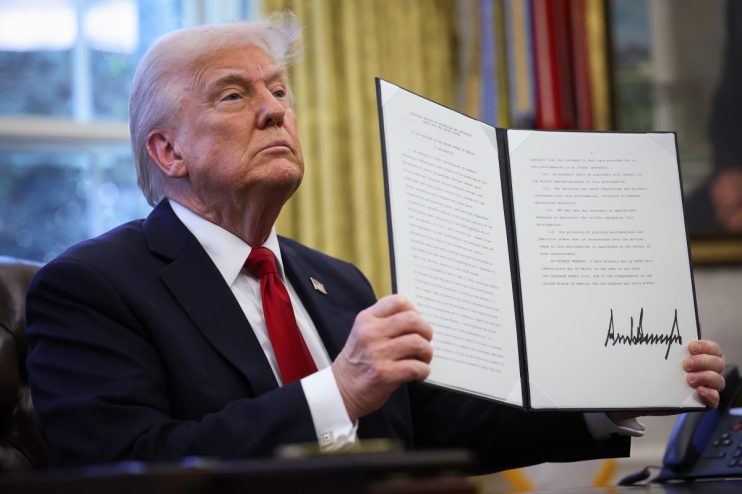
And yet the world’s largest economy under the leadership of President Trump is now heading in the opposite direction. The US has now imposed tariffs on various countries and goods. The UK is expecting to be hit by a 25 per cent on all cars imported into the US from today.   

Trump’s protectionist argument goes like this: for decades the US has been reducing tariffs and buying more goods from abroad. This weakened the US manufacturing sector as Americans chose to buy more foreign goods that are cheaper, higher quality or both. 

It also means the US runs a trade deficit (meaning it imports more than it exports) with many countries. This is a bad thing because the US is sending them more money than they’re using to buy goods from America.  

The solution to both these problems, they say, is to raise tariffs making foreign goods more expensive for American consumers and therefore boosting demand for US produced goods.  

Read more

‘I thought this would be drama-free’: Games Workshop pockets tariff reprieve

Games Workshop joined the FTSE 100 at the end of last year.

There are numerous issues with this. While it’s true that the US, like most other rich countries, buys more manufactured goods from abroad than they once did. But this has not been accompanied by a long-run rise in unemployment or reduced growth, in fact the result has been the opposite as people and investment have shifted into higher value sectors in which developed countries have more of a competitive edge.  

The idea that running a trade deficit with another country is a sign you’re being taken advantage of is absurd. You could just as easily say that I must be being conned by my nearest Chinese takeaway, because I’ve spent hundreds of pounds there and yet they have never bought anything from me. 

The economic equivalent of snake oil

So why do politicians support the economic equivalent of snake oil?  

Partly there is a nostalgic element to protectionism, particularly in the US. Trump has made repeated references to the high tariffs of America’s late 19th century Gilded Age as a model to follow – even if the work of economic historians like Douglas Irwin and Alex Klein has shown the US industrialised in spite of a high tariff regime not because of it.  

But there is an appeal to tariffs in that they allow politicians to pose as defenders of certain industries while the cost of doing so is diffused across society and therefore less likely to be noticed.  

An example of this is the first Trump administration’s imposition of tariffs on washing machines. This did lead to the establishment of a few new washing machine plants in the US which was of course trumpeted as a great success for the tariff regime. What was less obvious was (as a later study found) that every additional job in the US manufacturing cost American consumers over $800,000 (£627,000) in higher costs per year.   

Tariffs make people dependent on the state maintaining the tariff regime and therefore more likely to support the politicians who impose them in future. Trump may cynically claim that the bill is being paid by foreigners. But the reality is that trade enriches everyone and when it is choked off, especially in an arbitrary and random way, we all pick up the tab. 

Daniel Freeman is managing editor at the Institute of Economic Affairs

Read more

As it happened: Stocks jump as oil drops below $100; Trump in tariff blitz

Donald Trump speaking at a press conference with microphones, blue sky background

Share this article

  • Facebook
  • X
  • LinkedIn
  • WhatsApp
  • Email

Similarly tagged content:

Sections

  • Opinion

Categories

  • Opinion

People & Organisations

  • Donald Trump
  • imports
  • tariff
  • Tax
  • US Economy

Trending Articles

  • Revolut founder’s wealth set to balloon amid talks of share award at $500bn valuation

  • Rupert Lowe axes pensions triple lock and pledges tax cuts in economic plan

  • WPP slashes jobs as revenue continues to fall

  • Liverpool owners tipped to sell – but not to Amazon boss Bezos – by former CEO

  • As it happened: Stocks rise as oil fluctuates after Red Sea attack; US-Iran deal ‘being circulated’

More from Morning Wire

  • ‘I thought this would be drama-free’: Games Workshop pockets tariff reprieve

    Retail
    Games Workshop joined the FTSE 100 at the end of last year.
  • As it happened: Stocks jump as oil drops below $100; Trump in tariff blitz

    Markets
    Donald Trump speaking at a press conference with microphones, blue sky background
  • Vehicle production drops in first half of year

    Transport & Infrastructure
    Car bodies on an assembly line in a UK car plant, showcasing EV manufacturing process
  • Donald Trump is creeping towards a shrewd sanctions policy

    Opinion
    Donald Trump holding a red TRUMP 2028 hat, wearing a tuxedo with an American flag in the background
  • UK inks trade deal with Switzerland – despite shouting match

    Politics
    UK and Switzerland officials signing a trade deal, highlighting international services agreement and bilateral cooperation
  • ‘Door is open’ to interest rate hike as inflation fears return

    Economics
    Bank of England headquarters in 2025, showcasing modern architecture and iconic London skyline in the background.
  • Singapore on Thames or the Sick Man of Europe?: The Economics of Brexit Ten Years from the Referendum 

    Opinion
    UK-EU Brexit negotiations meeting with officials discussing trade agreements and policy impacts in a formal conference room
  • Will Drastic Dave live up to his name at Diageo?

    Retail
    Dave Lewis, former Tesco CEO, smiling in a supermarket aisle with products on shelves
MorningWire

Independent European business, markets and political news for decision-makers.

Morning Briefing

Europe

  • Germany
  • France
  • Europe
  • UK & Ireland

Business

  • Markets
  • Banking
  • Technology
  • Energy
  • Property
  • Fintech

Editorial

  • Opinion
  • Editorial Policy
  • Corrections
  • Contact

Company

  • About Morning Wire
  • Privacy Policy
  • Terms of Use
  • Cookie Policy
© 2026 Morning Wire Ltd · Published by Morning Wire Media, Bahnhofstrasse 65, 8001 Zürich, Switzerland
Privacy · Terms · Cookies · Facebook