Ed Warner: Why IOC is worst of both worlds for sporting democracy

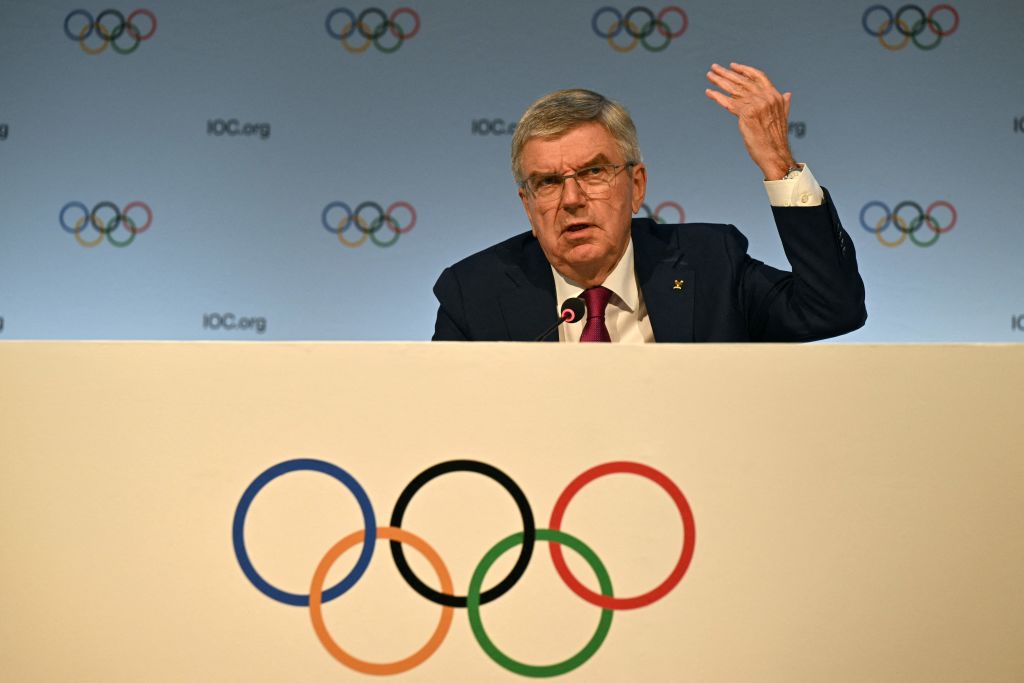
Thomas Bach blushes unconvincingly at his acolytes’ entreaties to stay on as president for four more years than the International Olympic Committee charter allows. Welcome to the world of sporting democracy.
“One member, one vote” has moral appeal but troublesome consequences. Hard to call out sub-par leaders though without coming over all imperial. There must be a better way.
World Athletics used to boast that it had more member federations than there are states in the United Nations. The current count is 214 to 193 in the governing body’s favour. Each federation gets an equal vote on major constitutional issues, including elections to the ruling council.
Last week, a former member of that council wrote a considered piece bemoaning the negative effects of this egalitarianism. It was brave in its way, and laudable for that. Helmut Diegel is a German who served for 20 years on the council.
In my experience, he was definitely one of the good guys and will have been in enough smoke-filled rooms to know what he’s talking about. (Diegel would not, quite rightly, have the opportunity for a two-decade term of office under the current constitution though).
For much of my time in athletics, the Oceania representative on the global ruling council hailed from Norfolk Island, an Australian territory with a population of just 2,188 at the last census. Geoff Gardener’s tiny federation never troubled the medal tables and his presence might have owed most to the Oceania nations’ inherent suspicion of Australia.
Gardener was though a thoroughly decent servant of the sport, which is more than can be said of some others elected – and who may lie behind Diegel’s advocacy of voting power being concentrated instead in those nations who make the biggest contribution to a sport. Sometimes you just needed to clock who was quaffing wine in hospitality out of sight of the athletics.
Trouble is, loading major nations with extra votes, as Diegel advocates, is no guarantee of higher quality rulers – or even more honest ones. Some sports do eschew universal suffrage, but not noticeably with enhanced leadership as a result.
The most extreme example of power-skewing is possibly cricket’s ICC, which not only distinguishes between 12 full members and 106 lesser associate countries, but has also decided to divide its spoils so that India alone will in future enjoy 39 per cent of overall revenue and the other full members 50 per cent between them. The associates? Just 11 per cent. How’s that for keeping aspirants under your thumb?
Or reflect on World Rugby’s ruling council, where major nations have greater representation than smaller. All understandable until a new international competition structure is unveiled, as it was this month, in which promotion and relegation between the two new divisions is not envisaged until 2030, the fifth year, so shielding those countries with most votes. How’s that for competition integrity?
What, though, of blushing Bach? The IOC comprises 206 national Olympic committees. Again, more than there are states in the United Nations, although now UN membership is a precondition of being invited into the IOC fold. Votes, though, are wielded by individual IOC members – constitutionally no more than 115, currently 107.
Some of these people serve by virtue of leading a sport globally; another sub-set represents all the national olympic committees worldwide; but the majority are chosen for what they are deemed to have to offer the Olympic movement.
Such appointments could be an effective antidote to the often random consequences of democratic elections. But the IOC members’ process of selecting Games hosts has been likened to a papal conclave. Quite the opposite of transparent, and the advocates for four more years of Bach hail from that membership.
It’s impossible to envisage egalitarian sports rowing back on democracy. Why would small nations cede their (disproportionate) influence? Conversely, less democratic structures are somewhat vulnerable, although sporting success from under-represented nations is probably needed to give them leverage for change.
The club-like structure of the IOC is probably the worst of both worlds. How can more than 100 people hold an executive to account, especially when the trappings of membership are so attractive and likely very hard won? Why rock that boat and advocate for change?
Don’t expect any radical reform agendas from those currently on quiet election manoeuvres should Bach spurn the pleas of his supporters.
Parting shots?
It is over a year since Caster Semenya last competed. Tuesday saw the publication of her book, The Race to be Myself.
At the age of 32 and declining to take testosterone suppressants to alllow her to run within World Athletics’ rules, we’ve likely seen the last of the South African athlete on the track, at least in earnest.
Having watched the terrible way in which Semenya was treated around the time of her breakthrough championships in 2009 – by the governing body, fellow athletes and coaches – and read the vile “below the line” comments that continue to accompany articles about her, I’ll certainly be buying the book to understand her experience.
If the interviews and extracts are anything to go by, Semenya’s (possibly) parting shots are certainly fierce ones: “The minute Sebastian [Coe], in 2016, started making these lousy comments and being dramatic, I told my legal team: ‘There’s a storm coming.’ Sebastian hinted at it, and he made sure to do it. But it’s funny, because he does it in a cheap way. He’s a very cheap man.”
My long-held sympathy for Semenya is unfashionable, outside perhaps of South Africa. I do wonder whether things may have been different for her if the question of intersex/DSD athletes hadn’t been subsumed by the wider issue of trans athletes, where my views in this case align with World Athletics and most major sports.
Gap analysis
The Rugby World Cup was made by the tight contests at key moments in the group stages and in all bar one of the knockout matches. What would the ICC give for equivalent jeopardy in its current Cricket World Cup?
As of Monday, when sides batting first have won, they’ve done so by an average of more than 100 runs. The tightest victory was Australia over New Zealand by five runs. The second closest, 38 runs. When the team batting second has prevailed, on average they’ve had more than 50 balls to spare and over six wickets in hand. No games have gone down to the last over.
England’s poor showing has clearly not helped these gap stats. I’ve gone back to the excellent book “Hitting Against the Spin: How Cricket Really Works” by Nathan Leamon and Ben Jones for a reminder of why tactics in the 50-over game aren’t the same as those in T20 cricket.
Mark Ramprakash summed it up: “Striking that balance of risk and reward is far more important than in T20, where there is an imperative to go hard.”
Touch too much
A tense rugby final was scarred by card controversy, a consequence of long-standing efforts to reduce the incidence of head injuries. It is no coincidence that World Rugby launched a new version of non-contact rugby in the week leading up to the final.
T1 Rugby, as it’s been labelled, is intended to be much more like union than existing forms of the “touch” game. I’m currently helping the RFU look at how best to seize the opportunity T1 Rugby might represent.
More on this no doubt in the coming months. In the meantime you can read World Rugby’s press release and watch its explanatory video here.
Ed Warner is chair of GB Wheelchair Rugby and writes his sport column at sportinc.substack.com