Elizabeth Holmes and the perils of the Silicon Valley culture of hubris

First hubris, then nemesis. There are few stories more compelling. Icarus flies too close to the sun and falls to earth. Richard III, “determined to prove a villain” in Shakespeare’s telling, overthrows his brother, kills his nephews and dies on Bosworth Field. When Milton’s Satan rebels against God, even in failure he is unrepentant. No line better embodies the hubrist’s lack of regret than his: “Better to reign in hell than serve in heaven.”
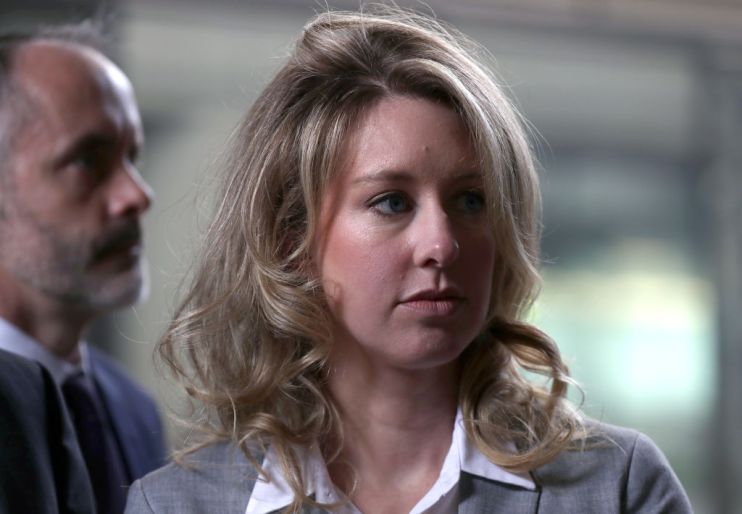
It is little wonder that the trial of Elizabeth Holmes, the disgraced former CEO of Theranos, has been so captivating.
Her fall was vertiginous. Once the founder of a business valued at $10bn, Holmes now faces 11 counts of wire fraud and conspiracy to commit wire fraud. If found guilty of them all, she could face a 220-year sentence.
Yet on the stand last week she was unrepentant. Yes, presentations shared with investors suggested, incorrectly, that major pharmaceutical firms had endorsed her technology. Yes, the revenue projection sent to investors – $990m – was higher than the $113m sent to an external valuation firm, and more still than the revised figure of $55m by Theranos accountants.
Holmes’ defence is two-fold. First, that her former partner, and Theranos’s former President, abused and controlled her. Second, that whatever she did, she did it in good faith.
The latter is the quintessential, hubristic argument: that the end always justifies the means. Hubris differs from a mere confidence trick because the hubrist truly believes in the righteousness of their actions.
They are propelled by a messiah-like belief that their actions are for the greater good.
In Holmes’s case, misleading presentations and revenue numbers were necessarily evils, ensuring that Theranos’ technology could – despite evidence to the contrary – save us.
Hubrists are believers. To this day, I doubt Elizabeth Holmes thinks she has done anything wrong. She likely never will.
That Holmes was able to succeed for so long is because hubris is the default mode in Silicon Valley.
California is the land of the extravagant mission statement, where WeWork could claim it was “elevating the world’s consciousness” not renting real estate, make a fortune for its founder and lose a greater one for its investors. It is the land of “fake it till you make it”, where “disruption” is deified, and where progress demands that we “break things” first.
It is also the land where founders are worshipped. What started with the cult of Steve Jobs has seen many imitators. Mark Zuckerberg and Jack Dorsey, both maligned today, were once hailed as his heirs. Holmes imitated Jobs so determinedly she even copied his trademark black polo neck.
It is little surprise that hubris is so common amongst those who found businesses. It takes an excess of confidence, after all, to believe that your business, as yet non-existent, is better than the legion that already exists.
But there is a line that separates hubris and confidence. The hubrist is defined by being unable to recognise their limitations. They are, in fact, not confident enough to do so.
True confidence in leaders is perhaps best illustrated by those who can see, and adapt, to their limitations.
In 1961, the White House backed an attempt to topple Fidel Castro’s Cuban government, which failed disastrously at the Bay of Pigs. In response, President Kennedy confronted his own limitations. When the next crisis arose, again in Cuba – this time the Missile Crisis of 1963 – Kennedy made a virtue of his own limitations. He sought opposing views to his own, often stepping out of the room to encourage a freer exchange of ideas amongst his advisors. He tasked his brother, Bobby, with subjecting all his decisions to intense opposition. By accepting his limitations, Kennedy saved the world from nuclear war.
Though rare in Silicon Valley, this same confidence is not unheard of. Sergei Brin and Larry Page had the confidence to admit that they needed an experienced executive, Eric Schmidt, to run Google. In their own estimation, that decision was critical to their success.
Leaders in Silicon Valley don’t have to be hubristic. Investors, meanwhile, should learn to avoid an excess of confidence and seek instead those who expose their weaknesses. And Holmes provides a cautionary tale for the ages: after hubris, nemesis.