Skip to content
Sunday 13 September 2026London --:--Frankfurt --:--Zurich --:--
NewslettersSearchEN · DE · FR
MorningWire

European business, markets and politics

FTSE 100
10,650.44
+0.39%
DAX
25,568.56
+0.82%
CAC 40
8,179.77
+0.78%
STOXX 50
6,325.13
+0.90%
  • Europe
  • Markets
  • Business
  • Economy
  • Regulation
  • Politics
  • Opinion
More
GermanyFranceEU InstitutionsCompetitionPublic AffairsBankingTechnologyEnergy
  • Germany
  • France
  • Europe
  • Markets
  • Business
  • Economy
  • Regulation
  • Politics
  • Opinion
  • DE
Wednesday 10 November 2021 6:00 am  |  Updated:  Tuesday 09 November 2021 7:05 pm

If billionaires can decide to pay tax with a Twitter poll, something is badly wrong

By: Robert Palmer

Add as a preferred source on Google
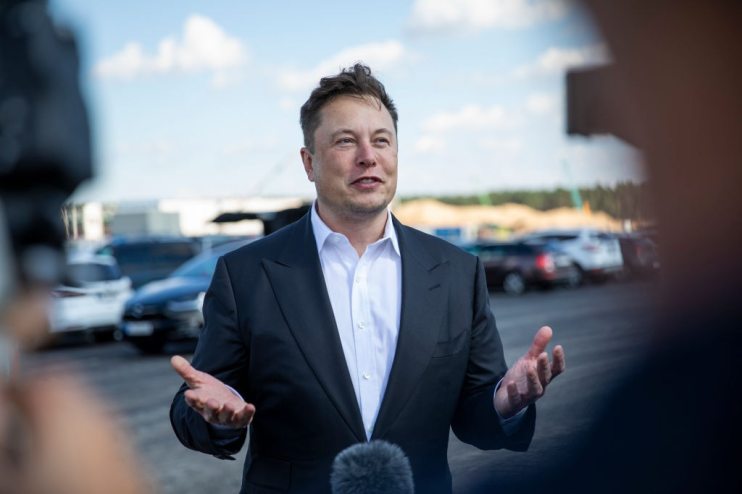
Elon Musk Visits Germany

There’s something darkly amusing about one of the richest men in the world using Twitter to poll his 60 million followers about whether he should pay tax.

It wasn’t just the flippant way Tesla’s Elon Musk (@edgeLorde) asked his followers to vote on whether he should sell $21bn of stock and in doing so pay billions in tax on his capital gains. It was the fact that for the tech baron, paying taxes is effectively something he can choose to do. Or not to do.

This is a direct consequence of a tax system in the US and the UK that taxes wealth badly. As another American billionaire, Warren Buffett, pointed out, the very richest often pay lower tax rates than their cleaners.

The pandemic has been kind to the very wealthy. Musk is part of a crop of US billionaires that have added an extra $1tn to their wealth since the start of the pandemic.

It’s partly in response to this that the US Treasury Secretary Janet Yellan tabled a plan to tax the unrealised wealth gains accumulated by the likes of Musk.

The new unrealised capital gains tax would be an annual levy on the increase in value of assets held by the richest Americans. It would apply to people who make more than US$100m a year for three years in a row or if one makes US$1bn in annual income.

The Yellan proposal is in part an acknowledgement that the status quo wasn’t sustainable. If the fabulously wealthy choose to take their income from their private stores, then they should be taxed just like everyone else.

Here in the UK the financial pain of Covid-19 has not been equally shared. Even before the pandemic wealth inequality was more than double income inequality.

Read more

One of Britain’s biggest taxpayers has left – who can replace Rokos?

Chris Rokos, a man with glasses and a beard, smiling in a dark zipped sweater against a grey background.

During the pandemic the richest 10 per cent of households gained over £50,000 in additional wealth per adult on average, the poorest 30 per cent gained just £86.

A properly functioning economy shouldn’t be hardwired to make inequality worse when there is a downturn. Yet our approach to taxing income from wealth means that the average tax rate of someone on £10m a year is less than that of someone on the median income according to University of Warwick research.

It is intuitively unfair that someone who earns their income from wealth should pay lower tax rates than someone who has to earn their income through work. It’s also not right that for the very richest, taxation is often effectively voluntary.  

In 1988 the then Chancellor, Nigel Lawson, said: “There is little difference between income and capital gains and many people effectively have the option of choosing which to receive… it is by no means clear why one should be taxed more heavily than the other.” He equalised the tax rates on capital gains and wealth.

The government’s estimates that doing the same now could raise up to £14bn a year. A recent poll found 61 per cent in favour of aligning CGT rates with Income Tax rates.  

To keep public support for taxation, it is vital that the system is seen as fair, with similar things taxed in similar ways. HMRC – which has a hefty weight behind it to collect the tax on regular incomes – must have the muscle to do the same for billionaires skating the rules.

Elon Musk is one of the few tech billionaires who’s actually very funny to follow on Twitter. But his flippant approach to whether he should be paying tax reveals just how bad we are at reaping in the tax we’re owed.

Read more

Tax crackdowns means high net worth Brits continue to mull UK exit

An annual property tax would be charged on houses over £500,000

Share this article

  • Facebook
  • X
  • LinkedIn
  • WhatsApp
  • Email

Similarly tagged content:

Sections

  • Opinion

Categories

  • Opinion

Trending Articles

  • Wetherspoon boss: ‘Not up to Burnham’ to choose who is on the high street 

  • Badger Beer maker Hall & Woodhouse doubles profit ahead of tie-up with James May

  • Four interest rate hikes loom despite surprise economic growth

  • Primark sales slip as owner dresses up retailer for demerger

  • Lotus, Porsche and Corvette: the best sports cars to buy in 2026

More from Morning Wire

  • One of Britain’s biggest taxpayers has left – who can replace Rokos?

    Opinion
    Chris Rokos, a man with glasses and a beard, smiling in a dark zipped sweater against a grey background.
  • Tax crackdowns means high net worth Brits continue to mull UK exit

    Tax
    An annual property tax would be charged on houses over £500,000
  • Hedge fund billionaire Chris Rokos joins UK wealth exodus 

    Wealth
    Chris Rokos, a man with glasses and a beard, smiling in a dark zipped sweater against a grey background.
  • Reform hits back at Tory plan to ‘abolish inheritance tax’

    Politics
    Badenoch discusses economic policy at a press conference, addressing key financial strategies to boost national growth.
  • Stealth taxes intensify London first time buyer struggle

    Property
    Row of classic London terraced houses with white facades and green doors, indicating UK property.
  • Here’s how Britain can woo back the world’s wealthy

    Opinion
    Image of yachts in a marina - the boats have traditionally been the preserve of the super rich
  • JP Morgan boss issues bank tax warning to John Healey

    Banking
    JPMorgan Chase CEO Jamie Dimon
  • Wetherspoon boss Tim Martin attacks government’s ‘unfriendly’ attitude to business

    Politics
    Wetherspoon chairman Tim Martin smiling in a red sweater outside a pub with ON THE FIVE sign
MorningWire

Independent European business, markets and political news for decision-makers.

Morning Briefing

Europe

  • Germany
  • France
  • EU Institutions
  • Europe

Business

  • Markets
  • Business
  • Economy
  • Regulation
  • Competition
  • Public Affairs

Editorial

  • Opinion
  • Editorial Policy
  • Corrections
  • Contact

Company

  • About Morning Wire
  • Privacy Policy
  • Terms of Use
  • Cookie Policy
© 2026 Morning Wire Ltd · Published by Morning Wire Media, Bahnhofstrasse 65, 8001 Zürich, Switzerland
Privacy · Terms · Cookies · Facebook