Musk’s anarchic vision won’t help Twitter but a subscription model might

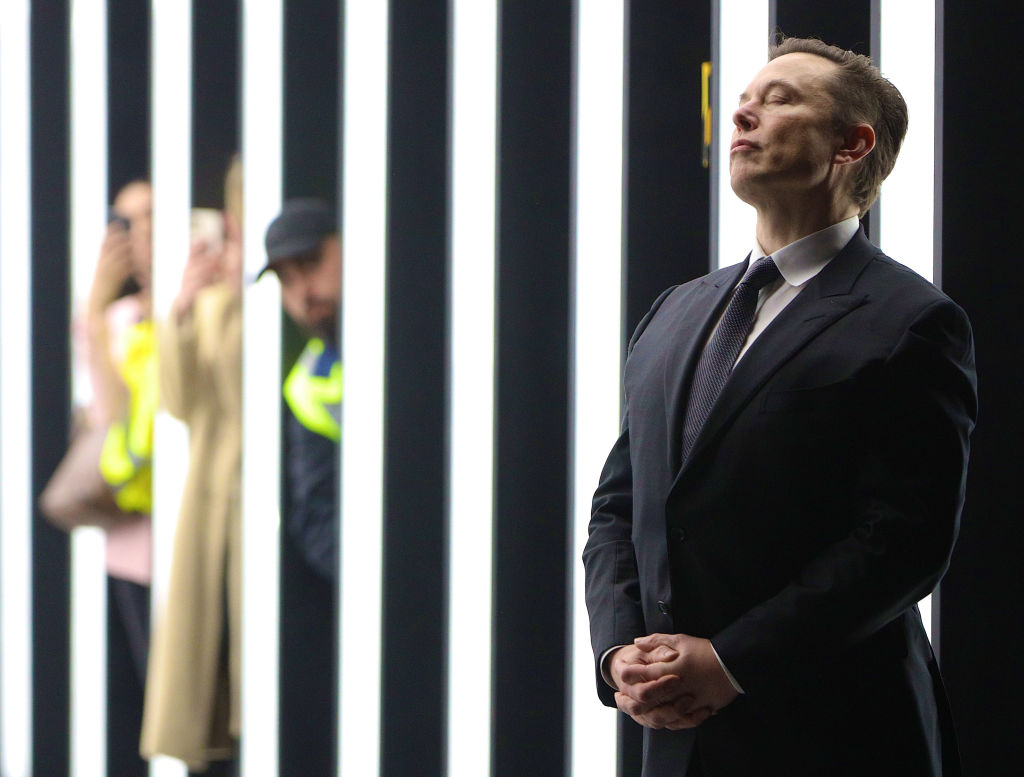
In late January, an unknown investor began quietly building a stake in Twitter. A little over two months later, Elon Musk breached the surface. On April 4th, he revealed a 9.2 per cent stake. Though two days later an official filing corrected that to 9.1 per cent, Musk has become Twitter’s largest shareholder.
Poor arithmetic was just the first error in what now looks distinctly messy. At first, Musk announced that he would be a “passive investor”, meaning that he would not try to influence company policy. Within days, that was updated: Musk became an activist. Shortly after, Twitter announced that he would join the board. Before, finally, Musk refused the offer.
In the process, Twitter’s new CEO Parag Agrawal was left looking both weak and foolish. At the end of this sorry process, Agrawal wrote a note to Twitter staff. In it, he said that offering a board seat to Musk was both “the best path forward” and that his rejection of the position was “for the best”.
Instead of joining the board, Musk has opted to influence Twitter from the outside. To flip a phrase of US President Lyndon Johnson’s, this leaves Elon “outside the tent pissing in” rather than the more preferable position of “inside the tent pissing out”.
And pissing, Elon is. Over the weekend, Musk took the opportunity to berate the company on, fittingly enough, Twitter itself. “Is Twitter dying?” he wrote in one tweet. In another, he suggested turning the company’s HQ into a homeless shelter.
While it is hard to discern precisely what Musk wants to achieve, his main gripe appears to be that Twitter is not protecting free speech sufficiently. A few days before revealing his stake in the company, he tweeted: “Given that Twitter serves as the de facto public town square, failing to adhere to free speech principles fundamentally undermines democracy. What should be done?”
Making Twitter more anarchic might appeal to Musk’s politics (though it is notable that Musk has a long record of silencing his own employees). Few, however, believe Twitter would be better for having less control over disinformation and hate speech.
And doing so is certainly not the solution to Twitter’s biggest problem: its commercial underperformance. Twitter is leagues behind its peers. Its advertising revenues are $4.5bn with a market capitalisation of $37.6bn. Meta, meanwhile, pulls in $113.9bn of advertising revenue with a market capitalisation at $618.9bn (down from a recent peak of over $1tn).
Musk’s solution is anarchy. Most would consider that bad for society. Importantly, it would be bad business too. With a fraction of the users of Google or Facebook, Twitter can’t compete for advertising revenue. And advertisers are already growing cautious of inserting their brands into the middle of toxic social media discussions.
The good news is that there is an answer that could be good both for society and for Twitter’s business, provided by another activist Twitter shareholder: serial entrepreneur and business professor Scott Galloway.
Galloway’s answer is to move Twitter towards a subscription model, where its customers are its users (not its advertisers). Of course, not all Twitter users would pay, but they needn’t. Instead, only those with the largest followings, who gain the most from Twitter, would pay for the audience the platform affords them.
Focusing Twitter on pleasing its users, rather than its advertisers, would change the platform. Rather than stoking the anger that drives the engagement which gets eyeballs on adverts, Twitter would have to make its platform a place that people will pay to spend time on. And as those subscribers pay, Twitter will have to think about new ways to please them, like showing sports or publishing news from a newsroom of its own.
Investors will like subscription Twitter too. Steady returns look good now and will look even better when inflation starts to bite. It is little wonder that subscriptions businesses have been outperforming the S&P 500 for years.
Today, however, there is only one Twitter investor that the world is talking about. Musk was right to spot that something is rotten at Twitter. But look to Galloway, not Musk, for the solution.