The emerging market comeback: Why investors are buying again

Short-term volatility is likely, but the developing world offers some enticing valuations
It’s been a difficult few years for emerging market equity investors. Even before the recent “taper tantrum”, which saw the “fragile five” economies of India, South Africa, Turkey, Brazil and Indonesia hit with enormous capital outflows as the Federal Reserve began to wind down quantitative easing, emerging market stocks had already underperformed high income markets for some time.
Over the last three years, the MSCI Emerging Markets index has been beaten by MSCI’s North America, Europe, and worldwide indices. And this year, the index has posted gains of less than 4 per cent, compared to the S&P 500’s 7 per cent, and over 5 per cent for the MSCI All-Country World Index.
But some think the tide may be turning. In a recent survey of 63 wealth managers at Blackrock’s London Investment Conference, 73 per cent said they anticipated increasing their clients’ exposure to Asian equities, and 60 per cent planned on raising allocations to emerging market stocks.
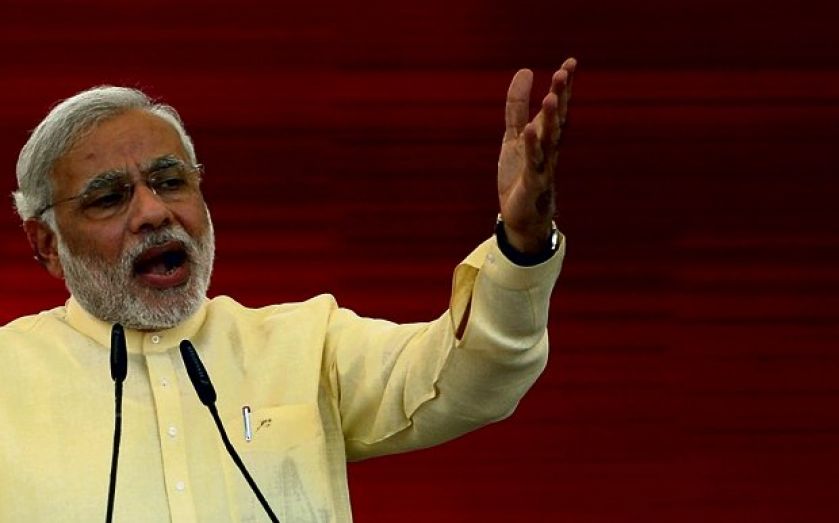
In India, the victory of the reputedly business-friendly Narendra Modi has helped the Sensex gain almost 4 per cent in just over a month. As JP Morgan Asset Management’s Emily Whiting says, “more than a glimmer of optimism has returned to emerging markets, largely driven by the outlook for this year’s elections in some of the ‘fragile five’ countries.” The risks are high, particularly with the Iraq crisis potentially leading to an economically-damaging spike in the oil price. But with attractive relative valuations and promising demographic trends, some investors are taking the opportunity to increase their exposure.
FOCUSING ON VALUE
“On a fundamental basis, emerging market shares represent one of the few pockets of value at the moment, and this could be a great entry point for a long-term investor willing to buy, hold and forget,” says Jason Hollands of Bestinvest.
With the S&P and wider developed market bourses trading at stretched valuations (as much as 56 per cent above historical means on the cyclically-adjusted price-earnings ratio), greater exposure to the developing world could prove more profitable. Hollands particularly likes the Lazard Emerging Markets Fund, which focuses on long-term capital growth.
And supporting these long-term growth prospects, according to Whiting, is a broad structural shift towards rising domestic demand in large emerging markets. Both India and China have a rapidly-growing middle class, with the latter regime explicitly focused on rebalancing the economy towards domestic consumption in the coming years. Whiting says that her team’s largest “overweight” at the moment is consumer staples. Just this week, Blackrock floated the first exchange-traded fund (ETF) on the London Stock Exchange explicitly focused on emerging market consumer growth, the iShares EM Consumer Growth ETF.
RISKY BUSINESSES
Despite the promise, there are some obvious risks. The danger of a “hard-landing” in China has been much-discussed, while a rising oil price – Brent crude has been pushing $115 per barrel amid turmoil in the Middle East – could represent a shock to heavy oil consumers like India and South Korea, according to Interactive Investor’s Rebecca O’Keeffe. She says that nine of the top 10 funds bought by her company’s clients are still UK-focused, although a “budding return” to Asian equities is evident.
Moreover, if a stock market correction materialises soon (surveys show that fund managers’ allocations to cash have risen recently), it’s difficult to see why emerging market stocks would be immune. A deterioration in risk sentiment could lead to a broad-based selloff, not limited to expensive Western shares.
But dips can also be a buying opportunity, and Fidelity’s Ayesha Akbar argues that differentiation is key. “Remember that the broad emerging markets umbrella encompasses a whole range of countries with different economies and markets.” Acronym-based investing (just looking at the Brics, for example) is likely to prove misguided, and Akbar favours well-resourced stock pickers to thrive in such a diverse environment. She likes Threadneedle’s Global Emerging Markets Fund, which meets with around 500 companies a year, and the JP Morgan Emerging Market Fund.