Let’s end the airline monopoly over Europe’s busiest airport

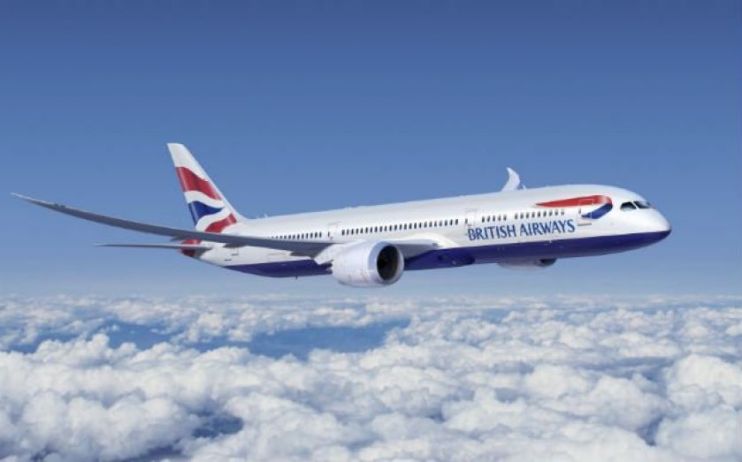
This week’s two-day strike by British Airways (BA) pilots is not just another blow for the brand and a pain for thousands of passengers.
It is also a vivid demonstration of the pitfalls of letting one airline group have an effective monopoly over many routes at Europe’s busiest airport, Heathrow.
Luckily, expansion at Heathrow provides the government with an opportunity to support the creation of a second national flag carrier, increasing resilience and consumer choice, and providing the competitive environment that has been so sorely missing.
A lack of competition at Heathrow will be a surprise to many, but a situation has emerged where BA and its partners now control more than half of total capacity at the airport.
There are some benefits to this system. BA and its passengers get a boost from economies of scale that allow it to operate as a “hub carrier”, connecting regional passengers across the UK to global destinations.
But the current set-up also limits competition. The next largest airline at Heathrow has only eight per cent of take off and landing slots, compared to the 55 per cent owned controlled by IAG, BA’s parent company.
To understand why that’s a problem, we can look to other markets.
If the same situation were replicated in the supermarket sector, it could mean that Tesco only faced competition from corner shops, not from bigger players in the market, such as Sainsbury’s. Or if the newspaper industry were similarly affected, The Times would be free to print more than 400,000 copies of the paper, but The Telegraph could be limited to a print run of just tens of thousands.
Presented like this, it is clear that competition is not working well at Britain’s biggest airport. Our report, “Letting Competition Fly: the case for two national flag carriers”, published today shows how passengers lose out.
First, the situation limits choice. We estimate that in the last year, 18.5m passengers spread across 77 routes did not have a choice of who to fly with. If you want to fly direct to popular short and long-haul routes from Heathrow, such as Glasgow or San Diego, you can only go with British Airways.
Second, the lack of competition is likely to lead to higher prices. Using evidence from similar situations around the world, we estimate that passengers could be paying as much as 10 per cent more in ticket prices.
Heathrow expansion could be a game changer, but under existing rules for how new capacity will be allocated, this situation is very unlikely to change significantly.
However, there is a simple way to tackle the situation – and it is not to penalise or falsely restrict BA, our first national flag carrier.
Instead, BA just needs a scale competitor – a second flag carrier – to bring increased choice, lower prices, and improved quality to passengers. To extend the supermarket analogy, this would be like giving Sainsbury’s the opportunity to take on Tesco.
Having two flag carriers would not be unusual. Other major cities – including Chicago, Tokyo, and Madrid – have smaller aviation markets yet already host two such competitors.
To achieve this, the government will need to act decisively when determining how to allocate the new capacity created by Heathrow expansion. Applying the current rules will serve only to reinforce the fragmented competition that exists the UK’s busiest airport.
A bespoke approach is needed to maximise the unique opportunity of expansion. This should explicitly commit to providing the framework for the creation of second national flag carrier, with around 20 per cent of overall Heathrow capacity.
Some, particularly those with vested interests, will argue against this approach, saying that it is too complicated or unfair to BA.
But without it, the full scale of potential benefits of Heathrow expansion are unlikely to be realised, and a unique opportunity to boost competition, lower fares, and improve service and passenger choice could be missed.