Energy bill support to cost billions as Ofgem unveils monster £4,279 price cap

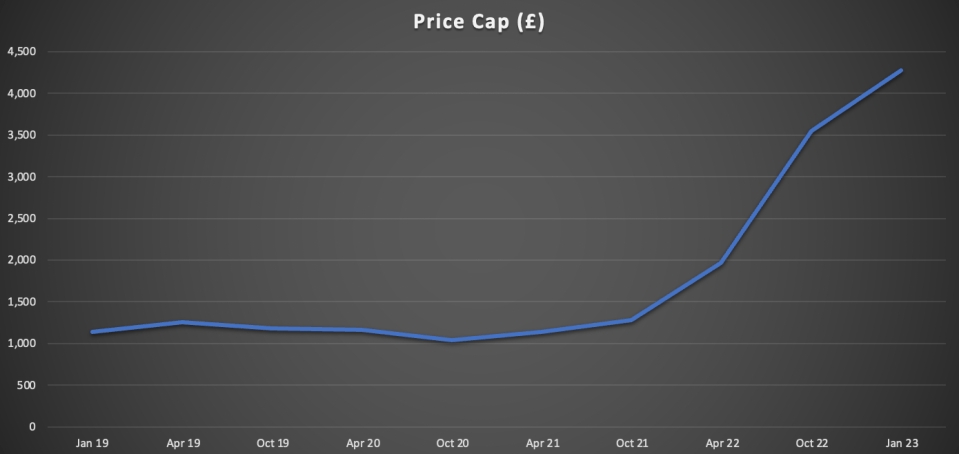
The energy price cap will rise by a further £700 in the new year, Ofgem has announced – a 20 per cent hike to its current record rates.
In its latest quarterly update, the market watchdog revealed the energy price cap will increase from £3,549 per year for average use to £4,279 per year in January, when the weather is at its coldest and demand at its peak.
Overall, the Government’s support package will be providing savings of up to £1,779 per year in the January-April window before the next price cap update.
This is because households will not have to pay the new price cap rate, with energy bills heavily subsidised under the Energy Price Guarantee – with average use contained to £2,500 per year until April, and then to £3,000 per year for the following 12 months.
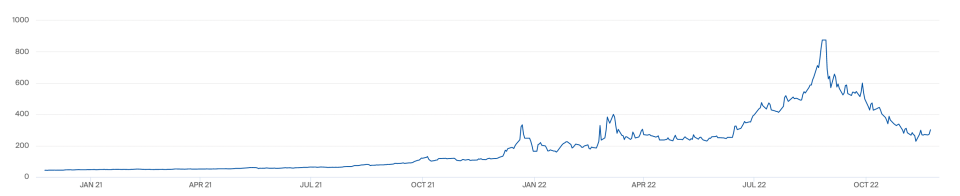
While not reflecting household bills, the latest price cap announcement exposes the volatile conditions in wholesale markets and the huge costs involved in the Government’s support package.
Cornwall Insight, which was only £34 off the price cap in its prediction yesterday, has boosted its own projections for the overall cost of the Energy Price Guarantee.
It now forecasts that the 18 months of support for households will cost £42bn, up from its estimates forecasts of £38bn.
However, this projection is highly dependent on the behaviour of highly volatile wholesale markets that have been highly influenced by macro-factors such as Russia’s invasion of Ukraine and rebounding post-pandemic demand.
The scheme currently subsidises the difference between record wholesale rates and a set rate of 34p per kilowatt hour (kwh) for electricity and 10p per kwh for gas.
If wholesale costs rise again, the difference will increase in turn, and raise the costs of the support package.
Craig Lowrey, principal consultant at Cornwall Insight said: “Extending the Energy Price Guarantee, even at an elevated level, has resulted in the government being exposed to variables and factors over which they crucially have no control. The risk is reduced by changing the level of support but remains acute.
Households to suffer ultra-high energy bills despite Government support
The energy specialists expect the cap to remain historically elevated, but will slip from January’s peak to £3,921 from April and then to around £3,400 for the last six months of 2023.
Chancellor Jeremy Hunt revealed to MPs at the Treasury Committee yesterday that the entirety of support for households and businesses could reach £120bn by the end of next year.
He also revealed there will be no further universal support for households from April 2024, and said Brits would “have to take responsibility for their energy usage.”
While milder than expected winter weather and Europe’s successful top-up of supplies has eased market conditions, supplies remain tight amid a Russian squeeze on the continent.
Europe has been scrambling to replace supplies with vast and costly liquefied natural gas imports from the US and Qatar, alongside energy saving measures and leaving coal and retired gas power plants on standby.
National Grid has warned of the possibility of rolling blackouts in its worst case scenario in January.
Despite the support, the subsidised household rate £2,500 per year is still a record cost for household energy bills, and a vast increase on the £1,277 per year price cap which was dictating energy bills as recently as March.
National Energy Action director of policy and advocacy Peter Smith called on the Government to reduce the difference in bills between households paying by cheque or cash compared to direct debit.
The group calculates cash payers are coughing up £254 more than direct debit customers.
Price Guarantee, there has been a big increase depending on how households pay for their fuel bills. If you
He said: “These differences add up and have a big impact for those struggling to pay their bills and are not cancelled out by the UK Government’s Energy Price Guarantee. People shouldn’t be punished because of how they pay their bills. Many have little or no choice. Unless the Government steps in, unfair differentials on this scale will persist.”