
European stocks stand up to terrorism

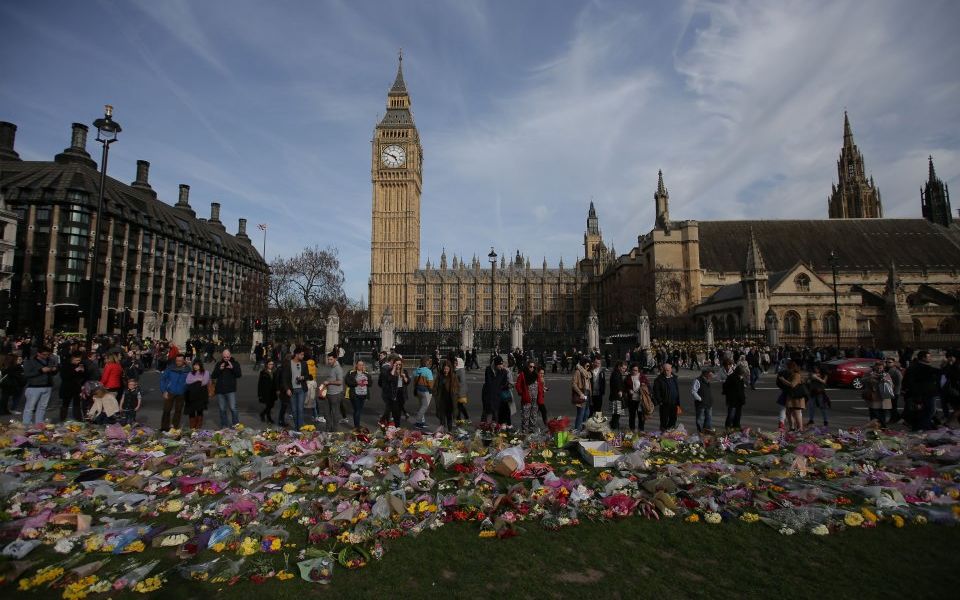
London. Manchester. Brussels. Paris. Nice. Copenhagen. Stockholm. Normandy. These are just a few of the European cities struck by terrorists in recent years. Attacks are sadly becoming increasingly frequent, and whenever they occur, people speculate about the potential market and economic impact. It is impossible to know where or when terrorists will strike next, but we believe recent history offers investors a powerful pre-emptive lesson: Whilst terrorism destroys lives and property, thus far, it has had no lasting impact on stocks.
Surprises move markets, but terrorism simultaneously is and isn’t a surprise. Due to attacks’ unpredictable nature, each one shocks society, the victims and their families. At the same time, because strikes have become more frequent, terrorism’s lingering presence isn’t a surprise. It is a fact of life, and as a result, markets appear to have become desensitised to it.
The reaction of the market
When America endured major attacks on 11 September 2001, the Western world had less experience with major terrorist strikes. Incidents like the first attack on the World Trade Center in the early 1990s, the bombing of Pan-Am Flight 103 over Lockerbie, Scotland in 1988 and IRA bombings in Manchester and elsewhere had sort of put the world on notice, but 11 September was the first time terrorists killed thousands whilst striking institutions of finance and government on Western soil. It was new, shocking and devastating—and markets reacted in kind. Measured in US dollars to eliminate currency skew, when US stock markets reopened on 17 September 2001, the S&P 500 fell -11.6 per cent over five straight trading days.[i] But the plunge didn’t last. Even though stocks were still suffering through the long dot-com bear market, which began in America back on 24 March 2000 and wouldn’t end until October 2002, they rallied in late 2001. By 11 October, the S&P 500 had regained its pre-attack level.[ii] When the year ended, the index was up 5.1 per cent since market close on 10 September.[iii]Devastating as the attack was, as time passed, it became evident that life would carry on and the attack wouldn’t cause America’s recession to take another turn downward. Instead, the economy began rebounding late in the year and, in our view, markets discounted free societies’ resilience in the face of terror.
When terrorists struck Western Europe a few years later, markets’ reaction was less pronounced. On 11 March 2004, coordinated train bombings in Madrid killed 191 innocent souls, shattering the nation three days before a general election and dealing Europe its worst terror attack since Lockerbie. Spanish stocks fell -2.18 per cent% that day, and by market close on 15 March they were down -7.4 per cent% from pre-attack levels.[iv] But markets began recovering on the 16th—the fourth trading day after the attack—and by 7 April they were back at breakeven.[v] When the UK was struck a little over a year later, on 7 July 2005, the MSCI UK Index fell -1.4 per cent that day but rose on the 8th, finishing that day above its 6 July closing level.[vi] As markets became more familiar with terrorism, in our view, they became more immune to it.
Since then, stocks’ reaction to most terrorist attacks has been negligible. Belgian stocks rose slightly on 22 March 2016—when terrorists bombed Brussels—and inched up again the next day. German stocks rose a hair on 20 December 2016, the first day after the attack at Berlin’s Christmas market. French stocks fell -0.1 per cent the first trading after 13 November 2015’s Paris attacks, but the following day they jumped 2.7 per cent.[vii] Earlier that year, as terrorists attacked satirical magazine Charlie Hebdo and other targets around Paris from 7-9 January, French stocks rose 2.4 per cent over that three-day period.[viii] A -1.7 per cent slide on 9 January did cap that stretch, but the next two trading days were up 1.1 per cent and 1.5 per cent, respectively.[ix]
A measure of hope
Whilst markets’ ability to quickly move past terrorist strikes is part of the grim reality of attacks’ increased frequency, we believe it also offers a measure of hope: It is a reminder of free societies’ ability to overcome evil and destruction by those who would seek to destroy our way of life. We believe those evil forces are no match for free people and free markets, and markets’ swift recovery is a testament to free nations’ solidarity and endurance.
Investing in equity markets involves the risk of loss and there is no guarantee that all or any capital invested will be repaid. Past performance neither guarantees nor reliably indicates future performance. The value of investments and the income from them will fluctuate with world equity markets and international currency exchange rates.
Fisher Investments Europe Limited, trading as Fisher Investments UK, is authorised and regulated by the UK Financial Conduct Authority (FCA Number 191609) and is registered in England (Company Number 3850593). Fisher Investments Europe Limited Headquarters: 2nd Floor, 6-10 Whitfield Street, London, W1T 2RE, United Kingdom. Fisher Investments Europe Limited’s parent company, Fisher Asset Management, LLC, trading under the name Fisher Investments, is established in the USA and regulated by the US Securities and Exchange Commission. Investment management services are provided by Fisher Investments.
This document constitutes the general views of Fisher Investments UK and Fisher Investments, and should not be regarded as personalised investment or tax advice or as a representation of their performance or that of their clients. No assurances are made that they will continue to hold these views, which may change at any time based on new information, analysis or reconsideration. In addition, no assurances are made regarding the accuracy of any forecast made herein. Not all past forecasts have been, nor future forecasts may be, as accurate as any contained herein.
[i] FactSet, as of 5/6/2017. S&P 500 Price Index in USD, 10/9/2001 – 21/9/2001.
[ii] FactSet, as of 5/6/2017. S&P 500 Price Index in USD, 10/9/2001 – 11/10/2001.
[iii] FactSet, as of 5/6/2017. S&P 500 Price Index in USD, 10/9/2001 – 31/12/2001.
[iv] FactSet, as of 6/6/2017. MSCI Spain price returns in EUR, 10/3/2004 – 15/3/2004.
[v] FactSet, as of 6/6/2017. MSCI Spain price returns in EUR, 10/3/2004 – 7/4/2004.
[vi] FactSet, as of 6/6/2017. MSCI UK price returns in GBP, 6/7/2005 – 18/7/2005.
[vii] FactSet, as of 6/6/2017. MSCI France price returns in EUR, 13/11/2015 – 17/11/2015.
[viii] FactSet, as of 6/6/2017. MSCI France price returns in EUR, 6/1/2015 – 9/1/2015.
[ix] FactSet, as of 6/6/2017. MSCI France price returns in EUR, 9/1/2015 – 13/1/2015.