Skip to content
Thursday 10 September 2026London --:--Frankfurt --:--Zurich --:--
NewslettersSearchEN · DE · FR
MorningWire

European business, markets and politics

FTSE 100
10,610.73
-0.56%
DAX
25,405.23
-0.67%
CAC 40
8,121.39
-0.43%
STOXX 50
6,273.08
-0.61%
  • Europe
  • Markets
  • Business
  • Economy
  • Regulation
  • Politics
  • Opinion
More
GermanyFranceEU InstitutionsCompetitionPublic AffairsBankingTechnologyEnergy
  • Germany
  • France
  • Europe
  • Markets
  • Business
  • Economy
  • Regulation
  • Politics
  • Opinion
  • DE
Wednesday 16 November 2022 6:00 am  |  Updated:  Tuesday 15 November 2022 5:18 pm

 Everyone wants a pay rise, but we will have to pay with cuts to jobs or services

By: Paul Ormerod

Add as a preferred source on Google
Government Announces Integrated Rail Plan
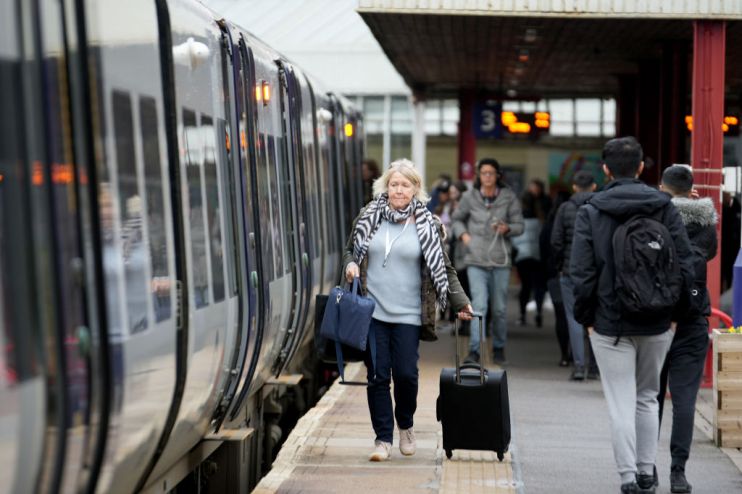
Passenger numbers on the railways are down 41 per cent. (Photo by Christopher Furlong/Getty Images)

The nation seems to be in the grip of an epidemic of cognitive dissonance. Where is Matt Hancock when we really need him to impose a lockdown and save us from this menace?

Two major events have put huge strain on the public finances.  

The pandemic led to government borrowing of some £400bn, around 20 per cent of GDP. The energy price guarantee is in principle only meant to last until next April, at an estimated cost to the public finances of £40bn. But already industry and consumer groups are lobbying hard for it to be extended.

The bond markets have already pronounced their judgement. The UK needs to get the public finances under control. We will learn tomorrow the precise details of the Autumn Statement, but the general lesson of restraint has clearly been learned by both the prime minister and the chancellor.

The left of politics rejoiced at the massive discomfiture of the short-lived Truss government and the sharp rise in interest rates its policies created.

Some of the more thoughtful, which fortunately appears to include the Labour leadership, now realise that the same constraints apply, both now and for some time to come, to any future government.

But many seem to believe that it was entirely the fault of the evil Tories, and their own proposals to boost public spending would be welcomed by the financial markets.

Indeed there are more and more impassioned demands for “Keynesian” policies of higher spending to be carried out to head off a recession. Yet the bond markets have shown time and again that one thing they actively dislike is increasing government borrowing to spend on welfare, without a reasonable way of paying back the debt. The sentiment may be morally dubious. But it is how the world actually is.

Read more

Healey oversees unexpected rise in borrowing in first month as Chancellor 

Man in suit and red tie speaking at a podium to an audience in a modern building.

The attitude of those on strike in the public sector shows even less grasp of reality. The demands are for pay increases at least in line with, or often above, the rate of inflation. The rationale is that this will protect them from the “cost of living crisis”.  

But the energy price guarantee scheme is already doing a great deal here. True, people still have to pay more for their energy, but considerably less than they would without the scheme. And it is energy prices which are the main drivers of the surge in inflation.

The demand for many of these industries is in fact in decline. Passenger volumes on the railways remain below their pre-pandemic levels, down 41 per cent on 2019. Yet they are plagued by strikes attempting to secure large pay increases. Early in the life of the 1974-79 Labour government, railway unions were on strike demanding a pay rise of 27.5 per cent, a figure which makes Mick Lynch look like a moderate.

Prime Minister Harold Wilson had put Michael Foot, a life-long member of the Labour Left, into the cabinet as employment minister, to try and placate the left.

But Foot’s speech to the House of Commons on the pay settlement bears repetition. “Of course,” he said, “the cost of this settlement will have to be borne by increases in fares or by rearrangements in manpower”.

In other words, even Michael Foot, who went on to be a disaster as Labour leader in the early 1980s, recognised that someone had to pay.  Either the travelling public, or by cuts in jobs on the railways.

There is a serious discussion to be had about both public sector pay in particular and fiscal policy more generally. But it needs to take place in the cold light of reality and not fantasy.

Read more

UK debt ‘hits £3 trillion’ milestone

Houses of Parliament in Westminster showcasing historic architecture under a clear sky, central to UK government and politics

Share this article

  • Facebook
  • X
  • LinkedIn
  • WhatsApp
  • Email

Similarly tagged content:

Sections

  • Opinion

Categories

  • Opinion

Trending Articles

  • Tesco and Boots lead 100,000 jobs pledge to tackle Neets crisis

  • Airport chaos latest: Heathrow, London City ‘starting to recover’ after air traffic control failure

  • Hedge fund billionaire Chris Rokos joins UK wealth exodus 

  • Primark sales slip as owner dresses up retailer for demerger

  • Crystal Palace owner Blitzer part of £1bn mega stadium redevelopment

More from Morning Wire

  • Healey oversees unexpected rise in borrowing in first month as Chancellor 

    Economics
    Man in suit and red tie speaking at a podium to an audience in a modern building.
  • UK debt ‘hits £3 trillion’ milestone

    Economics
    Houses of Parliament in Westminster showcasing historic architecture under a clear sky, central to UK government and politics
  • Treasury ‘tells Healey’ to consider tax on banks and oil

    Politics
    Chancellor John Healey smiling, wearing a navy suit, white shirt, and red tie.
  • Emergency government meeting held over high temperature amid ‘strain on public finances’

    Economics
    Aerial view of dry, brown farm fields affected by high temperatures, with a road and farm buildings.
  • Our debt addiction can only end in tears

    Economics
    UK public finances and sovereign debt crisis
  • Vibes matter with tax, so here’s how Healey can deliver a feel-good Budget

    Opinion
    Chancellor John Healey smiling, wearing a navy suit, white shirt, and red tie.
  • Andy Burnham hints at tax rises in Autumn Budget

    Economics
    Andy Burnham, Mayor of Greater Manchester, speaking at a podium against a dark blue background.
  • UK poised to pay highest borrowing costs since 1998

    Economics
    Treasury Department building with government bonds signage, representing financial management and bond issuance responsibi...
MorningWire

Independent European business, markets and political news for decision-makers.

Morning Briefing

Europe

  • Germany
  • France
  • EU Institutions
  • Europe

Business

  • Markets
  • Business
  • Economy
  • Regulation
  • Competition
  • Public Affairs

Editorial

  • Opinion
  • Editorial Policy
  • Corrections
  • Contact

Company

  • About Morning Wire
  • Privacy Policy
  • Terms of Use
  • Cookie Policy
© 2026 Morning Wire Ltd · Published by Morning Wire Media, Bahnhofstrasse 65, 8001 Zürich, Switzerland
Privacy · Terms · Cookies · Facebook