Evri-thing that’s wrong with parcel delivery

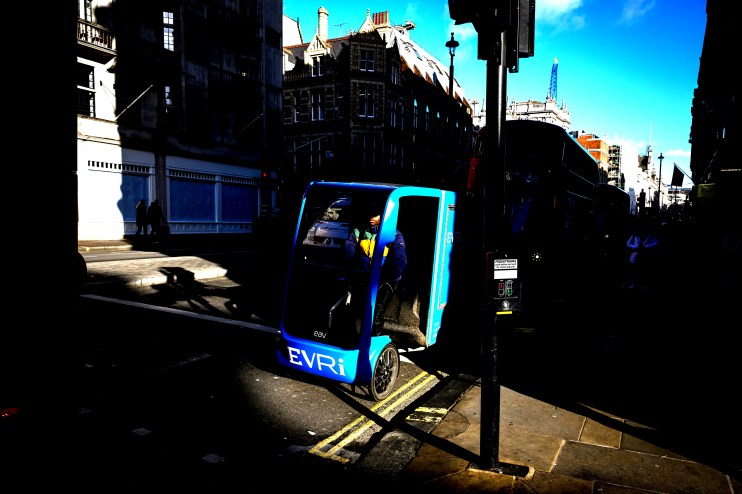
Missed deliveries, parcels abandoned on doorsteps or sent to the wrong house – online shopping has gone from a convenience to a hassle. But why do couriers provide such bad service? Asks Emma Revell
It’s not a career I ever expected to get into, but I appear to have found myself working as a parcel delivery driver. I didn’t apply for this job, I wasn’t even offered it. But still I find myself spending a fair amount of time tracking parcels, arranging re-deliveries, hunting down lost packages in far-flung post offices and hoping the guy behind the counter at the corner shop can tell one John Lewis parcel from the small mountain building up behind him.
In just the last week, I’ve had one parcel “delivered” but nowhere to be seen, one left on the doorstep, at the mercy of any passerby who thought it looked worth stealing, and one Royal Mail delivery driver playing knock down ginger while I was definitely, despite their claims, in the house. Another delivery company clearly thought I needed to ingratiate myself with my community and left the parcel with a neighbour. This was somewhat helpful in that I had my hands on the goods the same day they’d been delivered, but not before I’d spent quite a bit of time knocking on doors on my street, because they didn’t actually mention which neighbour the parcel had been left with
Shopping online, in other words, has gone from something convenient and time-saving to a minefield of missed deliveries and return hassle. But why?
We would usually associate being trapped in terrible service with a monopoly provider, not least the state. When there is no competition there can be little incentive to improve the service. But there are countless delivery companies. It’s so competitive a field that I imagine it’s not unusual for drivers to cross paths on their route or find themselves meeting a competitor coming down the driveway they’re trying to walk up.
Who’s the real customer?
The problem is that we assume we occupy the role of the customer in these transactions. But in most of them, we’re actually not. Yes, I may have bought those jeans or that vase. And yes, I am the one who has paid the chunky delivery fee. But I’m not actually the one purchasing the service from the delivery company: the retailer is. And what they prioritise is being able to get the items out of their warehouses as quickly as possible.
That’s not to say the customer doesn’t care about speed too – otherwise next day delivery wouldn’t be so tempting. But in most cases, the contract for the delivery services is between the retailer and an external courier. The customer instigating the transaction is the one benefitting, or not, from it. But we don’t have much power to control it. If Retailer A has a contract with Courier B, then that’s that. There is no power to choose an alternative courier, one you know has a wider range of delivery options or that you trust to put a card through the door telling you which neighbouring door you’ll find the parcel behind.
It might seem a trivial thing to complain about in the grand scheme of difficulties facing Britain. It’s the archetypal ‘first world problem’. How awful that you can order any combination of items from the other side of the country, or the world, and when it arrives on your doorstep within five working days, the last stage of that journey isn’t always seamless. But that stage is the bit that can add the most frustration, turning us all into part-time posties and undermining the convenience of the entire system. If you can’t take easy possession of things ordered online, if you have to stay at home hoping against hope that things go smoothly, then one of the fundamental selling points of online shopping is taken away.
Obviously there would be cost and time implications for retailers to change the status quo. If each distributor had to check every order leaving the warehouse to see if the customer wanted courier A, B, C or D, the process would be slower and potentially more expensive. But that could easily be passed onto the customer if the option to choose your preferred courier were branded as a premium service.
As it is, retailers appear to have pioneered a new form of capitalism – the same in evidence whenever we use those self-service checkouts. One in which they make their money by outsourcing the hassle and aggro to us.
Emma Revell is external affairs director at the Centre for Policy Studies