Skip to content
Tuesday 15 September 2026London --:--Frankfurt --:--Zurich --:--
NewslettersSearchEN · DE · FR
MorningWire

European business, markets and politics

FTSE 100
10,658.13
-0.37%
DAX
25,402.28
-0.15%
CAC 40
8,090.28
-0.34%
STOXX 50
6,236.50
-0.38%
  • Europe
  • Markets
  • Business
  • Economy
  • Regulation
  • Politics
  • Opinion
More
GermanyFranceEU InstitutionsCompetitionPublic AffairsBankingTechnologyEnergy
  • Germany
  • France
  • Europe
  • Markets
  • Business
  • Economy
  • Regulation
  • Politics
  • Opinion
  • DE
Saturday 26 June 2021 10:00 am  |  Updated:  Friday 25 June 2021 10:48 am

Ex-KFC Director: Junk food ad bans won’t move the needle on obesity

By: Chris Holmes

Add as a preferred source on Google
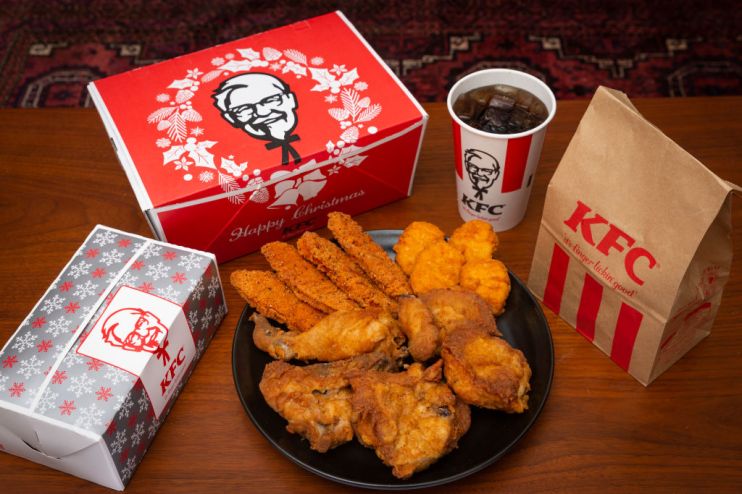
Japan Christmas With KFC
TOKYO, JAPAN - DECEMBER 23: KFC Christmas meal boxes are pictured on December 23, 2020 in Tokyo, Japan. KFC at Christmas has become something of a tradition in Japan with some attributing its yuletide popularity to a kindergarten delivery being made in a Santa Claus outfit which was such a success it was requested by a number of other schools and subsequently gave the company the idea of associating its product to Christmas. The chain launched its first Christmas campaign in December 1974, and has continued to do so every year at all its outlets nationwide. In 2018, KFC Japan posted all-time high sales of roughly 68 million USD for the five days from December 21 to 25. Roughly 10 percent of its annual turnover for the entire year. (Photo by Yuichi Yamazaki/Getty Images)

The Government is pushing forward with its commitment to ban “junk food” ads – one measure within its obesity strategy which will impose strict regulations on how brands can promote “unhealthy food items”.  

The move has been roundly criticised by the food industry, which is to be expected. One in three children are overweight or obese by the time they are leave primary school, this becomes one in two by the time young adults reach 24.

Currently young people are up against a flood of unhealthy food options, from their high street, supermarket shelves, school canteen. And there are not many healthy lunches you can buy for under £2.50. There are merits behind the motivation of the policy. We do need to change the food environment.

For too long we’ve blamed teachers, parents and young people themselves for how the food industry is set up. But implementing policies which put ministers at odds with the businesses who control the food environment is a potentially fatal flaw.

With every new set of regulations, businesses spend more time trying to understand them and work around them than trying to create and market healthier products that people want to buy and can afford on a mass scale, in order to drive demand-led behaviour change.

Very few restaurants even hold the necessary data for them to advertise anything at all (including healthy food) under the new guidelines. 

These measures could easily act as a disincentive to brands who are trying to nudge consumers to healthier options. If the “healthier” options still fail to meet the standards for promotion, then why bother making them at all?  

Read more

Jobless Banquet: Youth unemployment surge ‘sends Neets to KFC’

Redhead woman excitedly biting into a piece of KFC fried chicken dipped in green sauce.

The narrative needs a 180 degree shift from “ban the bad” and begin to “promote the good”. People buy unhealthy food not just because of advertising but because it is available and it’s cheap. The obesity divide often falls down socioeconomic lines.

We know the most powerful force shaping industry trends is consumer demand. The groundswell support for climate action in retail has caused even the giants of fast fashion to develop sustainable lines.

We need to use the carrot and the stick to incentivise food brands to make products healthier and put marketing spend behind them, so that they are commercially viable for business. 

Once we understand the barriers to brands developing and promoting healthier items, and the key drivers of the consumers buying them (taste, convenience, price) we can  accelerate this shift – for example by reworking the VAT system (away from hot and cold food towards those which are better-for-you), and encouraging brands to spend more on promoting nutritious food. 

We need to prove the elasticity of healthier food to show that promotions can drive volume – making it commercially appealing and sustainable for brands. To do this, we need to use data and insights to prove that healthier food sells and identify what incentives motivate behaviour. This has to be more effective than simply limiting the platforms and channels they can use to do so.   

Gen Z want healthier, affordable and great tasting food, and demand will go up when they have genuine access to it. 

Only then can we show that healthier food is better business and start to change the food environment. Only then will we start to see the radical shift needed to improve the health of young people. 

Read more

Cut student loan repayments to get youths out of chicken shops 

Three young adults enjoying chicken burgers and drinks from a food truck, casually dining outdoors.

Share this article

  • Facebook
  • X
  • LinkedIn
  • WhatsApp
  • Email

Similarly tagged content:

Sections

  • Opinion

Categories

  • Opinion

Trending Articles

  • Former Formula 1 champion loses £1.4m HMRC tax bill appeal

  • Wetherspoon boss: ‘Not up to Burnham’ to choose who is on the high street 

  • Mortgage rates at five-month high ahead of Bank of England decision

  • Revolut facing extortion threat after hackers steal customers’ data

  • Reform hits back at Tory plan to ‘abolish inheritance tax’

More from Morning Wire

  • Jobless Banquet: Youth unemployment surge ‘sends Neets to KFC’

    Retail
    Redhead woman excitedly biting into a piece of KFC fried chicken dipped in green sauce.
  • Cut student loan repayments to get youths out of chicken shops 

    Retail
    Three young adults enjoying chicken burgers and drinks from a food truck, casually dining outdoors.
  • Neets dip below one million as Labour blamed for youth unemployment

    Economics
    Andy Burnham, Sadiq Khan, and Sainsburys staff discussing Neets numbers in a supermarket bakery aisle.
  • Food inflation set to surge next year as Iran war ramps up supply costs

    Retail
    Shopper places produce into a cart in a grocery store aisle with mostly empty shelves, indicating supply shortages.
  • Supermarkets ‘actively shielding’ shoppers as food inflation falls again

    Retail
    Shopper in a supermarket produce aisle browsing various packaged vegetables and fruits.
  • Itsu blames inflation and Labour tax hikes as rising costs bite

    Hospitality
    itsu restaurant storefront with eat beautiful slogan, showcasing Asian salads, sushi, soups, and rice bowls.
  • Retailers hit back at Healey’s ‘profiteering’ threat

    Retail
    Chancellor John Healey smiling, wearing a navy suit, white shirt, and red tie.
  • SNP slammed for ‘mind-boggling’ food price cap plans

    Retail
    Bald man in glasses and dark suit with a purple tie and Scottish flag pin, looking to the left.
MorningWire

Independent European business, markets and political news for decision-makers.

Morning Briefing

Europe

  • Germany
  • France
  • EU Institutions
  • Europe

Business

  • Markets
  • Business
  • Economy
  • Regulation
  • Competition
  • Public Affairs

Editorial

  • Opinion
  • Editorial Policy
  • Corrections
  • Contact

Company

  • About Morning Wire
  • Privacy Policy
  • Terms of Use
  • Cookie Policy
© 2026 Morning Wire Ltd · Published by Morning Wire Media, Bahnhofstrasse 65, 8001 Zürich, Switzerland
Privacy · Terms · Cookies · Facebook