Exclusive: City insider urges retail not to make knee-jerk cuts in ad budgets

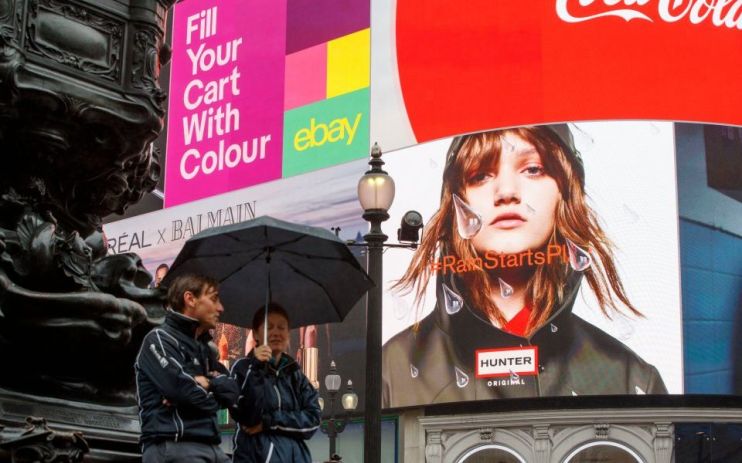
Recent figures show retail is feeling the effects of the cost of living crisis.
Latest figures from the Office for National Statistics show a 0.5 per cent drop in spending last month, with a 1.6 per cent decrease in food sales.
As a result, many businesses are under so much pressure they have no choice but to cut spending, including marketing costs and advertising investments.
However, a knee-jerk cut to advertising budgets, as suggested by the cost-of-living tsar David Buttress, is short-sighted and simply wrong, some in the City believe .
Morning Wire sat down with Square Mile insider Aidan Mark, global director, performance strategy at marketing consultancy CvE, to discuss the challenges many retail businesses face.
“Retailers are feeling the pinch as shoppers spend less because of the cost of living crisis, so now is the time to hone their marketing strategy and make sure they’re accurately measuring its effects”, said Mark.
“It is well documented that effective advertisers often invest through a recession in order to create excess share of voice at lower than normal costs. But the measurement approach that enables and turbo charges an effective media mix are less well known.”
If you have on and offline sales channels, don’t rely on digital metrics alone?
This is one of the most common pitfalls I see when businesses are trying to judge how well their advertising is working. Some audience behaviours are easy to measure, they tend to be online behaviours. Whereas offline behaviour is always much harder to measure, so it’s tempting to skew your marketing towards what’s easy to execute and justify.
“If you lean towards an easy-to-measure customer journey, you can fall into a trap; using only digital metrics often leads to ‘preaching to the converted’ media activation.”
Aiden Mark
For a big food retailer such as Sainsbury’s, where the majority of sales are in-store, you might market to people who buy online, but what about the people who are walking into a shop and picking things up off the shelves?
“The reality is that all media drives both online and offline behaviour but the ease of online measurement means that marketers inadvertently ignore the offline shopping behaviours that they can influence with comms,” Mark said.
Measurements to gauge success
Mark said it is vital to use different techniques to work out if your advertising is working or not.
“Each will give you a different estimate, but your job as a strategist is to triangulate those estimates,” he said.
“It’s like when you’re selling your house: you get three different estimates from an estate agent and then you’ll choose a price that’s somewhere in the middle.”
With mixed measurement set up, you might have digital attribution and another discipline that’s more traditional, such as statistics, along with a controlled experiment, he added.
“By way of an example for an experiment, you might serve a TV or banner ad to one group of people and compare the results to a group that wasn’t exposed to the same advertising stimulus.”
This approach gives you a much more balanced picture of what is going on and crucially, Mark stressed, “it will dethrone the biased digital measures that give a wildly optimistic view of the effectiveness of digital media.”
Ads driving sales
People buy from retailers all the time, but only occasionally is that purchase driven by ads. Big businesses such as Sainsbury’s could probably afford to go dark with their advertising for a month and people would still walk into the store and pick things up off the shelf.
“I go to Waitrose because it’s the nearest one to my house and that proximity relation is very important, because a lot of retail shopping is habitual.”
You need to have a dedicated measure of success that quantifies the rate of incrementality from different media tactics. It is most important for large brands to measure lift because they benefit from a lot of habitual shopper behaviours, whereas a startup wouldn’t have that concern. If someone’s in a habit, we need to be confident that the ad really is playing a positive role in influencing the sale”, stated Mark.
Brand loyalty
Most retailers are trying to bring new customers into their business, but for how long? Different customers are worth different amounts, especially in retail.
“Don’t apply a blanket cost of acquisition target, because inadvertently your media optimisations are likely to target the ‘path of least resistance’ which inevitably involves media skewing towards the lower-value prospects,” Mark noted.
“If a shopper is going to stick with your brand for life, it’s worth paying more to acquire them,” he said.
Repeat customers usually make up the majority of revenue for any retailer.
Sometimes ads drive those repeat sales, but more often these purchases are habitual and are not directly driven by marketing.
“Make sure your target cost per sale accounts for the fact that many of these sales are part of the business ‘baseline’,” Mark said.
For example, Domino’s recognised that Friday and Saturday nights were busy for orders, but they carefully targeted other times and demographics for their future growth.
“Mums with kids was one – and early afternoon football on a Saturday was another: it’s about creating a new occasion to order pizza, which, over time, becomes habitual behaviour,” noted Mark.