Exclusive: Enviva’s CEO on why COP26 may kick off the decarbonisation of heavy industries

Next week’s Budget is expected to focus heavily on a ‘green recovery’, as more and more business leaders call on the government and policymakers to ramp up their efforts to drive change in the race to net zeo.
With just nine months left until the UK will host the COP26 summit in Glasgow, the UK government has introduced a series of proposals in recent months, aimed at positioning the country as a world leader in the so-called ‘ESG’ space.
Similar initiatives are taking place in the U.S., as the wind of change is blowing through D.C.
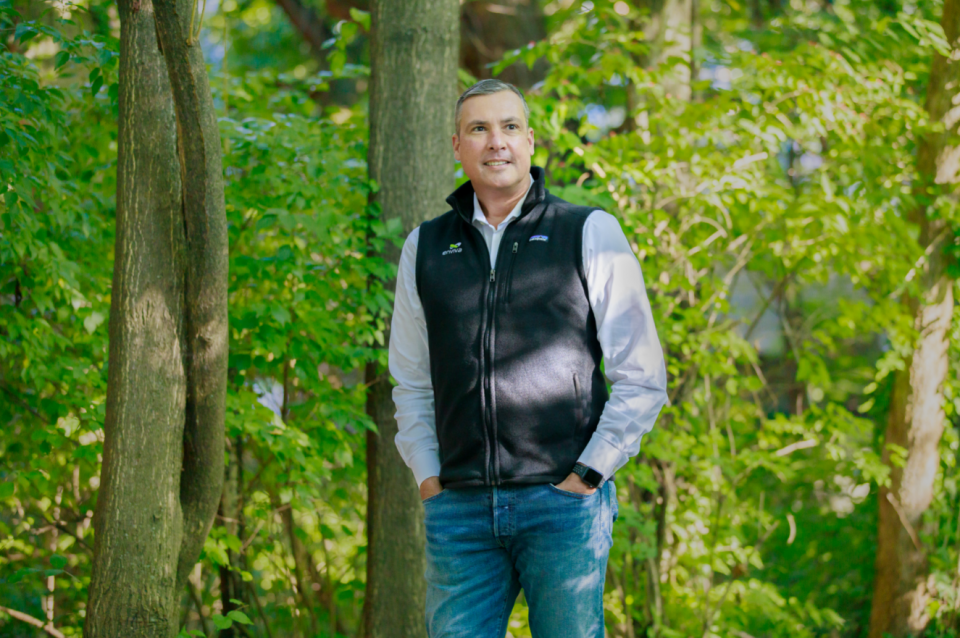
To discuss the latest developments, Morning Wire caught up with John Keppler, the chairman, CEO and co-founder of Enviva, the world’s largest producer of sustainable wood bioenergy.
The company launched this month an “aggressive commitment”, as Keppler puts it, to achieve net zero carbon emissions from its operations by 2030. As part of this plan, Enviva has committed to become carbon neutral and use 100 per cent renewable energy in its operations.
In recent years, many companies have announced similar sustainability and climate action plans, but this is a relatively bold step for a major biomass company, as it puts its operations on course to become net zero two decades ahead of the date set out in the Paris Climate Agreement.
You climate action plan has been labelled a bold step. So what are your plans exactly?
It is obvious that the current climate crisis demands more urgent action. So from this week our net zero carbon commitment evolves around reducing, eliminating, or offsetting the emissions from fossil fuels used directly in our operations, as well as reducing the emissions arising from our electricity purchases by sourcing 100 per cent renewable energy for our operations by no later than 2030, with an interim target of at least 50 percent by 2025.
And how do you plan to achieve that, in practical terms?
Complete transparency. We will track and publish our progress in reducing our emissions. By the end of 2022, we will disclose our climate-relevant data and risks through CDP [Carbon Disclosure Project]. And by proactively engaging with our partners and other key stakeholders to adopt clean energy solutions to address emissions generated as part of our upstream and downstream value chain.
Recently it was announced that Drax is buying biomass fuel producer Pinnacle as it prepares for the closure of its coal power stations next year. Should this be seen as a major vote of confidence in biomass?
Absolutely. Drax’s announced acquisition of Pinnacle further reinforces the value of bioenergy in meeting critical climate reduction targets. This is a strong and positive signal for the market, the industry, and the energy sector both right now and for the long-term as innovative negative emissions technologies like biomass energy with carbon capture and sequestration [BECCS] continue to mature. We believe another, well-capitalized industrial participant can further enhance the wood bioenergy industry’s growth profile and create incremental physical liquidity in the market.
What do you expect to come out of the 26th UN Climate Change Conference of the Parties (COP26), taking place in Glasgow this November.
In my opinion, COP26 will focus on an “all-in” approach to fighting climate change including deploying new technologies that will assist countries in reaching, if not exceeding, their respective climate targets by 2050. One such carbon-negative technology that is expected to play an integral role in decarbonizing sectors of our economy by mid-century is bioenergy with carbon capture and storage, better known as BECCS.
I think we will also see an increased focus on decarbonizing heavy industries, such as cement, steel, and aviation, a topic Bill Gates covers quite interestingly in his new book.
You mentioned BECCS twice now. Can you elaborate a bit on that?
Sure, bioenergy with carbon capture and storage, in the industry known as BECCS, is one of the very few options on the table that can remove carbon from the atmosphere. Once matured, BECCS could mark the beginning of a new era for low-carbon fuel applications that will enable us to meet and maybe exceed international net zero targets while still enjoying air travel and heavy goods transport, which is difficult and very expensive to decarbonize.
Finally, let’s take the long view, what would your main predictions for, let’s say, the next 5 to 10 years?
Firstly, bioenergy will remain the largest renewable energy source in Europe and will be critical to increased deployment of wind and solar.The use of bioenergy has more than doubled since 2000 as a result of its end-use as heat, transportation, and electricity. In heavy industries such as steel, aluminium, and cement, sustainablysourced wood-based biomass offers a carbon-neutral fuel replacement for coal and gas-fired furnaces, and combined heat and power plants.
Speaking of coal, yesterday it was announced that Vanguard and BlackRock invested tens of billions in coal in recent years. Do you think we will still use coal in, let’s say, 10 years from now?
Coal will still be used in some regions of the world, but it depends which part of the world you are referring to. For ambitious countries who have been largely successful in reducing GHG emission, such as the United Kingdom and Denmark, eliminating coal by 2030 or closely to it is possible.
Relatively speaking, Europe is on a path to become the first climate neutral continent by 2050, but it cannot be done without negative emissions, and biomass enables that solution
If we are discussing countries who presently have large dependencies, such as Germany and Poland, coal may not be completely displaced in 10 years but both economies will be well on their way to achieving net zero carbon emissions by mid-century. As a dependable and dispatchable renewable fuel, sustainably-sourced biomass represents a prime solution to complement the intermittency of wind and solar that will reduce carbon emissions by more than 85 per cent on a lifecycle basis.