Exclusive: Government admits fossil fuels use is cheaper than net zero technology

The UK government has quietly admitted that using low-carbon technologies essential to the rapid drive to net zero are more expensive than when fossil fuels are used an energy source, Morning Wire can reveal.
Labour ministers are expected to double down on expanding the use of green technologies to lower costs as the Treasury and Department for Business and Trade are set to unveil the UK’s industrial strategy next week.
The blueprint for growing the economy will outline plans to lower energy costs. The Department for Energy Security and Net Zero (DESNZ) saw its budget increase by 16 per cent at the Spending Review, with more funding set to go towards nuclear power and clean energy in a bid to remove nearly all fossil fuels from UK electricity production by 2030.
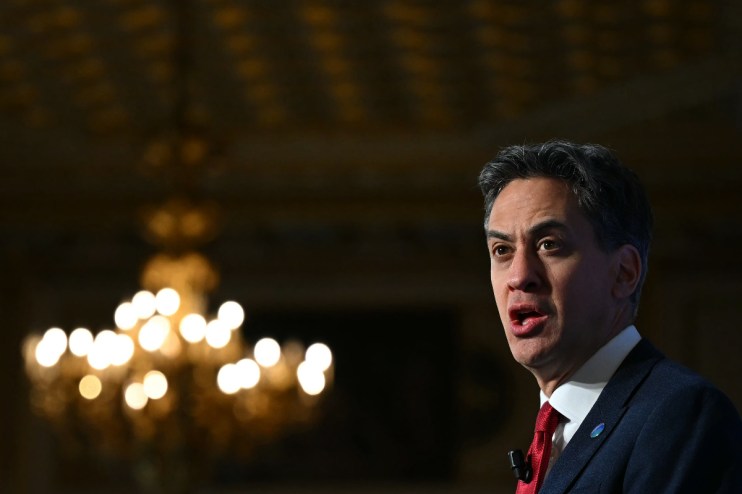
But officials working under energy secretary Ed Miliband told the Committee of Public Accounts, which scrutinises expenditure by different government bodies, explained higher electricity prices made “low carbon technologies” more expensive despite the government linking the development of green technology to more affordable energy bills.
The admission came in the minutes for a PAC report, which is publicly available online, detailing the government’s responses to recommendations made on energy policy.
The statement explains that high residential electricity prices in the UK do not reflect the “cheaper wholesale price of clean energy” and can stem from the costs of some net zero policies.
“Low carbon technologies can be more expensive to run than fossil-fuel powered alternatives,” the government’s response read.
“The price disparity between electricity and gas needs to be addressed to make it more attractive for consumers to install clean technologies like heat pumps.”
It follows a similar admission earlier this year that net zero policies would push up energy bills in the “short to medium term” according to a page on the government’s website, as first reported in the Telegraph.
Data published in March showed standard electricity bills reaching £1,067 last year compared to £814 for gas, meaning average energy bills were £1,881 in 2024.
Manufacturers paid just under twice as much for electricity as they did for either gas or other fuels last year, with UK industrial electricity bills nearly 50 per cent higher than those seen in France and Germany and roughly four times higher than in the US.
Net zero costs overlooked
Oxford University’s Professor Dieter Helm has said that estimates on the impacts of renewable energy have historically overlooked the cost of preventing issues surrounding unreliable weather, for example.
Keith Bell, holder of the Scottish Power Chair in Future Power Systems at the University of Strathclyde, has said that a power system “dominated by renewables” could still help to reduce costs overall as demand can be “reliably” met through clean energy.
Morning Wire understands the government has not yet made a decision on how it plans to rebalance gas and electricity prices.
Other economists, including Bank of England deputy governor Sarah Breeden, have warned that Brits were paying more due to the costs of the energy transition policies.
One of the biggest critics of the government’s ambition to decarbonise the energy grid is INEOS owner Sir Jim Ratcliffe, who has blamed soaring energy bills on a “negative political attitude towards oil and gas” risking the “extinction” of major producers of goods in the UK.
Confederation of British Industry (CBI) chief executive Rain Newton-Smith was the latest industry voice to call on ministers to find a way to shield the costs of net zero policies from firms.
A government spokesperson said: “Through our sprint to clean power, we will get off the rollercoaster of fossil fuel markets – protecting business and household finances with clean, homegrown energy that we control.”
“We are exploring a range of options for rebalancing gas and electricity prices – with securing better outcomes for consumers at the heart of our approach, and will set out further details in due course.”