Skip to content
Friday 7 August 2026London --:--Frankfurt --:--Zurich --:--
NewslettersSearchEN · DE
MorningWire

European business, markets and politics

FTSE 100
10,948.70
+0.74%
DAX
26,425.88
+1.09%
CAC 40
8,744.57
+0.52%
STOXX 50
6,557.19
+0.84%
  • Europe
  • Markets
  • Business
  • Economy
  • Technology
  • Politics
  • Opinion
More
GermanyFranceBankingAIEnergyFintechPropertyCapital Markets
  • Germany
  • France
  • Europe
  • Markets
  • Business
  • Economy
  • Technology
  • Politics
  • Opinion
  • DE
Thursday 23 October 2025 6:13 pm  |  Updated:  Friday 24 October 2025 10:15 am

Exclusive: Labour mulls hefty fine for employers who stop unions entering offices every week

By: Mauricio Alencar

Politics and Economics Reporter

Add as a preferred source on Google
Starmer and Reeves have caused huge damage to the UK economy
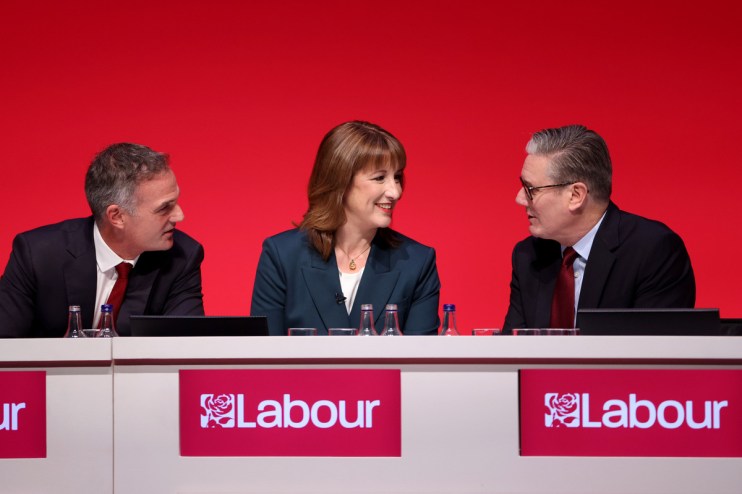
Reeves is under pressure from retailers. (Image: Getty)

The Labour government is considering a plan to give trade unions weekly access to businesses’ offices, with fines worth up to £75,000 to be dished out to bosses who bar them from entering.

The Employment Rights Bill (ERB) is set to include powers for trade unions to gain “right of access” to workplaces, a perk they do not currently enjoy.

The government is exploring plans to hit employers who prevent trade union officials from entering office premises with hefty fines. 

Under one proposal in a consultation document shared with industry, employers could be asked to cough up to £75,000, with bigger employers set to pay higher fees. 

The fine would be determined by the Central Arbitration Committee (CAC), a quango that oversees regulation of workers rights in the UK. 

Another suggestion floated proposes that fines would be “proportional to the nature of the breach in question”. 

Industry stakeholders are being asked on whether trade unions should have access to offices over a period of two years and be able to enter them on a weekly basis, with access terms able to be renewed. 

Employers may also have to respond to requests for access from union chiefs within five working days. 

Currently, union bosses are not allowed to interfere with business operations in an unreasonable manner, which is set to remain the case after the ERB comes into force.

The earliest time an official decision on terms of unions’ access to workplaces could be made is the week before Christmas, coinciding with Labour’s deadline for getting the Employment Rights Bill to receive royal assent. 

Read more

‘Pro-business’ Burnham eyes Reynolds return to top business job

Jonathan Reynolds addressing the SMMT's annual International Automotive Summit (image courtesy of SMMT)

Unions to make offices ‘playgrounds for activists’

Andrew Griffith, the shadow business secretary, said the proposals represented Keir Starmer’s urge to find “new ways to give the union barons more power”. 

“A week before Halloween, the unions’ plan to wreck our economy has been laid bare in all its horror,” Griffith said. 

“Under the guise of improving workers’ rights, we now know Labour’s plan to hand control of our workplaces to the union bully boys. 

“Union representatives will inevitably use this special access to pressure workers into joining them and supporting their political causes – which, naturally, are usually aligned with Labour. Businesses will become playgrounds for activists rather than engines for growth.”

A range of employers have taken aim at key aspects of the Employment Rights Bill, including the granting of ‘day one rights’ to people dismissed from jobs within the first six months of being hired. 

The change will allow these people to sue business chiefs for unfair dismissal, with the burden of costs falling heavily on employers. 

But a number of other more technical changes in workers’ rights reforms could later emerge as more difficult problems for businesses to manage, including giving union leaders a greater say in striking. 

In a speech to parliament on Wednesday, former deputy prime minister Angela Rayner said the bill was “a game changer for millions stuck in insecure and low paid work”.

A Department for Business and Trade spokesperson said: “It’s not true that this Bill will allow unions to turn up to workplaces when they want. The old laws didn’t work, and saw the UK lose more days to strike than France, which is why we will make it easier to ensure hard working people get a fair wage without unnecessarily impacting businesses.”

Read more

Students urged to rethink idea of a ‘safe job’ as Labour pledges major education reform

Bald man in glasses and a tie kicking a soccer ball on an indoor artificial turf field.

Share this article

  • Facebook
  • X
  • LinkedIn
  • WhatsApp
  • Email

Similarly tagged content:

Sections

  • News

Categories

  • Business
  • Politics

People & Organisations

  • Employment Rights Bill
  • Keir Starmer
  • Labour Party
  • Peter Kyle
  • Rachel Reeves
  • trade union
  • UK Government
  • unions

Trending Articles

  • Revolut founder’s wealth set to balloon amid talks of share award at $500bn valuation

  • Rupert Lowe axes pensions triple lock and pledges tax cuts in economic plan

  • Liverpool owners tipped to sell – but not to Amazon boss Bezos – by former CEO

  • As it happened: Stocks rise as oil fluctuates after Red Sea attack; US-Iran deal ‘being circulated’

  • WPP slashes jobs as revenue continues to fall

More from Morning Wire

  • ‘Pro-business’ Burnham eyes Reynolds return to top business job

    Business
    Jonathan Reynolds addressing the SMMT's annual International Automotive Summit (image courtesy of SMMT)
  • Students urged to rethink idea of a ‘safe job’ as Labour pledges major education reform

    Politics
    Bald man in glasses and a tie kicking a soccer ball on an indoor artificial turf field.
  • Staff would turn down promotion to keep flexibility at work

    Retail
    Keir Starmer is heading to China
  • Exclusive: Jobs lost across Labour’s ‘growth potential’ sectors in blow to Burnham

    Politics
    Jonathan Reynolds, Labour MP, in a suit and tie, holding a notebook, looking right, with a building behind him
  • Jonathan Reynolds’ industrial strategy is straight out of the 60s

    Opinion
    Labour's Jonathan Reynolds unveiled the industrial strategy in June.
  • Fifa accused of bullying in attempt to kill off multi-billion class action claim

    Sport Business
    Getty Images news-related image depicting a significant event or person, suitable for general news and business contexts.
  • If Burnham wants firms to hire young people, he needs to get out of their way

    Opinion
    Labour's Rachel Reeves has been urged to offer a tax relief to curb the number of Neets in the UK.
  • Burnham to approve North Sea oil and gas drilling in policy blitz

    Politics
    North Sea oil terminal with storage tanks and docking facilities under a clear sky, highlighting energy infrastructure.
MorningWire

Independent European business, markets and political news for decision-makers.

Morning Briefing

Europe

  • Germany
  • France
  • Europe
  • UK & Ireland

Business

  • Markets
  • Banking
  • Technology
  • Energy
  • Property
  • Fintech

Editorial

  • Opinion
  • Editorial Policy
  • Corrections
  • Contact

Company

  • About Morning Wire
  • Privacy Policy
  • Terms of Use
  • Cookie Policy
© 2026 Morning Wire Ltd · Published by Morning Wire Media, Bahnhofstrasse 65, 8001 Zürich, Switzerland
Privacy · Terms · Cookies · Facebook