Saturday Sitdown: Soho Housing’s chief on why ‘we need to rethink the way we use central London’


Insurance giant Admiral recently warned that nearly nine out of ten Londoners can no longer afford the average cost of rent in the capital.
The demand for rooms to rent is much higher than the available supply, thereby leading to such increases that most Londoners cannot keep up with, the company cited as the main reason. In London, there are 157 people looking to rent for every 100 available rentals, the firm found.
Time for Morning Wire to catch up with a well-known name in central London’s property scene, Barbara Brownlee, the current CEO of Soho Housing Association.
Insurance giant Admiral recently warned that nine out of ten Londoners are unable to keep up with the rent. Is that something you’re seeing? How are you working to tackle the problem?
Absolutely. Affordability in London has become a bigger issue over the last ten years or so. Even since the outset of the pandemic, rents have risen quite dramatically in some areas of the capital and, with prices of everyday supplies increasing, more and more of the population is feeling the pinch.
I saw a report recently showing that the average Londoner spends more than 70 per cent of their income on rent, so there is no doubt that more needs to be done.”
Barbara Brownlee
That’s why affordable and social housing has never been more important and, post-lockdown, we’re even more passionate about providing it in central areas like Soho, Covent Garden and Bloomsbury.
We are constantly in communication with our residents to understand how we can support them with financial debt they may have accrued as well as looking for opportunities to build new affordable homes for more Londoners who need them.
For example, we are just about to complete a new development on Greek Street, which will bring eight new affordable properties to the local market. We are also running a ‘Hidden Homes’ project this year, which is identifying opportunities to create new flats within our own portfolio.
How vital a role can housing play in the bounceback of London’s economy post pandemic?
Housing has a huge role to play and this is what we’re really passionate about at Soho Housing. Lockdown proved that central London must rely on more than just sandwich shops and bars for office workers, as it was deserted during those months. Now, with many companies setting up a hybrid model, there are going to be areas of the capital that remain much quieter than they were pre-pandemic.
“We must create areas in Soho where people who work in central London can also live in central London.”
Barbara Brownlee
This is where housing can come in. Real communities can then re-emerge, supporting both an economic and social bounce-back. We’ve been creating affordable homes in central London for nearly 50 years now – we’ll be celebrating our 50th anniversary in 2023 – and, arguably, our mission has never been more important than it is post-pandemic.
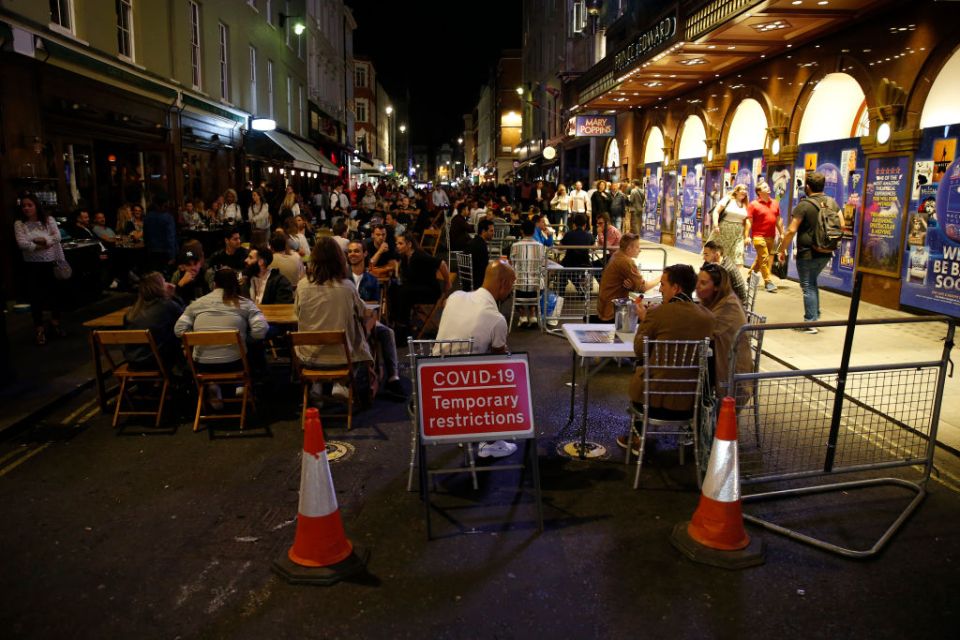
Why was central London hit so badly hit during the Covid-19 pandemic in comparison to other cities?
There’s long been a view that, without office workers and tourists, London would be a ghost town; now we know that’s broadly true! Really, this goes to the heart of the issue: not enough people actually call the heart of London ‘home’. In comparison to other countries and cities, where business districts are not so far away from residential hubs, communities didn’t evaporate so quickly when the country was locked down.
Take Copenhagen, for example – whilst our city lay dormant, the cooperative model of the Danish capital meant people were out exercising and shopping (for essentials!) in the city centre throughout lockdown. People lived near the heart of the city, so it maintained a drumbeat of activity despite restrictions and kept communities bound together.
As we exit an era of restrictions and lockdowns, we should learn from cities like Copenhagen. This could be done by putting greater protections in place so that particular streets do not end up being a collection of second homes, and local authorities, developers and housing providers should be looking to work more closely together to create more homes that people can actually afford to live in.
How can developers, housing associations and local authorities work together better to deliver positive change next year?
There’s a range of things that they can do but my message to the market is to be innovative; think outside the box. Take section 106s, for example – they legislate for affordable homes to be created as part of any new residential development, but just because they have been carried out in a particular way to date does not mean we have to stick with that approach.
“In the heart of the capital, we need to create more live and work space, along with developing a greater number of open public spaces and more child friendly areas for individuals and families to use.”
Barbara Brownlee
Really, partnerships between the public and private sectors are going to be absolutely vital in making London more affordable, so we need to get creative in thinking about how we best work with each other.
So, what does urban regeneration in London mean to you?
After working in London housing for 35 years, for me, ‘urban regeneration’ is about improving central neighbourhoods for people who live in them. But it has to be in a meaningful way, so sustainability must play a central role. Far too often, the ‘done-on-the-cheap’ approach improves things for say 20 years or so and then we end up back at square one.
In my role, I want to create sustainable places, not just buildings, which last for generations, which is why we’re working hard to maximise all the space on any land we own as well as modernising our buildings this year and aligning them with new regulations like the EPC rating.
“As a city, we also need to look at ways of reducing the number of vehicles that are coming into the centre, including the possibility of only allowing electric vehicles into certain areas.”
Barbara Brownlee
To do this, we need to think about things like how we collect our waste and even how post is delivered. There are hundreds of commercial waste contractors in Westminster alone, and Soho, which is a minute area, has dozens. We need to find ways of carrying out these activities using smaller electric vehicles, thus keeping the large transport vehicles out of the city centre streets.
Ultimately, urban regeneration is about doing a number of things to improve the way that our city is run, which will have a long-term meaningful impact on the communities that live here.
Canada and the office parts of Canary Wharf are ghost towns during the weekend. Should that change?
Yes, I don’t think any part of London should just be a Monday-Friday place. Whilst Canary Wharf may be slightly different, as this was the partial intention of the project, I do think the whole of London should be looking to diversify how it uses its space, particularly with the shifts in work habits we’ve seen over the last couple of years.
“Exiting lockdown, we need to rethink the way that we use central London.”
Barbara Brownlee
After all, London is about more than just work; it’s a vibrant city – full of cultural experiences, places to eat and stories to hear – so why should certain pockets of it only be used by the office worker population? We must begin to rebuild urban communities and that starts by ensuring that local people can actually afford to live here and, just as importantly, can thrive living here.