Skip to content
Wednesday 12 August 2026London --:--Frankfurt --:--Zurich --:--
NewslettersSearchEN · DE
MorningWire

European business, markets and politics

FTSE 100
10,833.15
-0.10%
DAX
26,331.07
-0.23%
CAC 40
8,674.94
-0.46%
STOXX 50
6,533.99
-0.26%
  • Europe
  • Markets
  • Business
  • Economy
  • Technology
  • Politics
  • Opinion
More
GermanyFranceBankingAIEnergyFintechPropertyCapital Markets
  • Germany
  • France
  • Europe
  • Markets
  • Business
  • Economy
  • Technology
  • Politics
  • Opinion
  • DE
Friday 19 May 2023 3:00 pm  |  Updated:  Friday 19 May 2023 1:08 pm

Explainer: How Rishi Sunak is trying to strike a balance on AI regulation

By: Elena Siniscalco

Add as a preferred source on Google
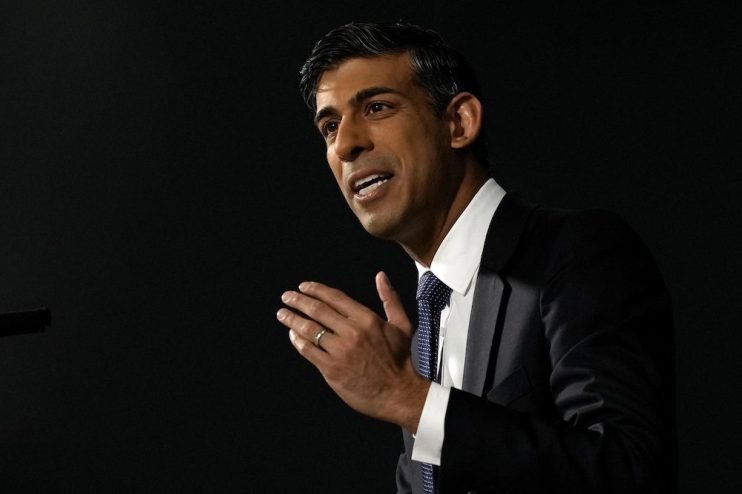
Prime Minister Rishi Sunak giving a speech on education at the London Screen Academy. Photo: PA

World leaders’ meetings like the G7, taking place in Japan right now, are not only about cringy photo ops and bilateral diplomatic statements. They’re also an opportunity for politicians to set out strategies and deliver messages to their foreign counterparts and their own domestic audience.

Rishi Sunak has proven a sleek player on the foreign stage so far, contrary to what many expected when he became prime minister. He knows how these things work. So it’s not a coincidence that he chose the G7 to suggest his approach to AI regulation will be tilting a bit more towards control and a bit less towards a free-for-all marketplace in the near future.

The prime minister admitted the UK might need to work on new regulations to tackle AI – implying the government might have to look again at its fairly laissez-faire approach.

Back in March, the government set out its strategy on artificial intelligence. It said AI companies would have to follow five “principles”, rather than laws, when developing technology. Regulators would then have to set out the rules of the game.

There are some obvious issues with this approach. Relying on principles rather than laws instantly moves the matter into the realm of subjectivity, making it overly complex to regulate. The principles include fairness, accountability and governance. But how do you define fairness? And who decides what is fair and for whom, in the world of technology? 

Then there’s the problem of dividing tasks. The regulators considered by the government for the job of overseeing AI are the Health and Safety Executive, the Information Commissioner’s Office, the Competition and Markets Authority, Ofcom and the Medicine and Healthcare Products Regulatory Agency. They all have different areas of expertise and experience, and there will be many cases where they’ll have to collaborate when AI touches on their remits. Regulators don’t always tend to work together very well.

A clear logic sits behind this strategy. The government thinks favouring a pretty unregulated environment will lure into the UK market lucrative AI companies, tech startups, and other businesses who find the regulatory environment within the EU too tight. These companies will bring innovation, stoking growth and making money. Many big business voices have been supportive of this approach, and for a reason: the AI industry contributed £3.7bn to the UK economy last year, employing more than 50,000 people.

But in the meantime, several AI experts and industry insiders have come out warning of the perils of letting AI grow unchecked – with their own descriptions of threats to the security of our businesses, and of our democracies. It’s always hard to strike a regulatory balance when new technologies arise: you want regulation to be flexible, so that it can be modified as the technology develops, but you also want strong safeguards in case something goes very wrong. 

Sunak’s comments at the G7 show the UK government is at least recalibrating. He’ll stand alongside Ursula von der Leyen, the president of the European Commission, to call for greater “guardrails” over AI development. He might have finally understood that on something like AI, international cooperation is an imperative rather than a choice.

Read more

Forget Burnham, what will Starmer do next?

Keir Starmer announces resignation at press conference, standing behind podium with serious expression, addressing media

Share this article

  • Facebook
  • X
  • LinkedIn
  • WhatsApp
  • Email

Similarly tagged content:

Sections

  • Opinion

Categories

  • Opinion

Trending Articles

  • Five-star Mayfair hotel hit with HMRC winding-up petition

  • Nottingham Forest owner Marinakis sues Crystal Palace for defamation

  • Back to basics: Sainsbury’s gradual retreat from the British high street

  • It’s not just Jason Arday, most of sociology is a scam

  • Hargreaves Lansdown orders staff back to office

More from Morning Wire

  • Forget Burnham, what will Starmer do next?

    Opinion
    Keir Starmer announces resignation at press conference, standing behind podium with serious expression, addressing media
  • ‘Fantastic news’ as Burnham brings Britain’s AI minister into Cabinet

    Tech
    Kanishka Narayan, prominent figure in the news, engaging in a public event or discussion, showcasing leadership and influe...
  • Andy Burnham should show London he cares by funding this one transport project

    Opinion
    Andy Burnham, Mayor of Greater Manchester, standing outside 10 Downing Street in a suit and tie.
  • Nscale doubles London office space as UK staff grows sixfold

    AI
    2024 was a transformational year for GlobalData.
  • Andy Burnham is on course to rack up the second highest debt interest bill on record

    Opinion
    UK National Debt Clock showing £3 trillion, with Big Ben and the Union Jack in the background.
  • Jonathan Reynolds’ industrial strategy is straight out of the 60s

    Opinion
    Labour's Jonathan Reynolds unveiled the industrial strategy in June.
  • ‘That’s reality’: Burnham will have to focus on international affairs, Starmer warns

    Politics
    Business conference attendees networking at a corporate event with banners and presentation screens in the background
  • Burnham risks ‘big mistake’ on AI with tech department shake-up

    Tech
    Andy Burnham discussing capital gains tax increase during a press conference, highlighting potential economic impacts
MorningWire

Independent European business, markets and political news for decision-makers.

Morning Briefing

Europe

  • Germany
  • France
  • Europe
  • UK & Ireland

Business

  • Markets
  • Banking
  • Technology
  • Energy
  • Property
  • Fintech

Editorial

  • Opinion
  • Editorial Policy
  • Corrections
  • Contact

Company

  • About Morning Wire
  • Privacy Policy
  • Terms of Use
  • Cookie Policy
© 2026 Morning Wire Ltd · Published by Morning Wire Media, Bahnhofstrasse 65, 8001 Zürich, Switzerland
Privacy · Terms · Cookies · Facebook