Explainer: Small house builders face existential hurdles

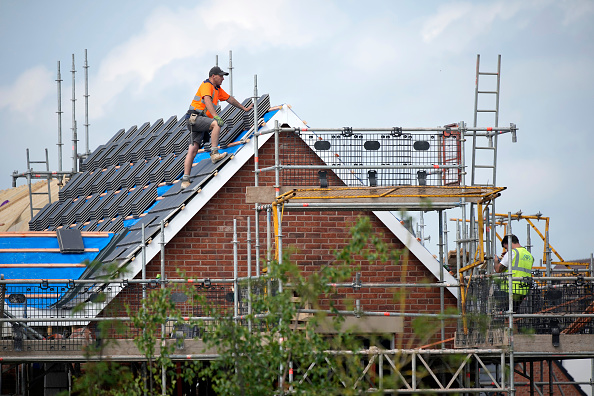
As mortgages and rents rocket up, the housing industry hardly needed another blow. But small firms in the sector have warned they risk going bust without an intervention.
In a letter to the prime minister this week, more than 200 small to medium-sized companies lamented that changes in the planning systems are blocking new developments and risk making their businesses go bust.
The number of new homes being built in the year to March has fallen to the lowest level since the 2008 financial crisis. After the government scrapped house building targets last year, and with little money in parts of the industry, the appetite for building seems to be fading.
Eighty per cent of the small house builders who co-wrote the letter said they are contemplating cutting down or completely ending residential works. They wrote they are facing “multiple existential threats” to the survival of their businesses. If they do, the number of people able to build the new homes desperately needed, will be limited to the top few.
Planning has always been a very complex policy area to navigate, with long and bureaucratic hurdles to get planning approval for new projects and experts leaving the field in droves because of bad pay and the recent politicisation around building in rural areas.
Now that local councils aren’t forced by mandatory targets to build more homes, they often find themselves between a rock and a hard place. Faced with residents who oppose new builds, they turn down or delay projects. This means further uncertainty for small house builders, who often don’t know for sure whether their projects will go ahead or not.
The building industry has always been populated by giant companies with deep pockets and influence, and medium-sized and smaller builders with local roots and contacts. The latter are finding it harder and harder to build. SMEs developed 10 per cent of new homes in 2020, down from 39 per cent in 1988, according to a report from the House of Lords Built Environment Committee from last year.
Another issue adding pressure involves the remediation works required by the Building Safety Act. The new legislation compels third parties to do remediation works on tall buildings affected by cladding or with other building defects that make them unsafe.
Legislation was urgently needed in the wake of the Grenfell fire and if anything, it came too late. With the Act, the government showed it was finally willing to take action and point the finger at an industry that had been allowed to behave irresponsibly for too long thanks to the deregulation measures introduced by previous Conservative governments.
But legislation often has unintended consequences, and one is the financial strain put on small businesses who now find themselves having to pay for remediation works while only a little money comes in from the few new builds they’re working on.
Lawyers from the building safety team at Howard Kennedy say that insolvency is coming to the contractors, causing problems for developers and a “double whammy” of problems coming from the supply chain.
They add that there is nothing in the Act differentiating between the big developers and small ones.
The economic argument for regulation in this area is that it will increase confidence in the market and in the long-term “you’ll get safer buildings and a better industry”, lawyers say.
But if the pressure to make the buildings safe is indeed unavoidable to safeguard tenants and leaseholders, then change needs to come from the planning system to ensure small house builders can stay afloat. Otherwise, by the end of this there won’t be any small players inhabiting this better industry of the future.