Failure after failure at the Serious Fraud Office has made a mockery of its mission

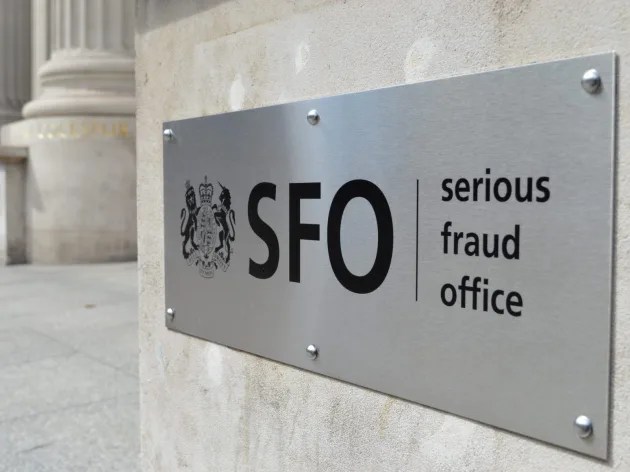
Fraud cases are getting more complex and hard to deal with, but we can’t underestimate another factor: the record of the Serious Fraud Office is far from perfect, writes James Forder
For the UK to keep its place as a global banking centre, it needs to be able to prevent financial crime. But the record of the Serious Fraud Office has been fraught. It has made many errors, and often been embarrassed by the improper behaviour of its staff. The collapse of the SFO’s case against security firm G4S earlier this month, after a failure to properly disclose evidence, is only the latest in a series of disasters.
Part – and only part – of the problem arises from the growing complexity of fraud cases. For example, there are literally millions or tens of millions of documents and electronic materials that might need to be disclosed by the prosecutor. Errors in this area can and do result in the failure of cases. The rules were written for a world where a few tens of thousands of documents was thought to be a daunting number. These rules need to be changed, perhaps to allow artificial intelligence identification of disclosable documents.
There is also the troubling question of whether trial by jury can reasonably continue. Currently, it is easy for cases to fail simply because jury members do not understand them. Certainly, some go slowly as arguments are explained, or perhaps as the defence makes them complicated to raise uncertainty in juries’ minds. Perhaps specialist judges could manage cases firmly enough to ensure comprehensibility. More likely, we have to accept the necessity of expert panels to adjudicate many cases.
The technicalities of corporate liability must be addressed. Where prosecuting a company depends on finding the individuals who are both in control of matters and understand the illegality of what they are doing, it can be literally impossible to secure a conviction. Modern companies are too complex for such people even to exist. One solution, already an aspect of the Bribery Act, is to create offences framed in terms of a “failure to prevent” specified behaviour. This puts the onus on companies to ensure they follow the law – not by any means an inappropriate requirement.
As I discuss in a recent report for the Institute of Economic Affairs, these are only part of the problem. Essential as these reforms are, none should divert attention from the recurrent failures of competence and propriety on the part of the SFO. Difficulties over disclosure do not excuse the losing of documents in the BAE Systems case, or the improper copying of potentially privileged ones to prosecutors, as happened in the case against Polly Peck.
Nor should it have been a difficult matter for the SFO to realise that when they were in discussion with a representative of the owners of a firm under investigation as in the case of Unaoil, and that a representative was claiming to be able to bring guilty pleas from some individuals, that they should have disclosed these contacts. In fact, they failed to keep proper records of them.
Nor is there any excuse for making a mockery of the court proceedings, by playing an April Fool joke at the expense of former Liberal Party leader Sir David Steel by forging a letter in his name during the trial of Nazmudin Virani. Nor should they have accused a judge of being in collusion with a defendant, as they did while trying to prosecute Asil Nadir. Worse still, the SFO was actually in cahoots with the defence lawyer for mining company Eurasian Natural Resources Corporation to ‘put the wind up’ his client, apparently so that the lawyer could extract more fees, while the SFO benefited from his leaks about the subject of the investigation.
That is not the way law enforcement conducts itself in a global financial centre.