Skip to content
Thursday 20 August 2026London --:--Frankfurt --:--Zurich --:--
NewslettersSearchEN · DE · FR
MorningWire

European business, markets and politics

FTSE 100
10,743.35
+0.14%
DAX
26,091.33
0.00%
CAC 40
8,501.91
0.00%
STOXX 50
6,444.46
0.00%
  • Europe
  • Markets
  • Business
  • Economy
  • Regulation
  • Politics
  • Opinion
More
GermanyFranceEU InstitutionsCompetitionPublic AffairsBankingTechnologyEnergy
  • Germany
  • France
  • Europe
  • Markets
  • Business
  • Economy
  • Regulation
  • Politics
  • Opinion
  • DE
Thursday 24 November 2022 4:27 pm  |  Updated:  Thursday 24 November 2022 4:36 pm

Farmers without solar panels could lose out on £1bn as Government weighs up clampdown

By: Nicholas Earl

Add as a preferred source on Google
Three-quarters of companies globally are not ready to have their environmental, social and governance (ESG) data audited externally months before new regulations kick in, according to a new report from KPMG published on Tuesday.

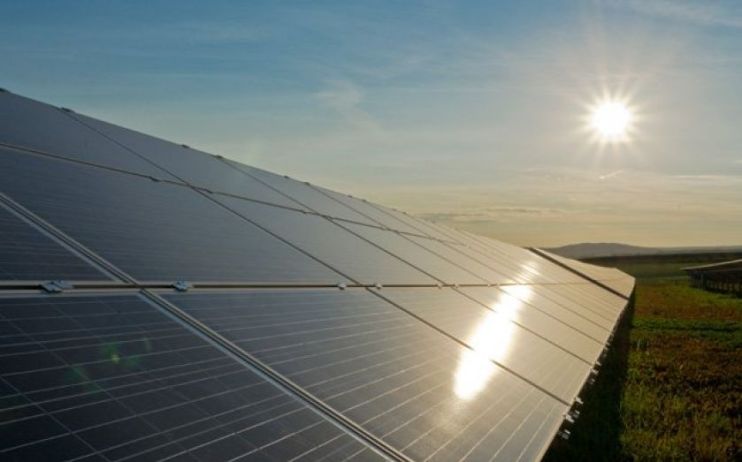
Farmers without solar panels could be missing out on up to £1bn over the next two years, according to new analysis from the Energy and Climate Intelligence Unit (ECIU).

Solar panels have enabled farmers to sell energy they generate themselves to cut their own bills.

However, the vast majority of England’s farms do not have solar panels – with only 28 per cent having the renewable power source on their fields.

ECIU has calculated that if the remaining 78 per cent had followed their counterparts, energy savings and revenues could have almost balanced out the increase in fertiliser costs over the next two years.

This would have provided an estimated saving of up to be £1.1bn.

While gas costs are expected to remain historically elevated for at least the next two years, other income streams such as like renewables may be essential to some farm businesses surviving.

In the second quarter of 2022, farmers paid on average 98 per cent more for gas than in the first three months of 2021, and 45 per cent more for electricity.

Farms with renewables, such as solar panels, wind turbines and small hydroelectric plants, can earn extra income through power purchase agreements by either selling excess energy back to the grid or by leasing their land to energy generators.

Solar panels on agricultural sites would also mean the Government cutting hundreds of millions of pounds on its Energy Bill Relief Scheme support package for businesses’ energy bills.

Polling from YouGov shows that more than two thirds of Conservative Party members back wind and solar, with 80 per cent of the wider public in favour of projects being built in their area.

Read more

Britain faces energy squeeze from solar eclipse

Rows of blue solar panels in a field, generating clean energy, with green trees in the background.

Government considers solar farm restrictions

The latest report from ECIU comes amid sustained speculation the DEFRA Secretary Thérèse Coffey os set to extend the de facto ban on solar farms in England to more farmland.

Morning Wire understands she is considering extending restrictions to solar developments to cover over 40 per cent of farmland.

Farmland is graded 1-5 for proposed developments – with the higher numbers (4-5) referring to poor quality land eligible for development and lower numbers defining high quality land essential for food security (1-3).

Currently, land graded 1-3a is ineligible, with grades 3b-5 considered suitable for development, but Downing Street is considering plans to make 3b ineligible for new sites to ensure food security.

Most proposed ground-mounted solar is currently put on Grade 3b land, which is typically less isolated and hilly for installations and transmissions.

Solar panels currently cover around 0.08 per cent of total land across the UK, or 0.1 per cent of UK farmland, only half the size of the Isle of Wight.

Matt Williams, climate and land programme lead at ECIU said: “Farmers are being hit by a double whammy of rising energy costs due to the surge in the gas price, and record prices for synthetic fertilisers which are made using gas.

“On top of that many are losing income as crops fail due to extreme weather driven by climate change. Some are choosing to leave the industry altogether as a result.”

Robbie Moore, Conservative MP for Keighley and Ilkley, added: “As gas prices rocket some farmers’ energy bills have gone through the roof. One of the best solutions is to have more renewables on farms. As long as care is taken to avoid land that’s needed to produce food they can help cut bills, bring in extra income, and achieve net zero.”

The Government has been approached for comment.

Read more

Energy operator ‘flying blind’ as net zero push threatens hiked bills and blackouts

Energy prices are high due to a range of factors including volatile gas prices and high net zero levies.

Share this article

  • Facebook
  • X
  • LinkedIn
  • WhatsApp
  • Email

Similarly tagged content:

Sections

  • News

Categories

  • Business

Related Topics

  • Energy
  • Green energy

Trending Articles

  • Which is the smelliest Tube line?

  • Take it from an AI founder, London is where it’s at

  • Xsolla Announces Multi-Year Strategic Partnership With the Good Game Club Podcast to Amplify Positive Stories From the Global Games Industry

  • Forecast rain sweet for Sugar and Kalpana

  • State ready to Star on the Knavesmire

More from Morning Wire

  • Britain faces energy squeeze from solar eclipse

    Energy
    Rows of blue solar panels in a field, generating clean energy, with green trees in the background.
  • Energy operator ‘flying blind’ as net zero push threatens hiked bills and blackouts

    Energy
    Energy prices are high due to a range of factors including volatile gas prices and high net zero levies.
  • BP eyes finalising sale of solar arm to Kuwait-backed wealth fund

    Energy
    British Petroleum BP forecourt with fuel pumps and company signage visible in a business setting, highlighting energy serv...
  • Emergency government meeting held over high temperature amid ‘strain on public finances’

    Economics
    Aerial view of dry, brown farm fields affected by high temperatures, with a road and farm buildings.
  • ReNew Announces Results for the First Quarter for Fiscal Year 2027 (Q1 FY27), Ended June 30, 2026

    Business Wire
  • Quinbrook Closes Oversubscribed GBP 587 Million Renewables Impact Fund II

    Business Wire
  • ReNew Reports 25.6% Reduction in Scope 1 & 2 Emissions and 24.7 Billion Units of Clean Power Generated in FY 2025-26

    Business Wire
  • CapVest Completes Acquisition of TSG

    Business Wire
MorningWire

Independent European business, markets and political news for decision-makers.

Morning Briefing

Europe

  • Germany
  • France
  • EU Institutions
  • Europe

Business

  • Markets
  • Business
  • Economy
  • Regulation
  • Competition
  • Public Affairs

Editorial

  • Opinion
  • Editorial Policy
  • Corrections
  • Contact

Company

  • About Morning Wire
  • Privacy Policy
  • Terms of Use
  • Cookie Policy
© 2026 Morning Wire Ltd · Published by Morning Wire Media, Bahnhofstrasse 65, 8001 Zürich, Switzerland
Privacy · Terms · Cookies · Facebook