Feeding off scrap: Steel industry must go green if it wants taxpayer support

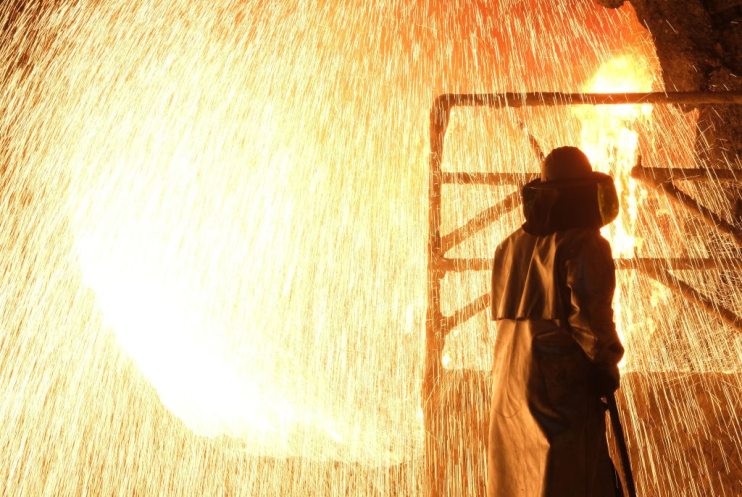
The future of the UK’s steel industry remains in the balance – with no resolution over how to make the sector fiscally sound and environmentally viable after protracted negotiations between Tata, British Steel and the government
The industry is under pressure from ultra-high operating costs, powered by soaring energy prices after Russia’s invasion of Ukraine last year, and growing expectations to ‘go green’ through installing costly electric arc furnaces and producing more carbon-friendly steel.
Steel is an alloyed metal consisting of iron ore, limestone, sinter and metallurgical coal – with the furnaces typically powered by fossil fuels such as coal or gas.
It is essential for the ramp up in renewables needed to head off the worst effects of climate change.
Yet, steel manufacturing is also responsible for seven per cent of global carbon emissions, with Port Talbot steelworks the single biggest carbon emitter in the UK – home to two of the country’s four blast furnaces.
If the taxpayers are going to be footing the bill, steel has to be a strategic asset to help the country go greener through decarbonisation.
Going green with steel is harder than it seems
Port Talbot owner Tata has been in talks with the government over upgrading the furnaces to electric arc designs – made up of graphite electrodes and 50 MW per hour electric currents – with gas providing around a third of the heat, before shifting over time to green hydrogen
While a bailout deal had been expected in January, talks are still ongoing with Tata initially demanding £1.5bn in taxpayer funds to upgrade its business, with the government countering with a £300m offer.
Negotiations between British Steel, which operates the UK’s two other blast furnaces in Scunthorpe, and the government are also at an impasse over cash.
Such a logjam to progress is frustrating with the Energy and Climate Intelligence Unit noting the EU already has 23 green steel plants underway, while the US Inflation Reduction act includes vast steel subsidies.
Nevertheless, green steel powering the UK’s green ambitions is easier said than done, with the sector clearly in decline.
The industry now supports just over 33,000 jobs – a tenfold decline on its peak – and contributed just £2bn to the UK’s economy in 2020, around 0.1 per cent of domestic economic output and 1.2 per cent of manufacturing output.
While the UK produced 7m tonnes of steel in 2019, China produced 996m tonnes – with the country’s exports now flooding European markets and propping up much of the West’s renewables agenda from wind turbines to electrification.
Meanwhile, the steel sector faces serious cost pressures to maintain current operations – with the industry shifting to night-time operations to reduce energy costs during the peak of the crisis last year.
Industry body UK Steel has calculated that producing steel comes with a £94.92 per megawatt hour cost for electricity, compared to £62.73 in France and £59.02 in Germany.
It is unlikely the UK can compete directly with this, and the government needs to press the industry into a ‘make do and mend’ approach to utilised resources – such as embracing the use of scrap steel.
Scraps your lot: industry must be creative
Scrap steel is a combination of waste metal material and repurposed steel, and is a perfectly valid material for construction in roads, bridges, pipelines, home furnishings and even some electrical appliances.
As it stands, over a third of the world’s production – around 680m tonnes – is being recycled, shaving off around a billion tonnes in CO2 emissions alone.
The UK, with its 33m cars and 25m homes, generates comfortably enough scrap steel to provide all the steel it currently uses, but its potential is unfulfilled.
Verner Viisainen, at environmental think tank Green Alliance, told City A.M. “The UK produces millions of tonnes of scrap steel every year, but it is currently being wasted and exported overseas.
“Instead, by recycling the steel domestically, it could help cut emissions when used in tandem with electric arc furnaces. There is a great opportunity here for the UK to increase its self-sufficiency and futureproof this strategically important sector for net zero.”
The London Metal Exchange has seen a significant uptick in investor interest in scrap steel, however this has been in emerging markets with easily secured contracts for commodity trading.
Alberto Xodo, vice president of sales at the LME, told Morning Wire, that its most successful contract was the steel scrap benchmark for Turkey, which is based on scrapping imports into the country.
In the eight years since launch, its prices have risen from $180-200 to around $440 per metric tonne today.
“The good thing about scrap, it’s a great way of decarbonizing the industry and reducing emissions. Scrap generation has much lower CO2 emissions, greenhouse gas emissions, and much lower energy consumption,’ Xodo said.
Alistair Ramsay, vice president of Rystad Energy argued the UK had an opportunity to create its own domestic scrap sector – even if there was a potential three-decade timespan on the sector before the likely pressure of material shortages.
He said: “It is also becoming increasingly regional as different countries’ steel producing fraternity successfully lobby governments to block its export. This lobbying is in fact directly related to net zero strategies, given how scrap, from an emissions perspective, is the most attractive raw material available to steel mills.”
In such circumstances, scrap steel has to be part of the debate in reforming the industry – if the UK wants to ensure real value for the taxpayer and present a realistic proposition for going green in a global renewables race.