‘Fiscal rules’ have made Budgets a farce

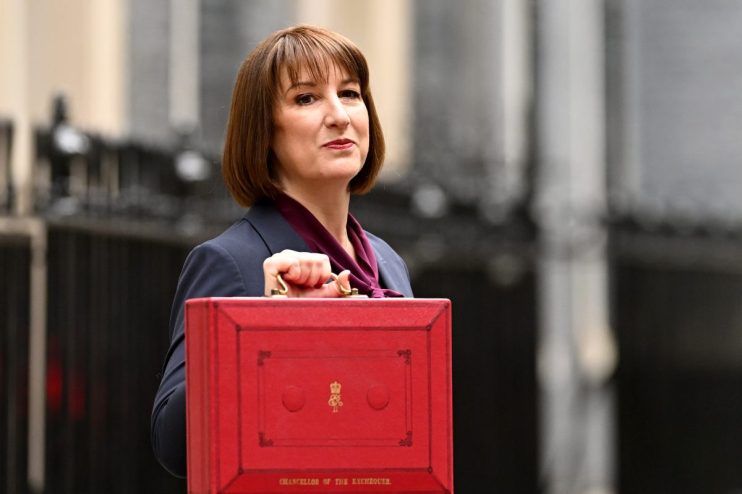
Chancellors increasingly make policy not on economic grounds, but to satisfy the letter of their own self-imposed fiscal rules, writes Ayushma Maharjan
Today, Rachel Reeves will unveil her second Budget. Her fiscal rules commit her to reducing public debt and returning to surplus. Yet if history is any guide, these pledges will prove no more durable than those of her predecessors. Successive Chancellors have introduced their own fiscal rules, and successive Chancellors have watched them crumble under political pressure.
When Gordon Brown first introduced fiscal rules in the late 1990s, they were intended to end the “short-termism” of British economic management. Yet public debt has since surged from under 40 per cent of GDP to nearly 100 per cent. Of the 54 medium-term forecasts made between 1990 and 2019, none saw actual spending come in below projections. Successive governments have consistently spent more than they planned, and while every Chancellor since Brown has unveiled their own fiscal rules, few have endured once political realities set in.
So what keeps going wrong? A recent Centre for Policy Studies report identifies several deep-rooted flaws. One is that our fiscal rules encourage governments to spend freely during good years without building buffers for the bad ones. In theory, the Treasury should pay down debt when the economy is strong and borrow only when recessions hit. In practice, even in perfectly ordinary years, governments have overspent by an average of 3.5 per cent of GDP – around £100bn in today’s money. This is why every major shock leaves Britain scrambling: we enter each crisis already over-borrowed and fiscally exposed.
Budget goal posts keep moving
Another weakness is the built-in incentive to postpone hard decisions. Chancellors are judged on targets set “four years from now”, which means the deadline is always far enough away to be reset before it matters. There is no accountability for what is actually delivered, only for what is promised. Reeves’ own numbers illustrate this. Her plan assumes day-to-day departmental spending will slow to just one per cent real growth by 2028, even as the NHS is guaranteed three per cent annual increases. Achieving those figures would require austerity levels no recent government has had the political courage to enforce.
Can economists really forecast public finances with precision half a decade into the future? The OBR’s track record suggests not. It and its predecessors have consistently underestimated the size of the state and the trajectory of debt because such accuracy is impossible. Yet Budgets still turn on tiny changes in the OBR’s spreadsheets, treated as if they were scientific truth.
This has become painfully obvious in recent months. Chancellors increasingly make policy not on economic grounds, but to satisfy the letter of the fiscal rules or to respond to tiny movements in the OBR’s forecasts. Shifts of a few billion pounds – in a £1.5 trillion budget – can trigger headlines, ministerial scrambling and hastily constructed policy packages.
We saw this clearly at the April 2025 Spring Statement, when Reeves unveiled a bundle of welfare changes seemingly crafted for one purpose: to restore the exact amount of “headroom” she had before the OBR revised its outlook. As many observers noted, this was an almost farcical exercise – weeks of political theatre over £14bn of projected spending changes five years from now, treated as if they were precise numbers rather than broad estimates.
Better approaches abroad
There are far better approaches abroad. New Zealand has moved away from rigid numerical targets toward broader “fiscal objectives” that require governments to consider spending, debt, revenue and net worth in a long-term, integrated way. The goal is not to hit a forecast line but to leave future generations a stronger fiscal foundation. Switzerland’s constitutional “debt brake” offers another model: it caps spending in line with expected revenue over the economic cycle, forcing governments to run surpluses in good years and repay borrowing from bad ones. The result is one of the most stable fiscal records in the developed world.
For nearly three decades, fiscal rules have allowed politicians to sound disciplined while behaving otherwise. They talk tough, juggle the forecasts and shift the goalposts. Meanwhile, debt rises, taxpayers shoulder the cost and future generations pick up the tab.
What Britain ultimately lacks is not better rules but genuine accountability. Chancellors should no longer be able to announce targets and quietly abandon them. If promises are missed, the next Budget should begin with a clear explanation of what went wrong and how the gap will be closed. Until that culture changes, every ‘responsible’ Budget will remain exactly what it has become: a very expensive pantomime.
Ayushma Maharjan is a researcher at the Centre for Policy Studies