Flooding crisis: A case study in the failure of government on all levels

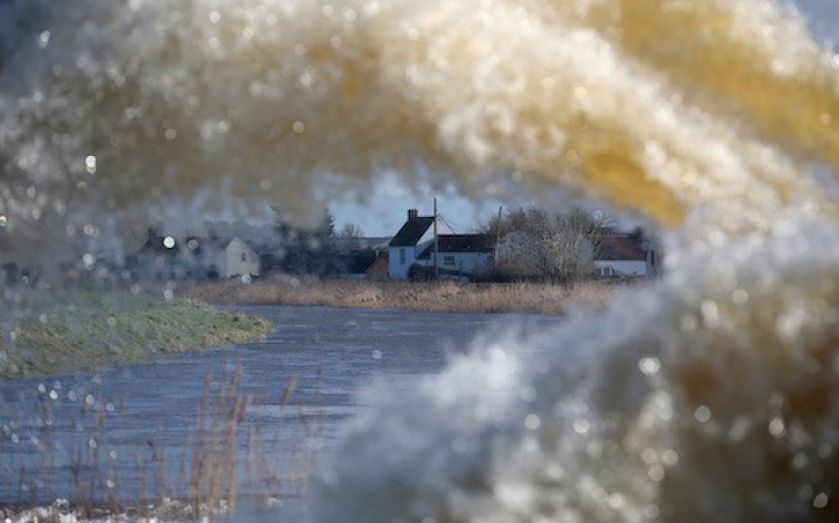
THE STATE’S many faces have been tearing pieces out of each other as the water level rises around London commuter towns. Who is to blame for England’s flooding crisis? Eric Pickles said it was the Environment Agency, but now thinks everyone should work together. Labour’s Lord Smith, the Agency’s head, has criticised spending cuts. David Cameron said yesterday that money is no object, as he announced a raft of measures to tackle the floods.
In short, this is yet another case study in government failure at all levels. While the Environment Agency is nominally independent, it is politicians that have ceded responsibility for flood protection to this distant state body. If it fails to do its job, it cannot be excused – but neither can those who set the terms of its existence. And if some establishment ideology has limited our protection from the weather, those promoting that ideology should have their heads on the line. What has gone wrong?
First, the Environment Agency. Much has been made of its failure to dredge rivers – when silt and debris is removed to improve water flow and limit flooding. Whether this has contributed to the current crisis will be debated for a long time yet, but it shouldn’t distract from another issue. The Environment Agency is a bloated state quango writ large. The Conservative MP John Redwood has described it as a pension fund with 11,000 staff attached. Of a total budget of £1.2bn in 2012-13, just £20m was spent on essential maintenance to ditches and culverts, while staff costs rose by £30m. Seven directors earn more than £130,000 annually. Lord Smith’s moaning about cuts would be more credible if his agency were more efficiently run.
Its centralising instincts are also invidious. Set up in 1996, the Agency took on responsibility for flood protection, with powers flowing upwards from local bodies. This would be fine if it were as responsive to local concerns as its predecessors. But there is evidence that ideology has influenced its decisions; that it has redirected its attention from safeguarding people and property towards the protection of wildlife. Recent chaos is arguably the result.
Take its 2008 draft consultation into the Somerset Levels (now underwater). From an economic point of view, it said, “a lot of money is required to protect relatively little.” It certainly has a limited budget, but tell that to local residents. The recommendation, however, was to “increase the frequency of flooding”. This would apparently reduce overall flood risk, but also “protect and improve biodiversity habitats”. Lord Smith claims this is not official policy, but the thinking was clear. The Agency recently spent £20m on a nearby bird sanctuary.
But we can’t single out the Environment Agency. It has been directed by policymakers at a national and EU level. Richard North has dug up a 2005 government document called Making Space for Water. It outlines a strategy in which flood defence spending would be re-routed from protecting farmland. Difficult decisions have to be made, of course. But landowner concerns that this would leave them exposed were dismissed. It was decided, instead, to promote “the environmental pillar of sustainable development”. Given backing by an EU directive, North says it was implemented by government in 2009. As is so often the case when decisions are made away from the action, the losers were barely given a thought.
And the Treasury cannot escape blame. Lord Smith has justified his response to the crisis by noting how a Treasury-determined funding formula restricts his room for manoeuvre. Every £1 of flood defence spending must lead to £8 of economic benefits. The aim is rightly to ensure limited budgets are focused on areas like central London, where flooding would cause immense economic damage. But there is an insidious detail. Spending is also directed towards areas with larger numbers of deprived households. Maybe there is a case for this. But it’s a ruthless rule for those who lose out. Those with properties in leafy parts of South West London may have good reason to fear.
So if government is responsible for this mess, what is the solution? How to ensure that local people can protect themselves as far as possible from the threat of flooding, and that decisions are made on local priorities? Budgets will always be limited; there will always be a risk. But it’s time for the responsibility for paying for and maintaining flood defences to flow back downwards.
Many, Lord Smith among them, point out that those who live on flood plains should accept the increased risk of flooding this implies. This is right. It also means that they should have greater control over how they mitigate against that danger. Lord Smith’s resignation would be a sticking plaster, as another state apparatchik would surely replace him. We must give serious thought to abolishing the Environment Agency.
Tom Welsh is business features editor at Morning Wire @TWWelsh