Skip to content
Thursday 13 August 2026London --:--Frankfurt --:--Zurich --:--
NewslettersSearchEN · DE
MorningWire

European business, markets and politics

FTSE 100
10,807.88
-0.23%
DAX
26,441.18
+0.42%
CAC 40
8,689.04
+0.16%
STOXX 50
6,565.64
+0.48%
  • Europe
  • Markets
  • Business
  • Economy
  • Technology
  • Politics
  • Opinion
More
GermanyFranceBankingAIEnergyFintechPropertyCapital Markets
  • Germany
  • France
  • Europe
  • Markets
  • Business
  • Economy
  • Technology
  • Politics
  • Opinion
  • DE
What is City Talk? City Talk allows marketers to connect directly with our audience by publishing content on morningwire.eu
Tuesday 02 January 2018 10:30 am  |  Updated:  Monday 10 February 2020 12:40 pm

Floods, hurricanes and earthquakes – triggers of financial crises?

By: CFA Institute Contributor

Add as a preferred source on Google

  After the global financial meltdown of 2007–2008, a common question among market participants is whether we will be able to predict the next one before it happens.

At the recent University of Virginia (UVa) Investing Conference, Robert Bruner, Dean Emeritus and current professor of UVa’s Darden School of Business, provided a primer on what to look for. Having spent years studying indicators of financial crises, he revealed that the triggering point is often not what one suspects.

In fact, he believes that:

  • The onset of a financial crises is more of a cascade, instead of a ‘Minsky moment’
  • The actual crisis begins with events that are seemingly dissociated from the later financial crisis itself
  • The “down-cycle” likely begins in a less-conspicuous corner of the capital markets

Unsuspected triggering events

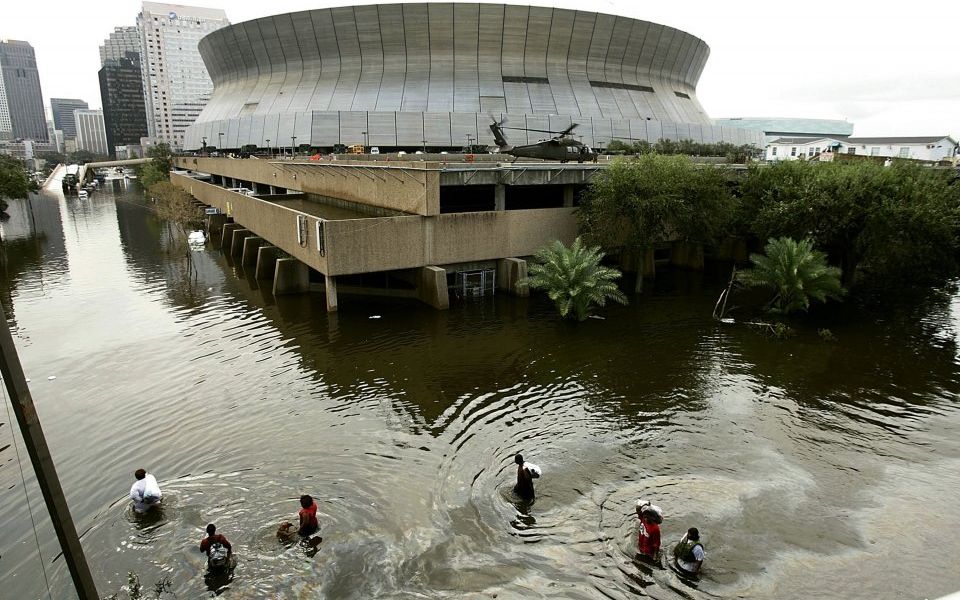
For example, one often thinks of the Great Recession of 2008–2009 as stemming from sub-prime mortgage delinquencies and defaults. However, Bruner believes the crisis actually started with Hurricane Katrina, which devastated the housing market in the Gulf Coast states, precipitating the rise in credit card delinquencies, and moving into the housing defaults. Similarly, he believes that the panic of 1907 began with the earthquake of 1906; the 1929 Depression originated with the Mississippi flood of 1927.

Particular analyses needed

So, how does one deal with the “unknown unknowns” that require a heightened awareness in order to anticipate financial events on the scale of our recent global meltdown? Bruner suggested four tools that frame the analysis required to evaluate the likelihood of an impending crisis and that may provide us with a “heads up” before a financial crisis occurs:

  • Conduct a scenario analysis, asking how could this situation go bad?
  • Conduct a sentiment analysis, considering consumer and investor confidence;
  • Conduct a momentum analysis, that looks are the correlation between serial and cross-sectional events, and
  • Conduct a systemic stress analysis.

In terms of current events, Bruner sees the upcoming change in the Federal Reserve leadership and direction as posing a major uncertainty. He also believes that the “blockchain revolution” is a very big deal with unknown consequences.

Future crises? He tells his business school students to expect one on the level of the Great Recession sometime during their lifetimes. To the rest of us, he suggests that we become “sharper thinkers.”

Consider for a deeper look into global capital markets.

Linda Rittenhouse, JD, is a director of capital markets policy at CFA Institute. She focuses primarily on issues related to investment products and investment regulation. Rittenhouse holds a JD degree.


Share this article

  • Facebook
  • X
  • LinkedIn
  • WhatsApp
  • Email

Similarly tagged content:

Sections

  • News

Categories

  • Business

Trending Articles

  • Five-star Mayfair hotel hit with HMRC winding-up petition

  • It’s not just Jason Arday, most of sociology is a scam

  • IT consultant ordered to pay £50,000 after being accused of stealing Soho House members’ personal details

  • Revolut takes flight with launch of new airport lounges

  • As it happened: FTSE 100 falls as Iran and US clash over Strait of Hormuz; Oil stockpiles ‘rapidly depleting’

More from Morning Wire

  • Commonwealth Games must prove crises are thing of past

    Sport Business
    Josh Kerr winning an athletics race at the London Stadium, with cheering crowds in the background.
  • Bank regulation, not austerity, explains why Britain is poorer than America 

    Opinion
    Aerial view of a residential cul-de-sac with houses, green lawns, trees, and a swimming pool
  • Europe has made a ‘major mistake’ on slow electrification, IEA chief warns 

    Energy
    UK industrial electricity prices are the highest in the G7 and 46 per cent above the average of the International Energy Agency.
  • Number of British millionaires sinks to lowest level since financial crisis

    Wealth
    Canada skyline with modern skyscrapers under a clear blue sky, showcasing iconic financial district architecture
  • Rightmove: Housebuilders face worst conditions since financial crisis

    Property
    Numerous For Sale and To Let signs from various real estate agents outside a brick building.
  • A pragmatic plan for Thames Water

    Opinion
    Thames Water infrastructure with pipes and maintenance workers, highlighting water management efforts in London
  • Smurfit Westrock Reports Second Quarter 2026 Results

    Business Wire
  • IFF Reports Second Quarter 2026 Results; Announces Use of Proceeds Plan for Food Ingredients Divestiture

    Business Wire
MorningWire

Independent European business, markets and political news for decision-makers.

Morning Briefing

Europe

  • Germany
  • France
  • Europe
  • UK & Ireland

Business

  • Markets
  • Banking
  • Technology
  • Energy
  • Property
  • Fintech

Editorial

  • Opinion
  • Editorial Policy
  • Corrections
  • Contact

Company

  • About Morning Wire
  • Privacy Policy
  • Terms of Use
  • Cookie Policy
© 2026 Morning Wire Ltd · Published by Morning Wire Media, Bahnhofstrasse 65, 8001 Zürich, Switzerland
Privacy · Terms · Cookies · Facebook