For love nor money: after the clapping stopped, can we fix our health system?

Derek Greatorex has been a GP for thirty years. He describes the current crisis in general practice as “more significant, deeper and like a runaway train which is heading down an ever-steepening slope to an inevitable crash somewhere ahead”.
Patients are feeling it too. Satisfaction with the NHS is at the lowest it’s been in the past 25 years, according to a new survey published by The King’s Fund and the Nuffield Trust. Only 38 per cent of the people surveyed late last year said they were satisfied with GP services.
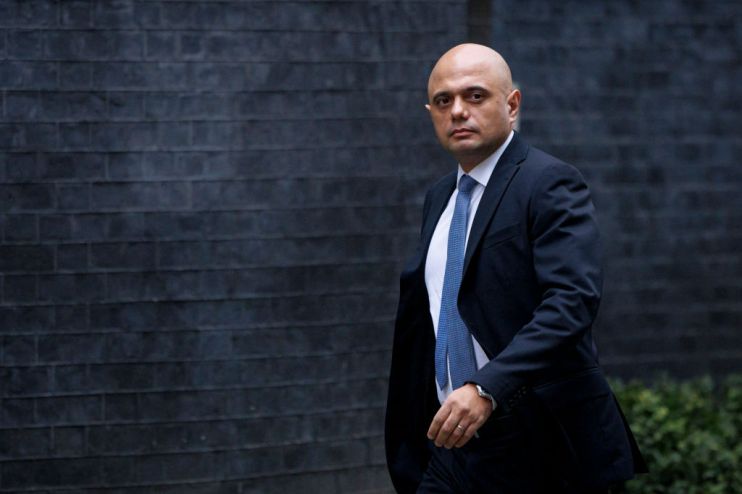
In 2019, the Conservative election manifesto promised to increase the number of GPs by 6,000 before 2025. We are now in 2022, and Health Secretary Sajid Javid has had to admit this target now looks unlikely. From September 2015 to December 2021 the number of patients per GP increased by 9.7 per cent, while the number of full-time GPs fell by 5.2 per cent, according to the Royal College of GPs. Doctors are now worried about the quality of care they can provide, as some of them see over 60 patients a day, as you might have discovered. Waiting times to get a GP appointment are also getting longer and longer.
General practice has been chronically underfunded. Yet primary care is a fundamental pillar of the NHS. GPs are there to cater for people with minor health problems and to alleviate pressures elsewhere in the system. If they can’t operate, people flood to A&E wards in hospitals, taking up space. In February a trial was launched at the Northwick Park Hospital in Harrow, North West London. As part of it, a GP was placed outside the A&E ward to redirect patients who didn’t need urgent care. Seventy-five patients were redirected in a single day. This shows how many people are worried enough about the lack of medical support to go the extra mile, visiting A&E just because they know it’s there.
GPs are caught in the middle of the NHS crisis, between a political system that effectively undervalues their work and disgruntled patients. On social media and in real life, it’s easy to meet people who have waited weeks to see a GP, or who showed up for an appointment only to be turned away. No wonder satisfaction rates are low. Virtual appointments became mainstream during the pandemic, but they can be problematic for older people with little digital skills, or for vulnerable communities with restricted access to technology.
Another big issue is what Jeremy Hunt, the Chair of the Health and Social Care Select Committee, has defined as the “Uberisation” of primary care. It is now common for patients to see a different doctor every time they visit their local practice. With these quick and sporadic meetings, it is difficult to build a relationship of mutual trust. On top of that, it can be harder for a GP to make the most accurate diagnosis without knowing the history and circumstances of a patient.
So GPs become the scapegoats of a dysfunctional system, sometimes even victims of patients’ abuse because the patients themselves are sick and tired of a healthcare apparatus that is failing them. Given these circumstances, GPs are leaving the profession. “I can clearly see why many of my colleagues are saying enough is enough”, says Greatorex.
What GPs want is a long term strategy for general practice. They strongly back an amendment to the Health and Care Bill which would place a duty on government to provide an assessment of staffing needs every two years. It was tacked on by the House of Lords but rejected by the government. Yet the amendment’s benefits are crystal clear: there are currently only 0.45 fully qualified GPs for 1,000 patients in England, and we need a system to understand how we’ve got to this point.
A spokesperson for the Department of Health and Social Care said that they are “making 4,000 training places available for GPs each year”. But funding increasingly goes to hospitals, so that’s where fresh graduates want to be. Underfunding and understaffing are disruptive forces exacerbating this crisis.
“If one part of the NHS is under pressure, it will have an impact on other areas”, says Martin Marshall, chair of the Royal College of GPs.
Without a long-term plan to reform general practice, it’s hard to see how the NHS as a whole could come out unscathed from this crisis in trust. But it is exactly this trust that is thrown into peril by any attempts to reform.
The founding principles of the NHS still garner strong feeling among Britons. Speaking to the FT, Dan Wellings, senior fellow at the King’s Fund said: “The public do not seem to want a different model, they just want the one they have got to work”.