Skip to content
Monday 10 August 2026London --:--Frankfurt --:--Zurich --:--
NewslettersSearchEN · DE
MorningWire

European business, markets and politics

FTSE 100
10,862.50
-0.35%
DAX
26,355.07
+0.14%
CAC 40
8,726.03
+0.13%
STOXX 50
6,540.08
+0.25%
  • Europe
  • Markets
  • Business
  • Economy
  • Technology
  • Politics
  • Opinion
More
GermanyFranceBankingAIEnergyFintechPropertyCapital Markets
  • Germany
  • France
  • Europe
  • Markets
  • Business
  • Economy
  • Technology
  • Politics
  • Opinion
  • DE
Friday 15 March 2024 5:30 am  |  Updated:  Thursday 14 March 2024 12:02 pm

For once, Humza Yousaf has set an example other politicians should follow

By: Paul Ormerod

Add as a preferred source on Google
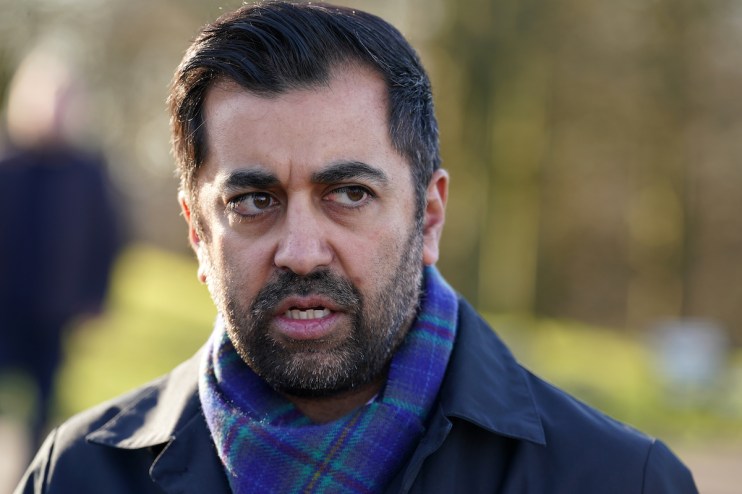
File photo dated 26/02/24 of Humza Yousaf who has dismissed as "ludicrous" and "completely untrue" suggestions of a conflict of interest over his decision to give £250,000 to an aid agency in Gaza. The First Minister had announced the donation to UNRWA as he met officials from the organisation on November 2 last year while his parents-in-law were among millions under siege in the enclave. Issue date: Saturday March 9, 2024. PA Photo. See PA story POLITICS Yousaf. Photo credit should read: Andrew Milligan/PA Wire

In overriding the advice of “experts” and channelling aid to Gaza, Yousaf did what politicians are elected to do, says Paul Ormerod

Humza Yousaf, the First Minister of Scotland, does not often attract plaudits. But last week he overrode the advice of his officials. Shock, horror.  Surely Sir Humphrey and the “experts” always know best.  

Officials recommended a donation to UNICEF to finance water programmes in Gaza. Instead, Yousaf decided that the money should be given to the United Nations Works and Relief Agency (UNWRA).  It is controversial, not least because of the alleged links of UNWRA to Hamas terrorists.  

But regardless of what the actual topic was, Yousaf did what politicians are elected to do. He made his own decision. It is one for which he is accountable to the voters.

In fact, electorates across the West have got into the habit of, when given the opportunity, rejecting the advice of so-called experts.

It started of course with the referendum on Brexit. Despite the overwhelming opposition of expert opinion and the mendacious Remain campaign – think Project Fear – the British people voted to Leave.

Last year, Australia followed suit. The government, spearheading metropolitan liberal opinion, proposed that the constitution be altered to allow for a special voice in Parliament to be given to indigenous Australians.  It was rejected in a referendum, in which voting was compulsory, 60-40.

The latest example is Ireland. Last week a referendum was held to change the 1937 constitution. One proposal was to remove the special status accorded to marriage in defining family relationships.  The other related to the role of women in the home.

The changes were supported by all political parties and had the overwhelming endorsement of the media.  The electorate rejected both by huge margins, averaging a 70 per cent “no” vote across the two.

Economists set great store by a concept known as revealed preference. This holds that preferences are revealed not in answers to surveys, but by decisions which are actually made.

Read more

The debate: should voting be compulsory?

Ipsos Mori is one of the largest polling companies operating in the UK.

On the few occasions on which Western electorates have been asked to make a decision on a specific issue in a referendum, they have revealed their preferences.  And these are in contrast to the views of the liberal elite.

Referendums are few and far between. The strong trend in policy is to remove decisions from democratic accountability and hand them over to bodies made up of “experts”.

The establishment of the independence of the Bank of England and the creation of the Monetary Policy Committee was hailed as a great achievement when Gordon Brown introduced the measure immediately after the 1997 general election.

It is hard to argue that the independent Bank and the MPC have performed better than under the pre-1997 arrangements, under which the Chancellor and the Treasury had a more direct say in the conduct of affairs.

The Bank failed to see the financial crisis of the late 2000s coming, although to be fair once it was upon us it did see the need for very urgent and decisive actions such as the effective nationalisation of banks.

But it then went on to hold interest rates very close to zero for a decade and to preside over an incredibly lax monetary policy. The failures of the Bank and the MPC in the inflationary experiences of the 2020s are well known.

The decisions of the Chancellor are now heavily constrained by the models and forecasts of the Office for Budget Responsibility (OBR).  Yet it is clear that the OBR has no special expertise which enables its forecasts and policy judgements to be any better than those of anyone else.  

So, for once, the Scottish First Minister is setting an example for elected politicians to follow.  By all means listen to advice.  But decisions should be made by those directly accountable to the voters and not by bodies made up of unelected experts.

Paul Ormerod is an economist at Volterra Partners LLP, an Honorary Professor at the Alliance Business School at the University of Manchester and author of Against the Grain: Insights of an Economic Contrarian, published by the IEA in conjunction with Morning Wire

Read more

As it happened: Intel, Arm shares slide; Oil climbs higher

Donald Trump smiling and holding a small golden ball, wearing a blue suit and red tie.

Share this article

  • Facebook
  • X
  • LinkedIn
  • WhatsApp
  • Email

Similarly tagged content:

Sections

  • Opinion

Categories

  • Opinion

Related Topics

  • Scotland

Trending Articles

  • Back to basics: Sainsbury’s gradual retreat from the British high street

  • Thames Water faces fresh threat to survival after pensions regulation breach

  • Hargreaves Lansdown orders staff back to office

  • As it happened: Intel, Arm shares slide; Oil climbs higher

  • Nottingham Forest owner Marinakis sues Crystal Palace for defamation

More from Morning Wire

  • The debate: should voting be compulsory?

    Opinion
    Ipsos Mori is one of the largest polling companies operating in the UK.
  • As it happened: Intel, Arm shares slide; Oil climbs higher

    FTSE 100 Live
    Donald Trump smiling and holding a small golden ball, wearing a blue suit and red tie.
  • The 24-hour news cycle is ruining politics

    Opinion
    Downing Street entrance with iconic black door, relevant to UK government and politics, set in a historic London street scene
  • Politicians call for easing of private school stranglehold on elite rugby

    Sport Business
    Getty Images logo on a digital screen, representing the renowned stock photo agency in a business news context.
  • The pensions triple lock is a travesty. Our politicians must fess up

    Opinion
    Young people face the risk of failing to save enough in their pension
  • Burnham is wrong. Devolution will only grow Whitehall

    Opinion
    Whitehall SW1 street sign in the City of Westminster, London, mounted on a white stone wall with decorative trim.
  • ‘Number 10 North’ is no more than a gimmick

    Opinion
    Andy Burnham speaking at a press conference, wearing a suit and tie, addressing current political issues in Manchester.
  • Keir Starmer wasn’t weird enough for Westminster

    Opinion
    Keir Starmer holding a football with a World Cup logo, smiling and engaging in a sports event discussion.
MorningWire

Independent European business, markets and political news for decision-makers.

Morning Briefing

Europe

  • Germany
  • France
  • Europe
  • UK & Ireland

Business

  • Markets
  • Banking
  • Technology
  • Energy
  • Property
  • Fintech

Editorial

  • Opinion
  • Editorial Policy
  • Corrections
  • Contact

Company

  • About Morning Wire
  • Privacy Policy
  • Terms of Use
  • Cookie Policy
© 2026 Morning Wire Ltd · Published by Morning Wire Media, Bahnhofstrasse 65, 8001 Zürich, Switzerland
Privacy · Terms · Cookies · Facebook